Statements by individuals linked to Sudan’s Islamist movement have drawn renewed attention after remarks perceived as endorsing Iran and promoting escalatory rhetoric circulated online, raising concerns about their potential regional impact.
The controversy follows comments attributed to Tariq Kajab, a Sudanese military officer associated with Islamist circles, who has previously made remarks interpreted as supportive of Iranian military actions in the Gulf. His statements have resurfaced alongside a sermon delivered by Abdul-Hayy Youssef, a prominent figure within Sudan’s Islamist movement.
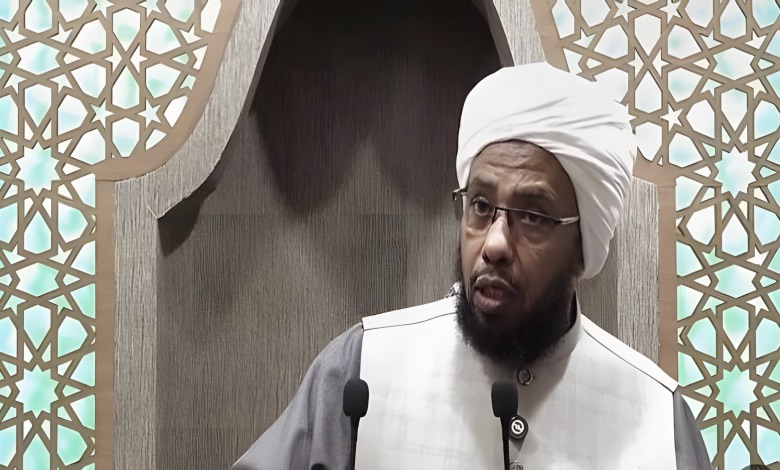
Youssef, a member of the movement’s Shura Council, delivered a Friday sermon in Turkey in which he addressed ongoing regional conflicts and expressed positions seen by critics as aligning with Iran. The sermon, later shared online, has been widely circulated and debated.
In his remarks, Youssef discussed the role of religious authority in political crises and voiced support for positions that observers say could deepen divisions at a time of heightened regional tensions.
The statements have prompted criticism from Sudanese commentators and analysts, who warn that such rhetoric risks inflaming sectarian and geopolitical fault lines, particularly amid ongoing instability in Sudan and the broader Middle East.
Youssef has previously been at the center of controversy, including over a leaked recording in which he appeared to comment on the influence of Islamist figures within state institutions. In that recording, he suggested that senior military leadership faced constraints from Islamist actors, a claim that has been disputed and remains politically sensitive.
Kajab, who has also appeared in videos circulating on social media, has drawn criticism for comments interpreted as encouraging attacks on infrastructure in Gulf countries. His remarks have not been officially endorsed by Sudanese authorities.
Analysts say the convergence of such statements reflects a broader pattern of politicized religious discourse and raises questions about the role of ideological networks in shaping narratives tied to regional conflicts.
The developments come at a time of heightened tensions involving Iran and Gulf states, with observers warning that rhetoric perceived as incitement could have wider implications for regional security and Sudan’s external relations.