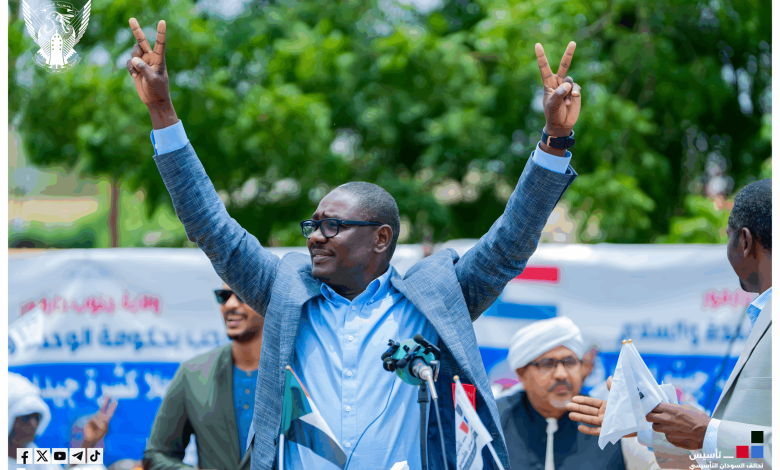
Sudan’s Peace and Unity Government has announced a new slate of ministers and senior officials, in what officials describe as a step toward completing state institutions amid renewed signals of openness to a ceasefire.
Prime Minister Mohamed Hassan al-Taayshi issued the decree on Monday under Article 73 of Sudan’s 2025 Transitional Constitution, appointing eight ministers, four undersecretaries and several top administrative officials.
The appointments span key portfolios including justice, finance, infrastructure, governance and social services, as part of what officials frame as an effort to consolidate executive authority.
Among the ministerial appointments:
- Osama Hussein Wahbi Mohamed Saeed — Minister of Justice
- Sila Musa Kanji Tiko — Minister of Decentralised Governance
- Carlo John Koko al-Nour — Minister of Finance and Economic Planning
- Hafez Ibrahim Abdel Nabi — Minister of Animal Resources and Fisheries
- Khaled Aseel Ahmed Mohamed — Minister of Transport, Roads and Bridges
- Hafsa Idris al-Maran Atiya — Minister of Urban Planning and Development
- Dr Zuhair Mohammedi Bashar — Minister of Social Development
- Khaled Ahmed Danaq Breima — Minister of Information
The decree also named new undersecretaries in key ministries, including cabinet affairs, decentralised governance, oil and energy, and health.
Senior institutional roles were also filled, including appointments to head the federal police, taxation authority, civil service bureau and the Sudan News Agency.
The government instructed all state bodies to implement the decisions immediately.
Institution-building push
Sudanese and regional media framed the move as part of a broader effort by the Peace Government to complete its administrative and governance structures, including executive and service institutions.
The appointments come as the administration seeks to project itself as a functioning alternative authority, particularly in areas outside the control of General al-Burhan’s SAF.
Ceasefire signals
The announcement coincides with statements attributed to Taayshi indicating readiness for a humanitarian truce and broader ceasefire arrangements, adding a political dimension to the administrative reshuffle.
The dual track — consolidating institutions while signalling openness to negotiations — reflects an attempt to strengthen the government’s position in Sudan’s fragmented political landscape.
Sudan has been mired in conflict since April 2023, with competing authorities seeking legitimacy both on the ground and in diplomatic arenas.