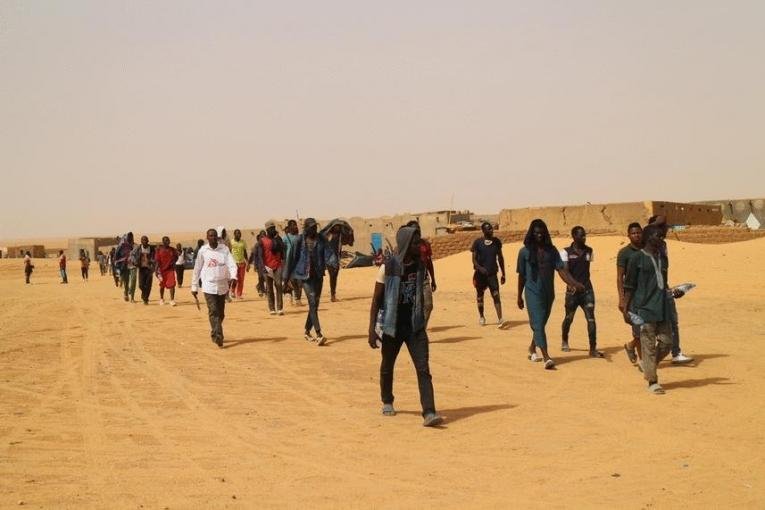
Sudan’s ongoing civil war has unleashed one of the world’s largest displacement crises, fueling irregular migration across the Sahel.
Over 1.2 million refugees have fled into Chad since 2023, turning the country into a fragile transit hub toward Libya and the Mediterranean.
Migrants are increasingly exploited by smuggling networks that thrive in conflict zones, linking forced displacement with organized crime.
Legal uncertainty in Niger, following the repeal of its anti-trafficking law in November 2023, has pushed smuggling networks underground and onto riskier routes.
West African migration flows now converge in Agadez, Niger, before continuing north, while Mali and northern Sudan serve as additional feeder zones.
Eight years of underground operations allowed networks to professionalize, integrating with militias and radical groups, according to UNODC reports.
Women and children suffer the most, with minors accounting for 40% of trafficking victims, facing forced labour, sexual abuse, or recruitment by armed groups.
Illegal gold mines in the Sahara act as “modern slavery” stops, trapping migrants seeking passage to Europe under brutal conditions.
The Sahel has become a nexus of war, crime, and survival, where weak state control and ongoing conflicts leave vulnerable populations exposed.
Conflict, displacement, and smuggling now form a tightly intertwined ecosystem across Sudan, Chad, Niger, and Mali, challenging regional stability and security.