Political opposition to the militarisation of schools in Sudan’s River Nile state is widening, with the Sudanese Communist Party joining teachers in condemning a directive to reinstate military training for secondary school students.
The party’s branches in Atbara, Berber, Al-Damer and Al-Bawga issued a joint statement rejecting the decision by the state’s education minister to revive the military training programme known as “Cadet.”
The party accused the SAF government of attempting to transform educational institutions into military barracks, exposing children to a culture of war instead of addressing the deepening crisis facing Sudan’s education sector.
In the statement, reported by Ain al-Haqiqa, the party said the decision reflected the mentality of the former regime and the failure of the military authorities to address the country’s educational challenges.
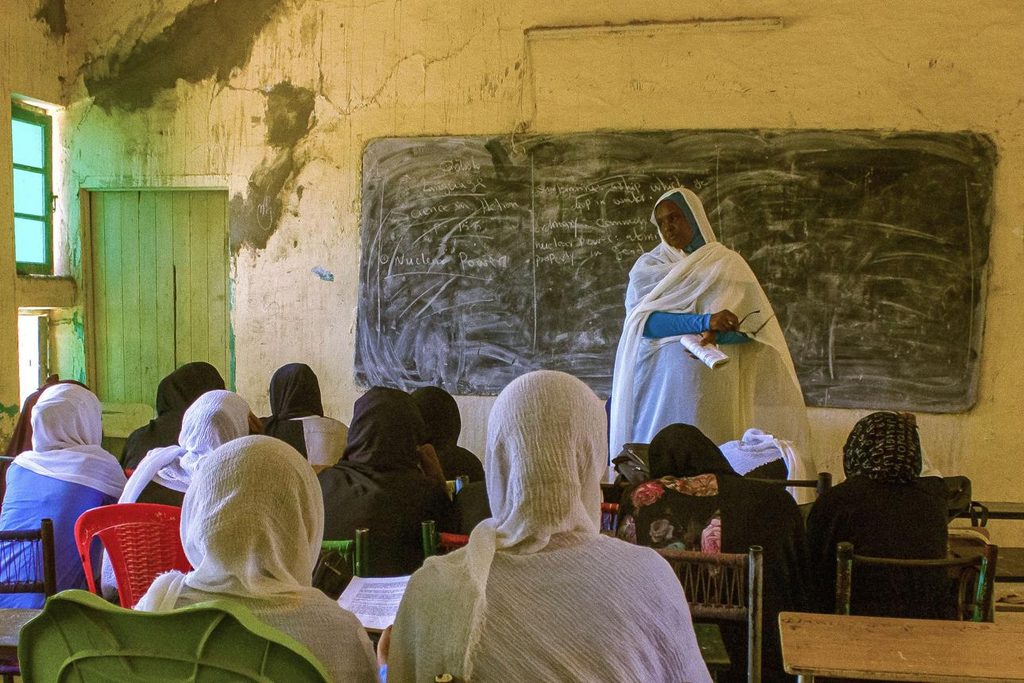
It pointed to severe shortages of textbooks and teachers, deteriorating school infrastructure, worsening living conditions and the collapse of essential public services across River Nile state.
The party warned that reinstating military training represented a revival of policies pursued under former President Omar al-Bashir, whose government used cadet programmes, the Popular Defence Forces and compulsory national service to recruit students and involve them in armed conflicts.
It described the directive as a reversal of the gains achieved through Sudan’s December Revolution, which brought an end to Bashir’s three-decade rule in April 2019.
The party stressed that secondary school students are predominantly minors, arguing that subjecting them to military training and instilling a culture of war violated children’s rights and international conventions.
It also accused the SAF government of abandoning its responsibilities to provide free education, improve teachers’ working and living conditions and rehabilitate deteriorating school facilities.
The Communist Party declared its full solidarity with the Sudanese Teachers’ Committee, which had previously rejected the directive, demanding its immediate cancellation and the removal of military and security personnel from educational institutions.
It called on teachers, parents, students, resistance committees and democratic forces to organise peaceful opposition to the decision and refuse its implementation.
The party stressed that educational institutions must remain independent of military and security structures, allowing future generations to receive a safe, civilian education.
The growing opposition comes amid concerns over the militarisation of civilian institutions in SAF-controlled territories, as Sudan’s prolonged conflict continues to devastate the education system and expose children to the consequences of war.