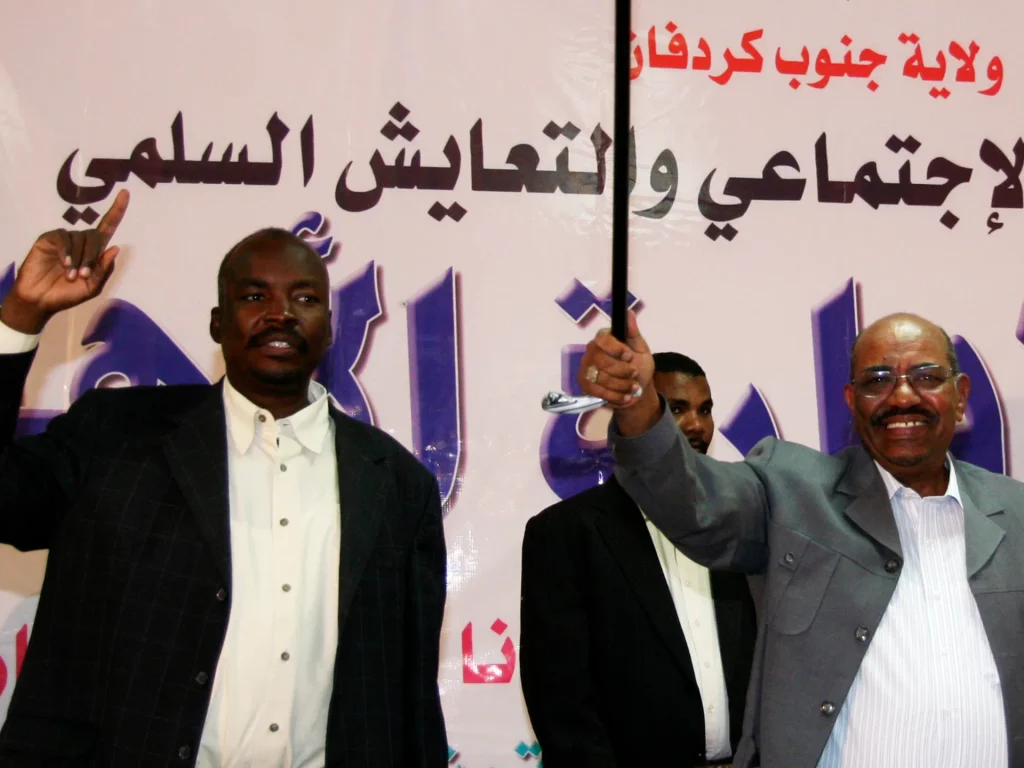
Senior figures associated with Sudan’s former Islamist government are reportedly preparing a series of public media appearances, signalling a possible campaign to reassert their political influence as controversy deepens over the relationship between the Sudanese Armed Forces (SAF) government and supporters of ousted President Omar al-Bashir.
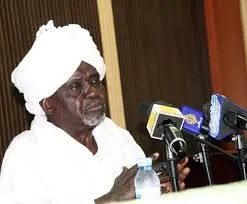
According to information obtained by the investigative publication Hafryat, the recent appearance of Ahmed Haroun, chairman of the dissolved National Congress Party (NCP), on Sudan Podcast could be the beginning of a coordinated media strategy involving other prominent Islamist figures.
The publication reported that additional leaders and representatives of the former ruling establishment are expected to appear on the same platform in the coming days.
The reported initiative is believed to be aimed at rebuilding political support, reshaping public perceptions of the former government and positioning Islamist factions to influence Sudan’s post-war political arrangements.
Hafryat did not identify the figures expected to participate or provide a timetable for their appearances. The reported plans could not be independently verified.
Haroun’s interview exposes political tensions
Haroun’s lengthy podcast interview sparked controversy after he openly discussed the relationship between the NCP, Sudan’s Islamist movement and the military leadership.
Although acknowledging political differences between the former ruling party and the SAF, Haroun maintained that both sides remained united in their opposition to the Rapid Support Forces (RSF).
His remarks renewed scrutiny of military chief Abdel Fattah al-Burhan’s repeated attempts to distance the SAF government in Port Sudan from political networks associated with Bashir’s former administration.
Critics argue that the public reappearance of senior Islamist figures challenges the military leadership’s portrayal of the ongoing conflict as an exclusively national struggle rather than one involving competing political interests.
The controversy intensified on November 8 when officials from Haroun’s party confirmed that he had been detained by military authorities following the interview.
The NCP condemned his detention and demanded his release.
However, the circumstances surrounding the detention remain unclear, and there has been no public indication that the SAF government intends to transfer Haroun to the International Criminal Court (ICC).
Islamists seek a return to political prominence
The reported media campaign comes amid growing concerns among Sudanese civilian political groups that factions associated with Bashir’s government are attempting to rebuild their influence through wartime alliances.
According to Hafryat, the anticipated appearances could form part of a wider effort to move Islamist political activity into the public arena after years of operating through informal networks and alliances within state institutions.
The publication suggested that senior figures increasingly believe the political and military environment provides an opportunity to advance their positions on future governance, negotiations and the restructuring of Sudan’s armed forces.
Political attention has also focused on the influence of prominent Islamist figures, including Ali Karti, and military leaders such as Yasser al-Atta, whose relationships with the former ruling establishment have attracted criticism.
The possibility of a renewed Islamist political campaign threatens to complicate Burhan’s efforts to maintain international legitimacy while distancing his administration from the former NCP.
Political analyst Ihab Madbou, cited in the original report, argued that the controversy surrounding Haroun raises questions about the extent to which figures associated with Bashir’s government continue to enjoy protection and political influence within territories controlled by the SAF.
International justice concerns remain unresolved
Haroun has been wanted by the ICC since 2007 over allegations of war crimes and crimes against humanity committed during the Darfur conflict.
He faces 42 counts relating to alleged atrocities between 2003 and 2004 and has denied wrongdoing.
The United States designated Haroun under its War Crimes Rewards Program in January 2024, offering up to $5 million for information leading to his arrest, transfer or conviction.
International law expert Al-Moez Hadra, speaking to Erem News, argued that Haroun’s ability to remain in Sudan despite the outstanding ICC warrant raises serious questions about the responsibility of authorities controlling the territory.
Sudan’s Emergency Lawyers group has also demanded clarity regarding Haroun’s legal status and called for an investigation into allegations that internationally wanted former officials have received protection.
The Unionist Alliance similarly called for accountability, warning that attempts to rehabilitate figures associated with the former ruling party would undermine the demands of Sudan’s December 2018 revolution.
The latest reports of an organised media campaign suggest that the controversy could extend beyond Haroun’s individual case.
While his reported detention has exposed tensions between the SAF leadership and its Islamist allies, further public appearances by Bashir-era figures could intensify the struggle over political influence and the direction of Sudan’s eventual transition.
For Burhan, the challenge is increasingly whether the SAF government can maintain its public distance from the former Islamist establishment while factions associated with that establishment seek a more visible role in shaping Sudan’s future.