A senior figure in Sudan’s “Sumoud” (Resilience) coalition has warned that the country risks further fragmentation as General al-Burhan’s SAF continues to reject ceasefire proposals and negotiations, deepening the conflict and humanitarian crisis.
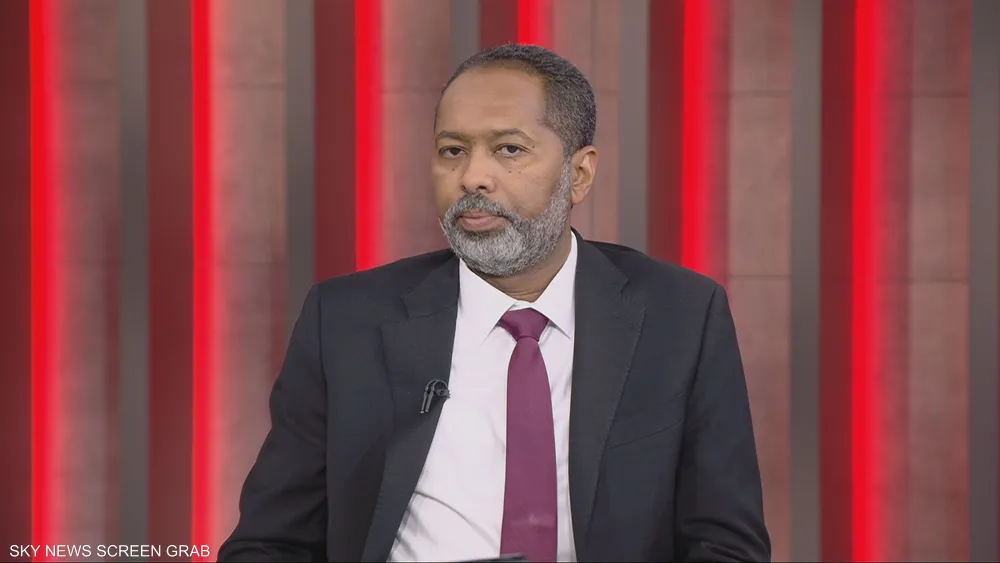
Khalid Omar, deputy head of the Sudanese Congress Party and a leading member of the coalition, said in an interview with Sky News Arabia that recent remarks by Finance Minister Jibril Ibrahim — stating that the SAF would continue its campaign to seize cities without negotiations or a truce — signal “more destruction, killing, hunger and displacement” for Sudanese civilians.
Omar argued that attempts to block peace initiatives only prolong suffering, stressing that “this war has no military solution” and that an immediate political settlement is the only viable path forward.
He said the Sumoud coalition has recently intensified diplomatic outreach, holding meetings with the African Union, the United Nations, and several Western embassies to push for a comprehensive peace process and support a coordination platform established by five regional and international bodies.
Omar also voiced support for a four-party initiative led by the United States, Saudi Arabia, the United Arab Emirates and Egypt, describing it as the most realistic opportunity to break the deadlock. He called on the international community to unify efforts and pressure the warring sides to accept a ceasefire and allow humanitarian access.
Addressing the SAF’s increasingly hardline rhetoric, Omar said the military camp is not unified and includes factions that benefit from the continuation of the war. He specifically pointed to Jibril Ibrahim as combining Islamist affiliations with a vested interest in prolonging the conflict.
On Sudan’s political future, Omar said the country cannot be governed by military rule or “closed ideologies” such as the Muslim Brotherhood, blaming such approaches for Sudan’s past divisions and atrocities, including the conflict in Darfur.
Omar warned that continued fighting could push Sudan beyond partition, noting that the country is already experiencing de facto division, with rival authorities and parallel institutions emerging on the ground.
“There is no future for a stable Sudan without a civilian democratic transition in which the people choose their leaders,” he said, urging the international community to back such a path before it is too late.