Sudan’s SAF government has imposed sweeping night-time restrictions in Sennar state and mobilised allied local forces as the rapid advance of the Sudan Founding Alliance (TASIS) in neighbouring Blue Nile raises fears that the fighting could spread into central Sudan.
Sennar Governor Al-Zubair Hassan Al-Sayed issued Emergency Order No. 6 of 2026 on Saturday, November 21, introducing a curfew, restrictions on goods transportation and new controls on commercial activities across the state.
The measures follow a series of battlefield gains announced by TASIS forces, including the Rapid Support Forces (RSF) and the Sudan People’s Liberation Movement-North (SPLM-N) led by Abdel Aziz al-Hilu, in Blue Nile.
The alliance has reported capturing several strategic locations in Bau and Geissan localities, bringing its operations closer to Ed Damazin, the regional capital and a major SAF military stronghold.
Although SAF government officials have sought to reassure residents that their forces remain in control, the emergency measures in Sennar illustrate how the consequences of the offensive are extending beyond the immediate battlefield.
Sweeping restrictions imposed across Sennar
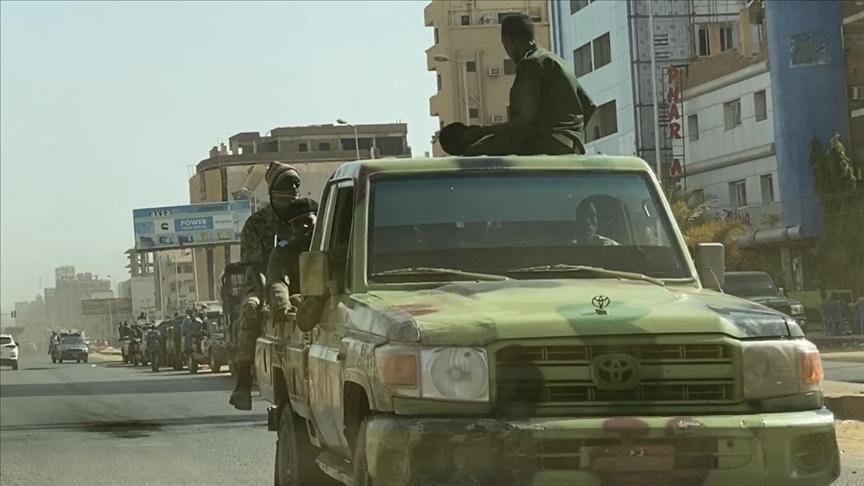
Under the emergency order, movement within towns across Sennar is prohibited between 10 p.m. and 4 a.m.
Vehicles transporting goods are barred from operating between 8 p.m. and 5 a.m., introducing additional restrictions on commercial movement in a state that serves as an important connection between central Sudan and the southeastern regions.
The order also prohibits the sale of tea, coffee and other hot beverages between 8 p.m. and 5 a.m. in public and private spaces, including markets, roadside establishments, squares, cafes and clubs.
Shisha establishments are subject to similar restrictions.
Exemptions apply to military personnel, security officers and judicial officials carrying out official duties, as well as authorised medical and emergency workers. Ambulances and vehicles responding to emergencies may also move during restricted hours when the purpose of their travel can be established.
Certain registered clubs are permitted to continue beverage services through their attached cafeterias.
The new order replaces an earlier emergency directive issued in 2025, while maintaining measures already implemented under that directive.
The restrictions signal heightened concern among SAF-aligned officials about the potential security consequences of the rapidly changing military situation in Blue Nile.
They also introduce new pressures on traders, transport operators and residents already navigating the economic disruption caused by Sudan’s prolonged war.
SAF-allied mobilisation intensifies
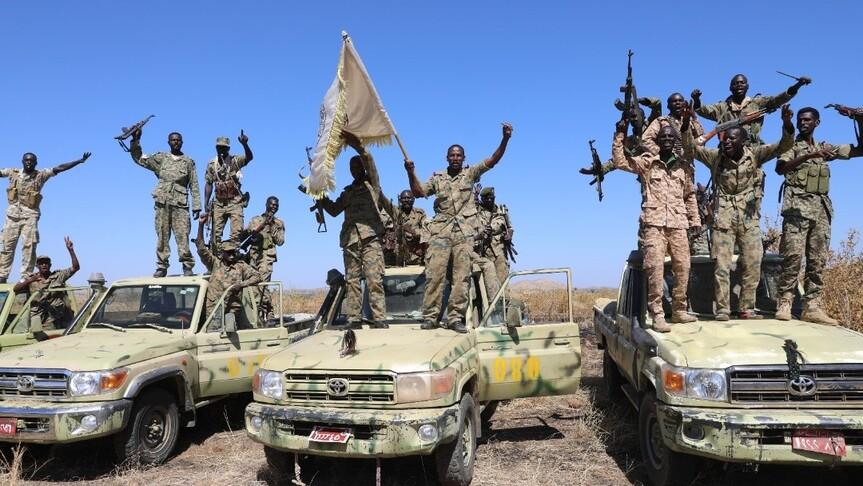
Alongside the curfew, the Popular Mobilisation and Resistance Committee in East Sennar staged a military-style display on Saturday, bringing together local officials, military representatives, security personnel, traditional leaders and civilian mobilisation groups.
The event was followed by an emergency meeting focused on security developments, logistical requirements and coordination with SAF forces.
East Sennar Executive Director Al-Amin Youssef Al-Amin, who also heads the locality’s security committee, attended alongside retired police Major General Suleiman Abdullah Elias, chairman of the local mobilisation committee.
Army representative Lieutenant Colonel Mutasim Bashir and local intelligence official Major Al-Hadi Al-Malih also participated.
The display featured organised formations intended to demonstrate the readiness and morale of the groups supporting the army.
During subsequent discussions, participants examined ways to reinforce military positions, coordinate support and protect areas regarded as vulnerable to further instability.
Local officials pledged continued backing for mobilisation efforts, while army and security representatives expressed their commitment to defending the state.
The mobilisation is significant because it comes as the SAF government faces growing military pressure in neighbouring Blue Nile, where TASIS has announced successive territorial gains.
While the deployment of these mobilisation groups into active combat has not been independently established, their public display reflects the expanding security preparations taking place outside the immediate conflict zone.
TASIS gains reshape the security picture
The developments in Sennar follow a series of operations by TASIS forces across Blue Nile, where the alliance has reported capturing military positions, administrative centres and settlements previously held by SAF government forces.
Among the locations claimed by TASIS are Khor Mak, Singa Nabag, Al-Taqa, Al-Madina 10 and Al-Madina 11.
The latest advances follow earlier announcements concerning Bau locality headquarters and other positions in the region.
TASIS commanders have presented the offensive as part of a broader effort to dismantle SAF government’s remaining military positions in southeastern Sudan.
The alliance has also reported the convergence of its eastern and western operational fronts, a development that could strengthen coordination between formations advancing through different parts of Blue Nile.
Not all territorial claims can be independently verified, and the precise location of the front lines remains subject to competing accounts.
Nevertheless, the speed of the reported advances has prompted visible security responses from SAF-aligned administrations.
In Sennar, those responses now extend to civilian movement, commercial transport and the mobilisation of local armed supporters.
SAF government insists it retains control
Officials aligned with the SAF government have rejected suggestions that the army is losing control of the wider Blue Nile region.
Blue Nile government spokesman Saif al-Nasr Min Allah Mahmoud said the army retained the initiative and was working to restore security in the southern part of the state.
He acknowledged public anxiety over the fighting but accused TASIS forces of spreading misleading information about battlefield developments.
SAF-aligned officials have also described some territorial losses and withdrawals as tactical repositioning rather than evidence of an approaching military collapse.
Their reassurances contrast with the heightened security preparations being implemented in neighbouring Sennar.
The restrictions do not establish that TASIS forces are preparing an imminent attack on Sennar. They do, however, demonstrate that officials are responding to the possibility of further instability as the Blue Nile campaign develops.
Civilian fears deepen around Ed Damazin
The fighting has also generated growing concern among residents of Ed Damazin, where families are confronting uncertainty over whether the conflict will reach the city.
Residents interviewed by Radio Tamazuj described an increasingly difficult security environment, with some families leaving while others remained because they lacked the financial means to relocate.
Civil society representatives have called for clearer official information, stronger civilian protection measures and preparations for additional displacement.
Ed Damazin remains a strategically important administrative and military centre, while nearby Roseires is home to critical infrastructure, including a major dam.
The prospect of fighting spreading toward these locations has increased the significance of the ongoing offensive.
For civilians, the consequences are already being felt through displacement concerns, uncertainty over transport routes and tighter security restrictions.
A widening challenge for SAF
The security response in Sennar highlights the broader strategic implications of the TASIS campaign.
The alliance’s Blue Nile offensive has opened another area of intense pressure on the SAF government, whose forces are also engaged in fighting across Kordofan and other contested regions.
Sennar’s position between Blue Nile and central Sudan makes developments there particularly important for understanding how the conflict could evolve.
For now, the curfew and mobilisation measures constitute a defensive response to the deteriorating security environment rather than evidence that fighting has reached Sennar itself.
But the contrast is increasingly difficult to ignore: while SAF-aligned officials continue to insist that the military initiative remains in their hands, neighbouring administrations are introducing emergency restrictions and rallying local armed supporters as TASIS advances.
Whether the alliance can sustain its offensive toward Ed Damazin remains uncertain.
What is already evident is that the Blue Nile campaign is producing consequences well beyond the areas where TASIS fighters have reported their latest victories.