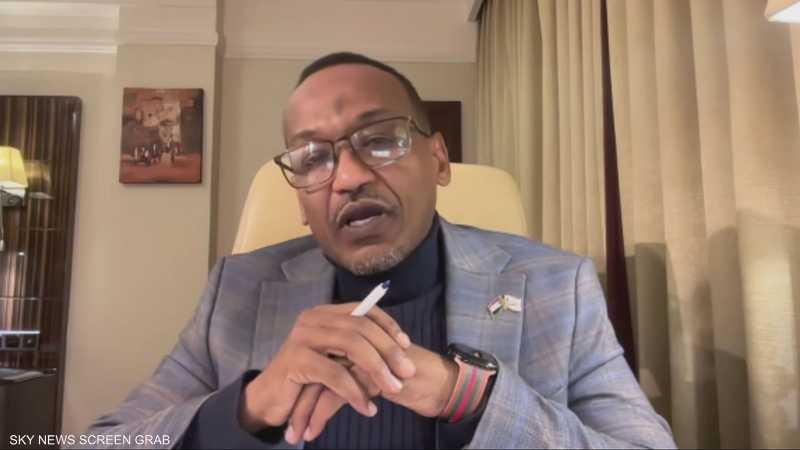
Alaa al-Din Naqd, spokesperson for the Sudan Founding Alliance (TASIS), said the group strongly supports the suspension of military operations and the ceasefire announced in the Middle East, describing it as a potential step toward a broader and lasting de-escalation.
Speaking to Al-Rakoba, Naqd said TASIS has consistently called for an end to war both in Sudan and across the region, stressing that any halt in hostilities — if built upon — could pave the way for a permanent ceasefire.
Naqd criticized what he described as Iran’s “aggressive behavior,” saying it extended beyond Gulf states during the conflict despite prior assurances from those countries that their airspace would not be used for attacks on Iran. He noted that some states, including Oman, had instead played mediation roles between Washington and Tehran.
He added that Iran’s influence also operates through allied groups across the region, citing its backing of Hezbollah in Lebanon, the Houthis in Yemen, and various factions in Iraq, which he said contribute to instability.
Turning to Sudan, Naqd alleged that Tehran provides military support, protection, training and advisory assistance to General al-Burhan’s army (SAF), as well as to the Al-Bara bin Malik Brigade and affiliated militias, accusing Iran of prolonging the war and supplying drones and advanced military technology.
He said recent developments in the Middle East highlight what he described as a broader alignment between hardline actors and political Islamist movements, arguing that ideological differences between Sunni and Shia factions have become secondary to shared methods and objectives.
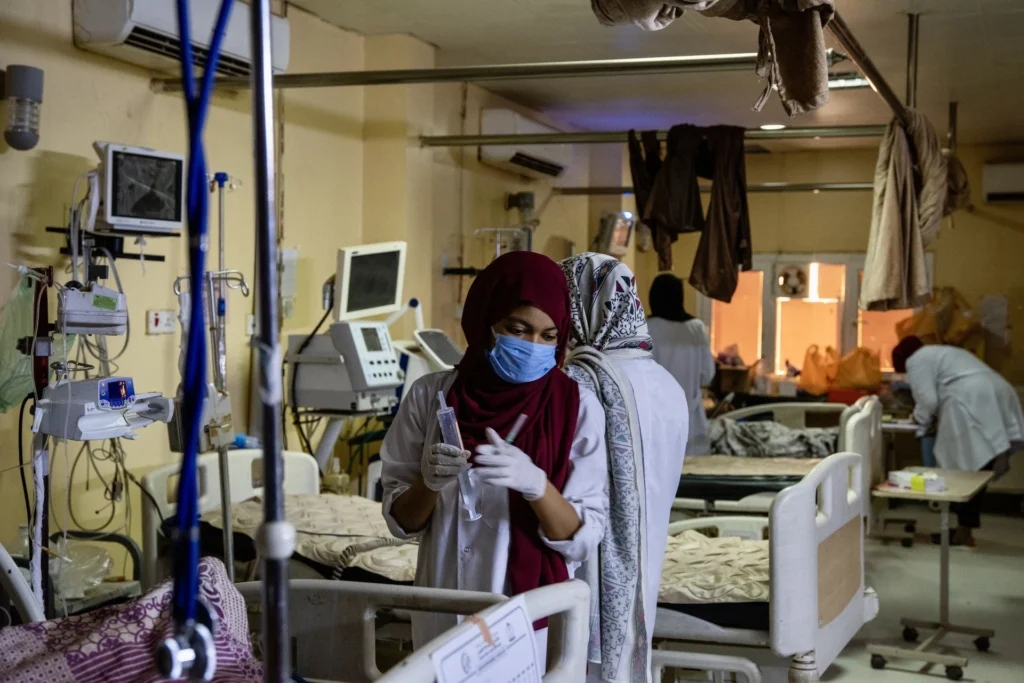
Naqd further accused Iran of escalating the cost of war by targeting civilian infrastructure across the region, drawing parallels with actions he attributed to General al-Burhan’s SAF in Sudan, including strikes in residential areas and attacks on hospitals such as those in Al-Daein and Al-Mujlad.
He argued that both sides justify their actions using religious rhetoric, claiming to act as “armies of God,” and accused them of exploiting religion for political gain and survival in power.
Naqd concluded that the ongoing conflicts have exposed what he described as the misuse of religion by political Islamist movements, saying the primary victims of such practices are both Islam itself and Muslim populations.