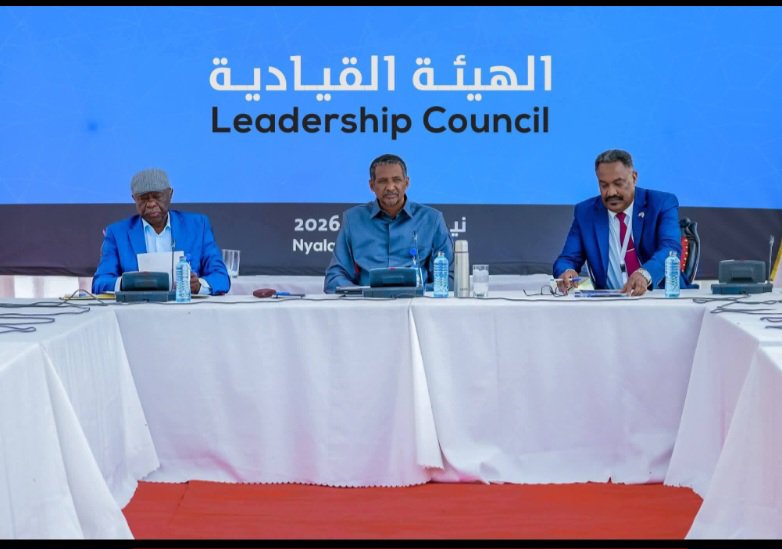
The Leadership Council of the Founding Alliance, Tasis, has concluded several days of meetings in the city of Nyala.
The Alliance led by Mohamed Hamdan Dagalo has announced a new phase of political and military activity, saying it is moving towards what it describes as “complete liberation” and the rebuilding of the Sudanese state.
The statement came after several days of meetings in Nyala, where the group signalled a more structured and accelerated push in both its political and organisational efforts.
Dagalo said the movement is advancing, as he put it, “with unwavering force” to reshape Sudan on new foundations of governance and authority.
He outlined a vision built on equal citizenship, a federal system, and what he described as a fair distribution of power and wealth across the country.
The alliance also pledged to establish a unified national army, alongside security institutions it says would be free from extremism, and a civil service detached from political influence. Leaders framed these proposals as central to what they call a transition toward a “new Sudan” emerging from years of conflict.
Dagalo further called for continued mobilisation and operations until, in his words, Sudan is cleared of “terrorist groups”.
Observers say the initiative reflects an attempt to combine military and political strategies at a time when Sudan remains deeply fragmented and politically unstable.
Abdulaziz Adam Al-Hilu, deputy head of the leadership body, said steps had already been taken towards building structures for what he termed a “peace government”. He described recent organisational moves as progress towards forming a more coherent political framework.
According to the Alliance, internal regulations were approved during the meetings, alongside the creation of specialised committees aimed at improving coordination and institutional performance.
An executive committee was also established, with appointments made for an official spokesperson and deputies.
The group says work will continue to complete the institutional structure of the proposed “peace government” and expand its administrative presence.
Nyala, where the meetings took place, has increasingly become a focal point for the alliance’s political coordination and messaging.
Despite the momentum, major challenges remain, with Sudan’s fractured power landscape and competing political visions continuing to shape an uncertain and volatile national outlook.