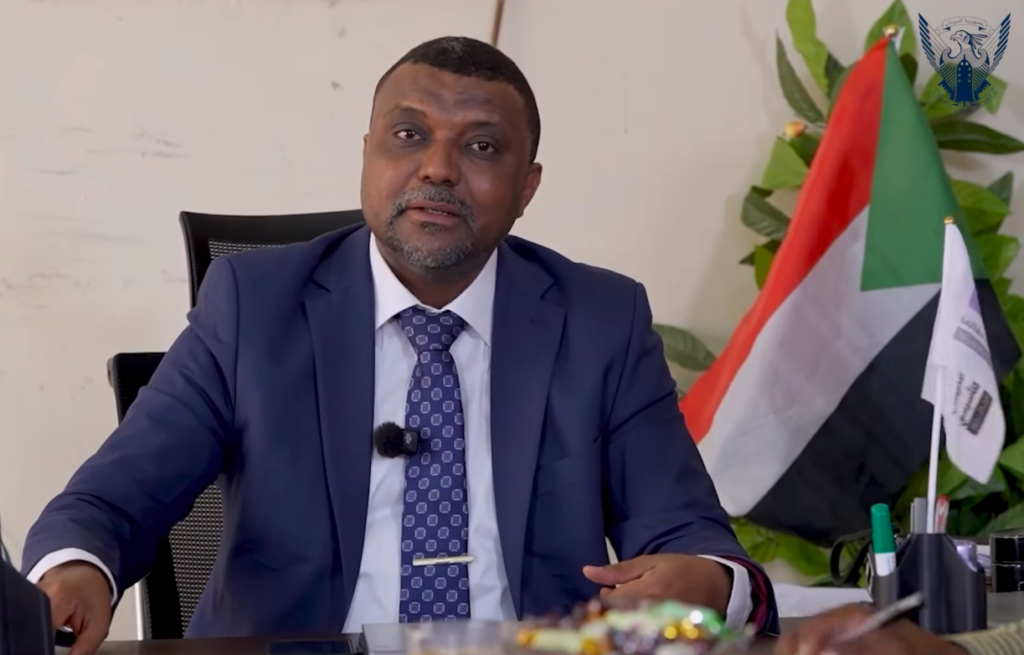
A senior figure in the Sudan Founding Alliance (TASIS) has warned that recent statements by Islamist leaders advocating “lethal force” could signal a dangerous escalation in Sudan’s war, including the potential use of internationally banned weapons.
Hasab al-Nabi Mahmoud, a member of TASIS’ leadership body, said the remarks — widely interpreted as calls for the use of chemical weapons — come at a highly sensitive moment, as General al-Burhan’s army rejects ceasefire efforts and appears to be shifting decisively toward a military solution.
Mahmoud said the rhetoric raises fears the conflict could spiral into a more violent and indiscriminate phase, particularly as fighting intensifies across multiple regions.
Appointment seen as Islamist victory inside SAF
Mahmoud described the appointment of Yasser al-Atta as chief of staff as a major boost for the Islamic Movement within the military.
He said Atta’s alignment with Islamist positions since the outbreak of war suggests the SAF may adopt more hardline military options, noting that Atta himself has previously hinted at the use of “lethal force.”
The move, he added, links recent command changes directly to an escalation in rhetoric favoring a decisive military outcome over political negotiations.
Fears of war crimes and civilian targeting
Mahmoud warned that calls for the use of chemical weapons or other forms of mass destruction represent a direct threat to civilians and could amount to war crimes requiring urgent international action.
He said such statements are part of a broader pattern of escalation, pointing to widespread violence reported in Darfur, Kordofan, and Blue Nile, where civilians have faced attacks involving heavy and destructive weaponry.
Risk of repeating Darfur atrocities
He cautioned that Sudan’s past — particularly the mass atrocities in Darfur — serves as a warning of what could unfold again if the current trajectory continues.
Mahmoud said the re-emergence of figures and factions linked to the former Islamist regime increases the likelihood of renewed large-scale abuses, especially in the absence of a viable political process.
Limited public support for war mobilisation
He also noted that calls for so-called “popular resistance” have failed to gain significant traction among Sudanese civilians, reflecting widespread fatigue with the war and rejection of agendas tied to the former regime.
According to Mahmoud, the lack of public backing may be pushing these factions toward more extreme measures in an attempt to impose new realities on the ground despite the humanitarian cost.
Power struggle risks fragmenting Sudan
Mahmoud argued that the current escalation reflects a struggle for power rather than an effort to preserve the state, warning that some actors may be willing to divide or destroy the country in order to return to authority.
He said continued military escalation threatens Sudan’s unity and undermines any prospects for a democratic transition.
Call for urgent international intervention
Mahmoud called for serious regional and international intervention to halt the escalation, warning that failure to act could lead to another humanitarian catastrophe.
He urged the international community to treat the recent statements as credible warning signs of potential large-scale crimes unless political and diplomatic pressure is applied swiftly.