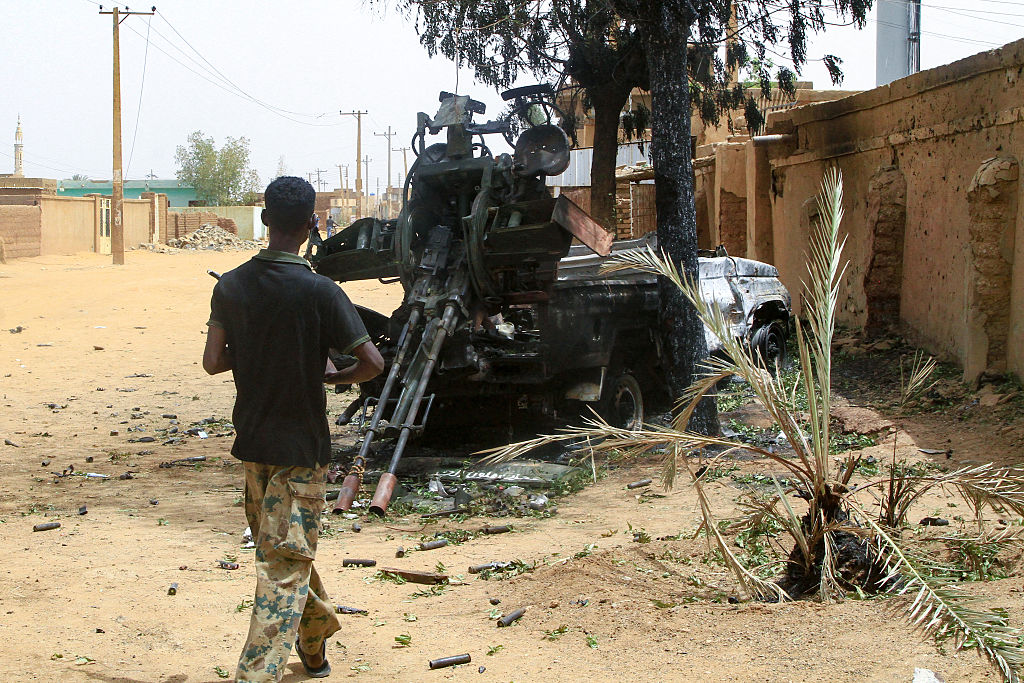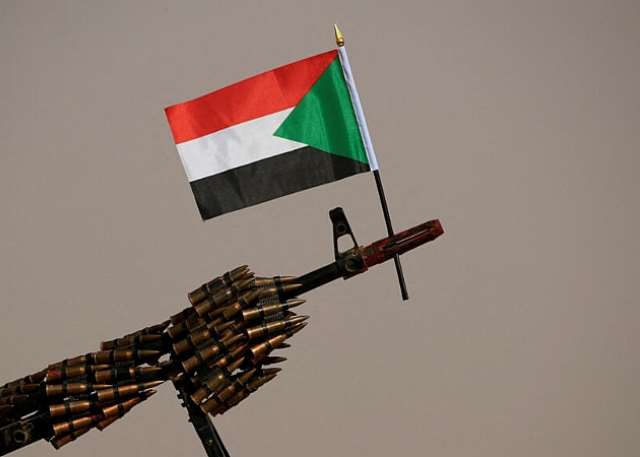
Sudan’s war is no longer shaped solely by battlefield decisions or military command rooms. Increasingly, it is driven by intertwined networks of influence, money, and ideological loyalty, revealing a darker reality in which decisions of war and peace are no longer controlled by the state, nor even by SAF itself.
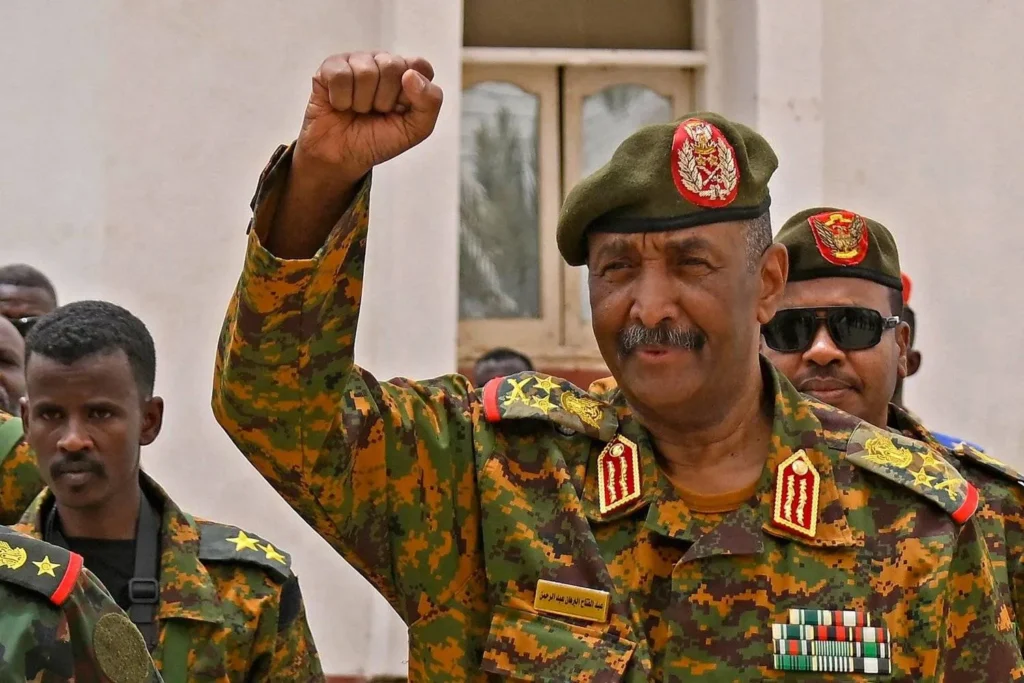
Behind the uncompromising rhetoric of Abdel Fattah al Burhan stands a complex system of Islamist, security, and war economy interests that view the continuation of conflict as a guarantee of survival. For these actors, peace represents an existential threat to power centres that have accumulated wealth and authority on the ruins of an exhausted state.
According to earlier statements by Orwa Al Sadiq, a senior figure in the National Umma Party and a member of the “Somoud” alliance, Burhan is no longer the sole decision maker on issues of war and peace. Instead, he operates within limits imposed by Islamist aligned officers and security circles that dominate military, financial, and strategic choices.
Al Sadiq argues that Burhan’s rejection of peace reflects internal pressure from a ruling network embedded within the military institution itself. This network, composed of Islamist loyalist officers and security bodies controlling funding and direction, is closely tied to what is described as Sudan’s war economy, including gold smuggling, illegal levies, supply chains that thrive on chaos, and commercial interests that only function in the absence of the state.
Key figures shaping the war
Ibrahim Jaber, often described as the army’s economic manager, serves as assistant commander of SAF and a member of the Sovereignty Council. A naval engineer by training, he oversees economic files within both the military and the state, having chaired the council’s economic committee since 2019.
Yasser Al Atta, Burhan’s principal military enforcer, plays a central role in troop movements, appointments, and internal hierarchies. A Sovereignty Council member and assistant commander of SAF, he has repeatedly rejected any ceasefire or negotiations, declaring that the war would continue until total surrender, even if it lasted a hundred years. Critics view him as Burhan’s political instrument within the military, and a potential successor.
Shams El Din Kabbashi, appointed deputy commander in May 2023, represents the political face of SAF. Rising through the ranks to lieutenant general in 2020, he has held multiple command and academic positions and became a Sovereignty Council member after the 2021 power grab.
Omar Zain Al Abideen, a senior general, is described as a key liaison between the Islamist movement and its officers within SAF.
Mirghani Idris, once a core pillar of the Bashir regime, is now a close adviser to Burhan, transferring his full political and administrative machinery to the current leadership.
Islamist political and military influence
Among civilian aligned figures, Jibril Ibrahim, Sudan’s finance minister and leader of the Justice and Equality Movement, plays a significant role. His movement has contributed thousands of fighters to the war, contributing to widespread destruction and displacement. He has also faced international sanctions for his role in sustaining the conflict.
Ahmed Haroun, a senior Islamist figure wanted by the International Criminal Court for alleged war crimes in Darfur, re emerged following his escape from prison and publicly declared support for SAF. His long record includes accusations of mass displacement, violence against civilians, and direct involvement in militia mobilisation.
Al Bara’ bin Malik Battalion
The Al Bara’ bin Malik Battalion, described as the Muslim Brotherhood’s military arm, has emerged as a powerful force within SAF aligned ranks. Originally part of the Popular Defence Forces during the 1990s, it reactivated following the outbreak of the war, recruiting thousands of fighters and exerting growing influence over battlefield decisions.
According to security sources, its core mission is to block any settlement that could restore revolutionary civilian forces to governance, prevent independent foreign policy realignments, and ensure the continuation of war regardless of humanitarian consequences. Statements attributed to its leadership openly reference external ideological alliances and ambitions extending beyond Sudan.
The Burhan family and the gold sector
Investigations have also highlighted the extensive influence of the Burhan family over Sudan’s gold sector, which accounts for roughly half of the country’s exports. Reports indicate that Burhan’s brother, Hassan al Burhan, manages mining interests linked to the commander in chief, reinforcing claims that the Port Sudan based authority functions largely as a façade for organised extraction by family networks and Islamist elites.
Political activists have cited incidents involving large cash seizures linked to family members, later released without accountability, as evidence of entrenched financial immunity.
Military industrial complex
Economic experts familiar with Sudan’s mining sector report that SAF, through its Defence Industries System, controls more than 300 commercial and industrial companies spanning mining, construction, food production, pharmaceuticals, banking, telecommunications, and aviation. Annual revenues are estimated to exceed two billion dollars, placing this structure among the most powerful quasi sovereign economic entities in the country.
Ali Karti, sanctioned by the US Treasury and widely regarded as the current leader of Sudan’s Islamist movement, remains a pivotal figure. Former foreign minister and head of the Popular Defence Forces, he is accused of obstructing ceasefire efforts, undermining democratic transition, and amassing vast land and commercial assets. Critics describe him as a central architect of the strategy to prolong the war in order to preserve Islamist influence.
What emerges from this landscape is not a fragmented failure of governance, but a coherent system in which war has become an instrument of profit, ideological survival, and political control. In this system, humanitarian cost is collateral, peace is a threat, and the state itself is reduced to a shell, managed by networks that thrive on perpetual conflict.