Two Sudanese political parties have rejected army chief Abdel Fattah al-Burhan’s proposed Sudanese-Sudanese dialogue in its current form, saying any credible political process must be preceded by an end to the war and conducted under neutral conditions.
The National Umma Party and the Umma Party said in a joint statement that talks held while fighting continues, and while the country remains divided between rival military-controlled areas, risk reflecting battlefield realities rather than producing a genuine national settlement.
The parties said Sudan needs a broad, foundational political process aimed first at ending the war, preserving the country’s unity and establishing a civilian democratic transition.
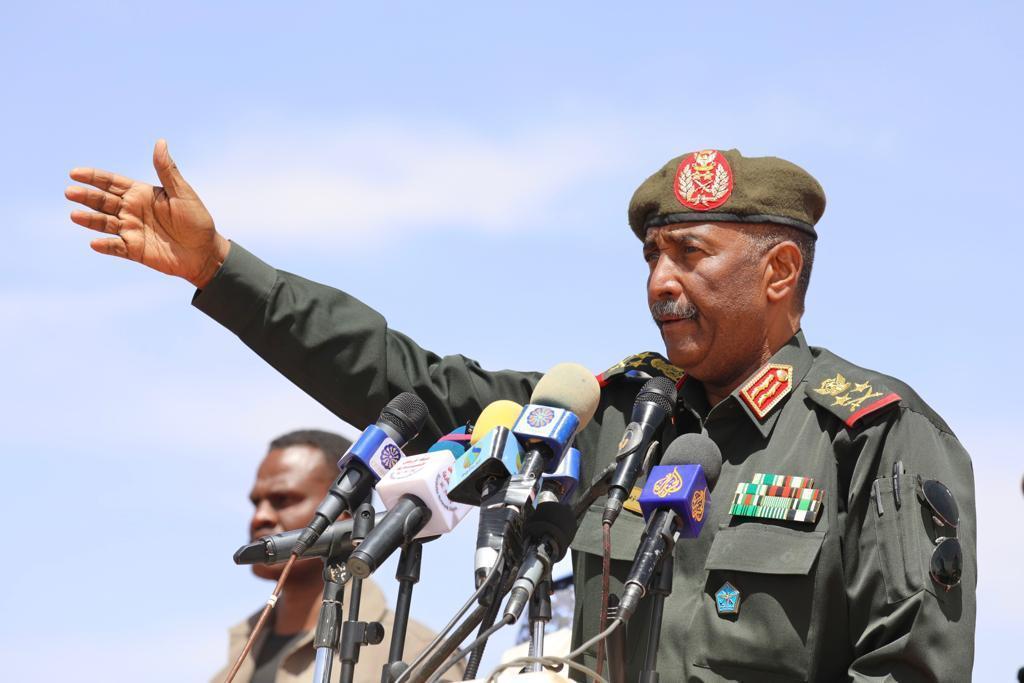
Burhan, chairman of the Sovereignty Council and commander of the Sudanese Armed Forces, called on August 15 for an inclusive dialogue to be held inside Sudan. He said the process would discuss completing state institutions, including the formation of a legislative council, and promised legal, political, security and logistical guarantees for participants.
He also said the authorities would not interfere in the dialogue’s agenda or final outcomes.
The two parties, however, argued that a nationwide ceasefire must come first, warning that conducting political talks alongside continued military operations could give the war political cover and allow warring parties to use negotiations to buy time or alter the balance of power.
They said Sudan’s military and territorial fragmentation makes an inclusive domestic dialogue difficult, noting that millions of Sudanese now live outside areas controlled by the Port Sudan authorities, including displaced people, refugees, political groups, civil society organisations and armed movements.
The parties said assurances that the state would not directly organise the talks were insufficient to guarantee their independence. They called for a neutral sponsor, freedom in selecting participants, an independently agreed agenda, a secure venue and clear mechanisms for decision-making and implementation.
They proposed holding the dialogue on a neutral and secure platform outside territories controlled by the warring parties, saying this would provide the best chance for equal participation.
The statement also argued that dropping criminal complaints or legal procedures against participants would not, by itself, create a suitable political environment. The parties called for an end to the fighting, an end to security-service interference in political activity, and permanent guarantees for freedom of expression, political organisation and legal protection.
They said any future national dialogue should address ending the war and humanitarian crisis, preserving Sudan’s sovereignty and territorial integrity, rebuilding a single professional national army removed from politics and commercial activity, and forming an independent civilian transitional authority.
Other priorities, they said, should include adopting a transitional constitution, pursuing reconciliation and transitional justice, compensating victims, creating conditions for the safe return of displaced people and refugees, rebuilding the country and eventually holding free and fair elections.
The parties also rejected any political process that would legitimise the order created by the war or reproduce what they described as the authoritarian structures that emerged after the October 25, 2021 military takeover.
At the same time, they said no political current with genuine social support should be excluded, provided it accepts democracy, Sudan’s unity, the rejection of war and violence, and the peaceful transfer of power.
They backed regional and international efforts to facilitate — rather than dominate — Sudan’s political process, saying outside actors should help provide a balanced and secure platform capable of ensuring broad and equal participation.
Burhan’s initiative followed consultations with political, civil society, youth, community and religious figures over arrangements for launching the dialogue.
The proposal has divided Sudanese political forces. The Democratic Bloc has welcomed the initiative as a possible route toward a comprehensive political settlement, while civilian alliances including Sumoud have rejected holding talks inside Sudan while the war continues, warning that such a process could legitimise the existing authorities.
Other civilian groups have also criticised the timing and conditions surrounding the initiative, insisting that ending the war must precede any meaningful political process.