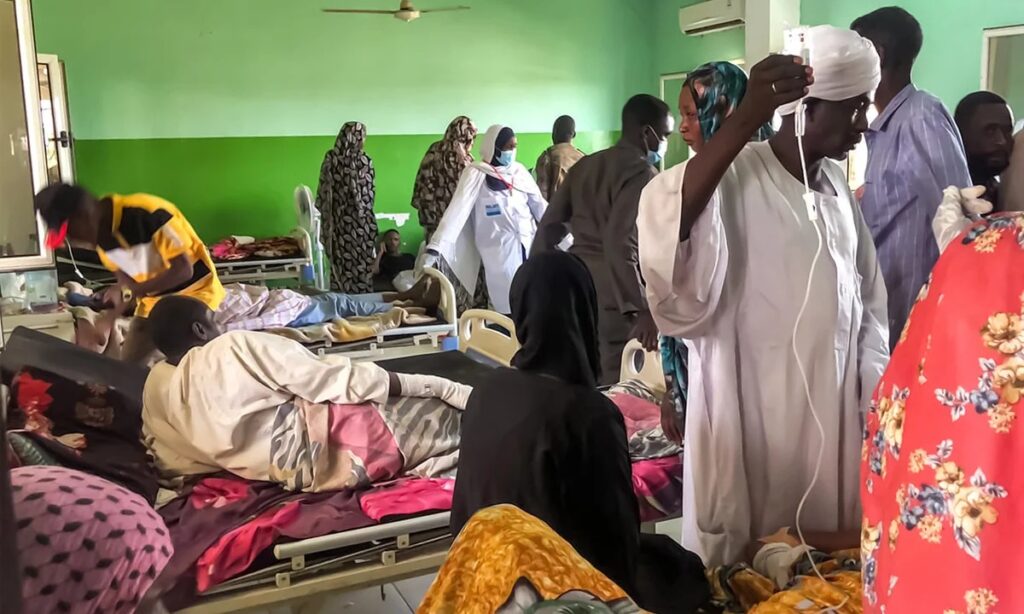
Sudan is approaching a comprehensive collapse of its health system as war, hunger, and disease converge into one of the world’s most severe humanitarian crises, according to a stark warning issued by the World Health Organization.
The UN agency said the country’s health sector is under unprecedented strain, with widespread outbreaks of cholera, malaria, dengue fever, measles, and polio, alongside soaring levels of malnutrition. Sudan is also facing one of the largest food insecurity crises globally, with millions at risk.
The organization said attacks on healthcare facilities in Sudan have resulted in the highest number of deaths globally linked to violence against medical services, in what it described as a clear violation of international humanitarian law. It urged the international community not to look away, warning that continued fighting is endangering millions of civilians and undermining any chance of recovery without sufficient funding and safe humanitarian access.
Speaking in a video interview, WHO’s representative in Sudan, Dr Shible Sahbani, said the conflict that erupted in April 2023 has evolved into a multi layered humanitarian catastrophe encompassing civilian protection, mass displacement, famine, and a nationwide health emergency.
He said Sudan is grappling with multiple disease outbreaks, rising non communicable illnesses, and urgent maternal health needs, while health facilities face armed attacks, medicine shortages, limited access, and shrinking human and financial resources. Many hospitals and clinics have already ceased operations.
Cholera has been reported in 18 states, with more than 123,000 infections and 3,500 deaths. Dengue fever cases have surpassed 53,000, causing 145 deaths across 14 states, while malaria infections have exceeded 1.4 million in 16 states, with high transmission rates. Climate conditions, the WHO said, are further fuelling the spread of mosquito borne diseases.
Measles and polio outbreaks continue in several states due to falling vaccination coverage, leaving children increasingly vulnerable. At the same time, Sudan is facing extreme levels of malnutrition. More than 21 million people are experiencing acute food insecurity, with 45% of the population suffering from severe hunger levels under the integrated food security classification.
Acute malnutrition affects 13.6% of the population, with children under five and pregnant or breastfeeding women at greatest risk. Around 4.9 million people require urgent nutritional intervention, and an estimated 800,000 children are expected to suffer from severe acute malnutrition during 2025.
The WHO said more than 40,000 children with severe acute malnutrition were admitted to treatment centres this year alone, while health needs continue to rise faster than access to care.
Eastern Sudan is facing intense pressure on health services due to large inflows of displaced people, while Kordofan and Darfur remain in critical need because of ongoing fighting. Central states, meanwhile, require early recovery plans to stabilise basic services.
Since the war began, the WHO has delivered 3,000 metric tonnes of medical supplies worth $33.3 million, along with an additional 790 tonnes through cross border operations during 2025. It is providing direct operational support to hospitals, primary healthcare centres, mobile clinics, and malnutrition treatment facilities amid salary disruptions, fuel shortages, and widespread electricity outages.
However, funding remains dangerously inadequate. Only 36% of Sudan’s 2025 humanitarian response plan has been financed so far. The health sector has received just 47.7% of required funding, while the WHO itself has secured only 40% of its needs.
The organization has documented 201 attacks on healthcare since the start of the war, resulting in 1,858 deaths among health workers, patients, and their relatives. In 2025 alone, 65 attacks killed 1,620 people, accounting for more than 80% of global deaths caused by assaults on medical facilities this year.
The WHO stressed that respect for international humanitarian law is urgently needed and that peace remains the only path to rebuilding Sudan’s shattered health system.
It concluded with an appeal to the international community not to forget Sudan, warning that health needs are escalating as the conflict drags on, and that the country must remain a global humanitarian priority to protect civilians, secure funding, ensure safe access, and deliver life saving services.