The United States and 30 other countries have warned of a worsening hunger crisis in Sudan, calling for urgent international intervention to prevent famine and demanding that the country’s warring parties remove restrictions on humanitarian assistance.
In a joint statement released by the US State Department on Monday, the signatories, including Britain, France, Germany, Canada and Australia, expressed alarm over deteriorating food security and urged immediate measures to protect millions of vulnerable civilians.
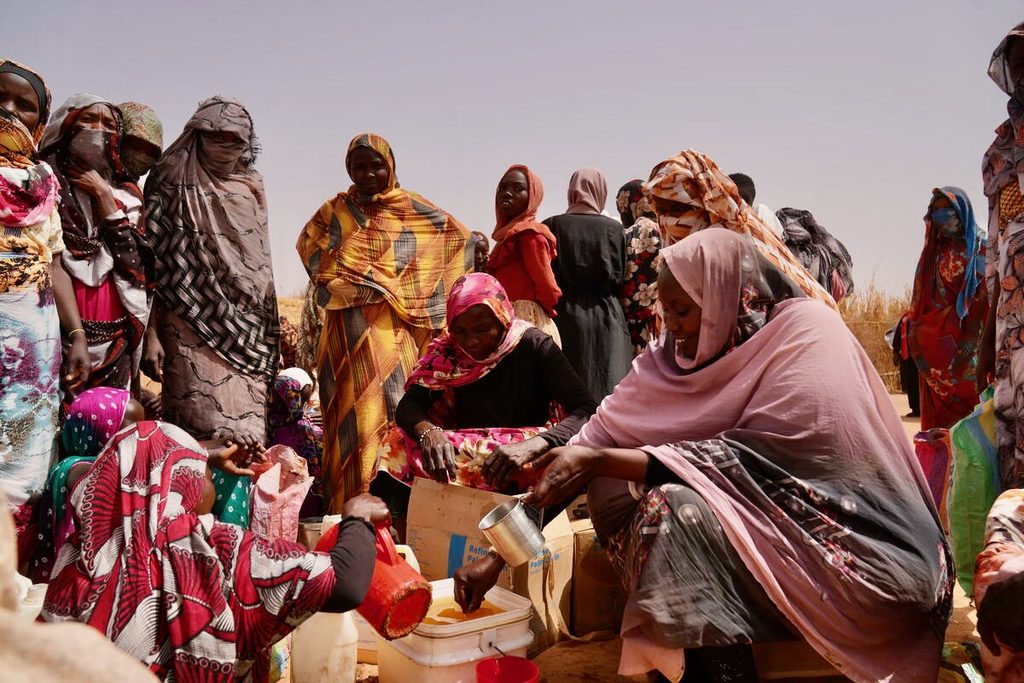
The statement warned that approximately 19.5 million people, representing 41 percent of Sudan’s population, are experiencing acute food insecurity, including five million facing emergency levels of hunger.
It also cautioned that the number of children suffering from severe acute malnutrition could exceed the projected 825,000 unless urgent measures are taken.
The governments cited warnings from the Integrated Food Security Phase Classification (IPC), a United Nations-backed hunger monitoring system, that famine could spread across additional parts of Sudan in the coming months.
The signatories placed responsibility for alleviating civilian suffering on the parties involved in Sudan’s conflict, urging them to guarantee safe and unrestricted access for humanitarian organisations.
They specifically called for the reopening of humanitarian routes across front lines and international borders, including air access to Darfur, to accelerate the delivery of emergency supplies and facilitate medical evacuations.
The statement also demanded greater protection for humanitarian personnel, fewer bureaucratic restrictions on aid operations and an end to attacks on civilian infrastructure, particularly agricultural facilities and food supply systems.
The countries urged international donors to increase humanitarian funding and called on development and financial institutions to adjust their programmes to address Sudan’s escalating food emergency.
Sudan’s humanitarian crisis has deepened since fighting erupted between the Sudanese army and the Rapid Support Forces (RSF) in April 2023.
The conflict has displaced millions, devastated agricultural production, disrupted commercial supply chains and severely weakened essential services, leaving large sections of the population dependent on humanitarian assistance.
Food insecurity has been compounded by severe drought linked to the El Niño weather phenomenon, which has affected approximately half the country, reducing agricultural output and driving up food prices.
An IPC alert issued earlier this month warned of an increasing risk of famine in parts of Darfur and Kordofan, where displacement, prolonged fighting and inadequate humanitarian funding have pushed communities towards catastrophic conditions.
The latest appeal comes amid continuing international efforts to secure a humanitarian truce and a negotiated settlement to Sudan’s conflict.
In September, Washington said neither the Sudanese army nor the RSF, nor their respective leaders, represented legitimate constitutional governance for Sudan, reiterating its support for a civilian-led political transition.
The joint statement stressed the urgency of preventing further deterioration, calling for increased support for agricultural production, locally led relief initiatives and humanitarian operations across the country.
The signatories warned that further delays in delivering assistance could leave millions exposed to worsening hunger and malnutrition.