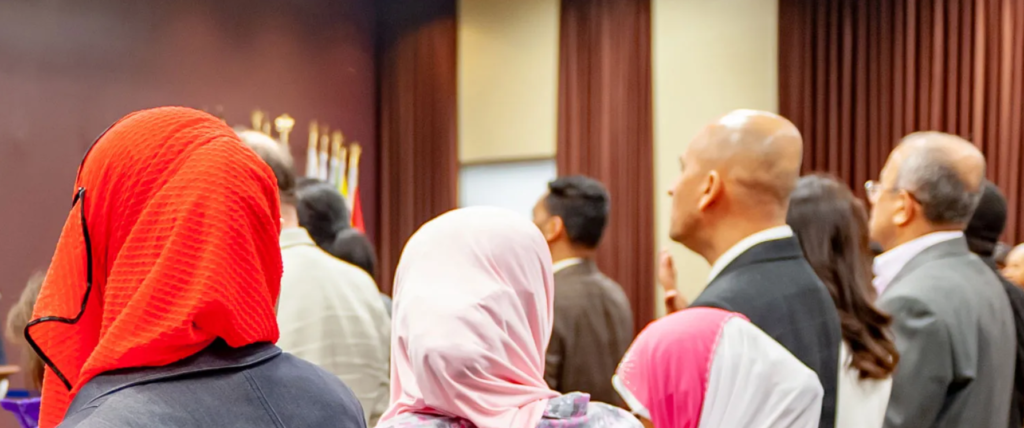
US authorities in Boston took the unprecedented step of removing several Sudanese migrants from the queue minutes before they were due to take the oath of citizenship, despite all their applications having already been fully approved. The sudden intervention caused confusion among attendees, disrupting what was supposed to be a celebratory moment marking years of waiting and strict compliance with US immigration rules.
The Arab American community in the US said the decision was based on directives from US Citizenship and Immigration Services (USCIS) ordering a halt to all immigration and naturalisation procedures for nationals of 19 countries classified as “high-risk” by President Donald Trump’s administration under the pretext of strengthening national security. The list includes Afghanistan, Somalia, Sudan, Yemen, Libya, Iran, Cuba, Venezuela, Haiti, Chad, Myanmar, Eritrea and others, making the suspension broad and affecting large segments of migrants.
Rights groups said many of those affected did not receive prior notice that their cases had been cancelled. They arrived for the ceremony as usual, only to be asked to step out of line solely because of their nationality. Migrant-support organisations reported that many were left shocked and devastated, questioning why such a measure would be taken after years of fulfilling all legal requirements. What should have been a moment of celebration instead became a psychologically distressing experience.
The US Department of Homeland Security defended the decision, saying it was part of stricter security vetting and emphasising that citizenship is a “privilege, not an entitlement.” The statement reflects the administration’s approach of linking immigration and naturalisation processes directly to national security concerns.
The incident triggered widespread criticism from human rights organisations, which described the move as a form of collective punishment and discriminatory treatment of people who had fully met the legal criteria for citizenship. These groups argued that the decision violates principles of fairness and equality and places affected migrants under additional emotional and social strain as they try to integrate into American society.