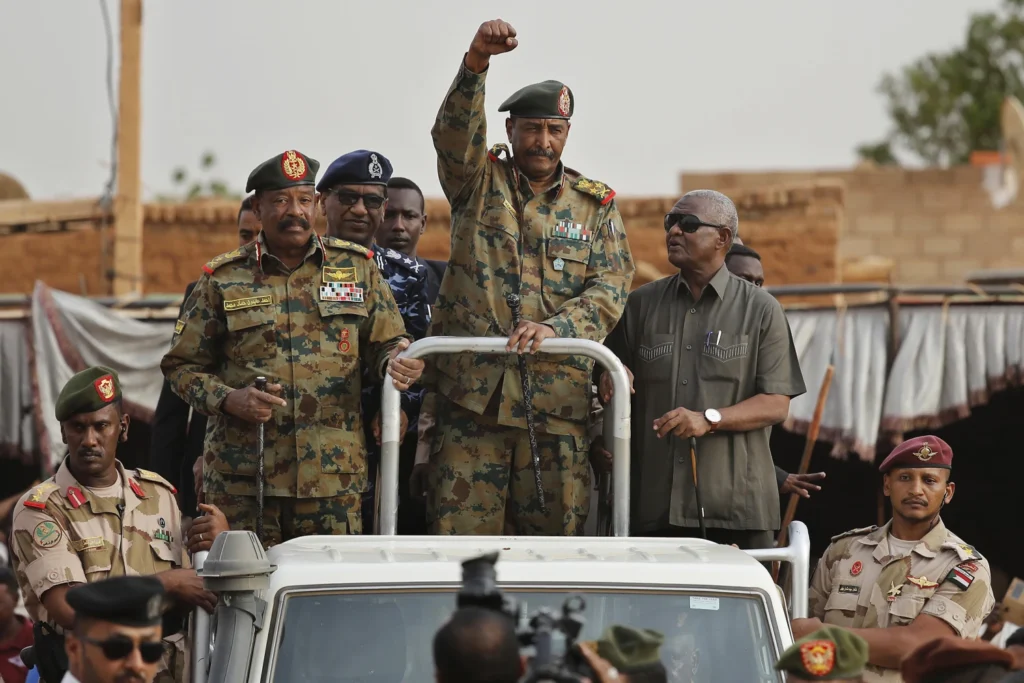
A decision by the U.S. administration under President Donald Trump to tighten measures against branches of the Muslim Brotherhood across several Arab countries is reshaping Washington’s approach to political Islam — with significant implications for Sudan’s military leadership.
A U.S. diplomatic source familiar with the decision told Irm News that discussions in Washington focused on cases where Brotherhood-linked currents are tied to military alliances that manage and prolong armed conflicts. According to the source, U.S. assessments have identified a direct overlap in Sudan between Islamist networks known locally as the “Kizan” and the military decision-making center based in Port Sudan, with tangible effects on the course of the war.
The source said the new U.S. criteria place any religious-ideological structure linked to armed activity under heightened political and financial scrutiny, with evaluations driven by battlefield realities and patterns of positioning within conflicts.
“In the Sudanese case, we have observed the Kizan moving into a position of real influence within the military decision-making apparatus, playing mobilization, media, and organizational roles that contribute to sustaining and prolonging the conflict,” the diplomat said.
The latest U.S. move opens the door to expanded scrutiny of financing and mediation networks linked to the Islamist current, while reshaping diplomatic engagement with any authority that relies on it. Washington, the source added, views such structures as a destabilizing factor for the region and is working to restrict their access to the international financial system.
Western capitals assessing Sudan say Islamist networks rebuilt their influence through security and economic channels after 2019, gaining increasing visibility amid the current war. This presence has been closely tied to what diplomats describe as a fragile military leadership operating from Port Sudan.
That relationship has evolved into a key driver of military decision-making, extending into state institutions and parallel economic structures. According to the U.S. source, this alliance bears the hallmarks of a “war state,” where military authority intersects with an ideological current experienced in managing the political economy of conflict.
“This model has become a source of concern in Washington, especially amid growing indicators that resources and regional mediation channels are being used to sustain the fighting,” the source said.
Islamist positioning inside the military decision structure
In Sudan, the Kizan represent a network of influence embedded in the state for three decades, which reconstituted itself after 2019 through security, economic, and military pathways. With the outbreak of war, the group shifted from a latent position to direct influence over decision-making, anchored in a functional alliance with Port Sudan’s authorities.
This positioning has effectively integrated the Kizan into the war apparatus, shaping it politically and sustaining it through mobilization, religious discourse, media activity, and recruitment networks.
U.S. assessments indicate that this alignment places Sudan’s military leadership on a collision course with Washington’s evolving policy toward political Islam. The diplomatic source warned that dependence on Islamist networks significantly constrains external maneuverability and complicates any effort to secure broad international support.
“Authorities that rely on armed religious-ideological alliances are increasingly unable to build trust-based channels with the United States and its partners,” the source said.
The U.S. crackdown on the Muslim Brotherhood places this alliance under mounting political pressure by redefining political Islam as a threat to regional stability and closing loopholes some regimes have used to portray themselves as acceptable partners despite reliance on Islamist networks.
In Sudan’s case, international actors no longer see a credible separation between the Kizan and the military leadership linked to them.
Constraining Burhan’s authority
Sudanese political sources told Irm News that the shift is already reflected in tighter informal diplomatic channels, increased financial oversight, and growing reservations toward any governance model anchored in this alliance.
“The practical outcome is the erosion of Port Sudan’s external maneuvering space and a declining ability to present itself as an indispensable actor in any political settlement,” the sources said.
They added that Sudan’s military leadership now faces a difficult test regarding its standing in the international system, as its organic ties to Islamist networks place direct political responsibility on it for the trajectory and continuation of the war.
“This association limits access to effective international support and reinforces perceptions of the current authority as part of the obstruction of political transition,” the sources said.
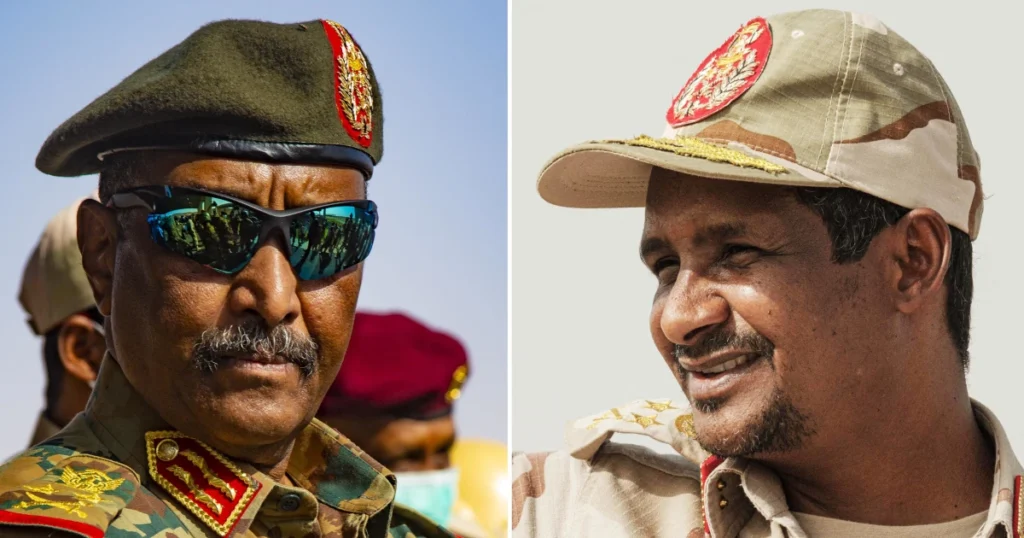
As a result, options are narrowing for SAF chief Abdel Fattah al-Burhan, amid growing pressure linked to sanctions, accountability, and calls to restructure the political process on civilian foundations independent of armed ideological currents.
Sudanese sources said messages reaching Port Sudan point to escalating political constraints and broad international reluctance toward any governance formula built on this alliance. “What once functioned as an internal power asset is now becoming a heavy external liability,” they said.
Domestic impact and growing isolation
Sudanese political analyst Abdel Rahman Fadlallah said Islamist networks treated the war from its earliest days as an opportunity to rebuild the influence they lost after the fall of Omar al-Bashir.
Speaking to Irm News, Fadlallah said Burhan has become the central pillar of an alliance that provides the Islamists with political protection while supplying the military leadership with mobilization and social-control tools.
This interdependence, he said, has obstructed any realistic path to ending the war, as continued fighting now serves entrenched interests within Sudan’s deep state.
According to Fadlallah, the U.S. crackdown strikes at the core of this arrangement, leaving Burhan unable to separate his military role from the networks that underpin his political position — exposing him to growing isolation and pressure.
U.S. analyst Thomas Redfield, who studies transnational political-Islam networks, said Washington now views the Muslim Brotherhood as an operational structure embedded within active conflicts. Sudan, he said, is increasingly seen through this lens.
“The Kizan are no longer treated as an adaptive political actor, but as a war-embedded influence network that benefits from the continuation of conflict,” Redfield told Irm News.
He added that U.S. decision-makers are particularly concerned about the group’s ability to turn military institutions into functional platforms by supplying ideological cover and recycling resources and loyalties.
Within this framework, Burhan is viewed as part of a broader operational system rather than a standalone military leader.
Redfield said Washington’s strategy now centers on gradually dismantling these networks through financial and political pressure, arguing that their survival means the survival of war as a governing mechanism.
“The next phase will likely see tighter constraints on any external engagement routed through Port Sudan,” he said, warning that U.S. officials increasingly view this model as a threat to the very concept of the Sudanese state, turning the country into an open arena of regional exhaustion and proxy competition.