Late last year, the United States issued an executive order mandating a review of certain branches of the Muslim Brotherhood ahead of a potential terrorist designation. The House Foreign Affairs Committee later approved the Muslim Brotherhood Terrorist Designation Act of 2025, which explicitly includes Sudan.
Separately, in September 2025, the US Treasury imposed sanctions on Sudanese Islamist figures and entities, including Jibril Ibrahim and the Al-Baraa bin Malik Brigade, accusing them of undermining peace efforts and cooperating with Iran’s Islamic Revolutionary Guard Corps.
The question is whether such a security designation is warranted in Sudan’s case, given the movement’s long record of fostering extremism and prolonging conflict.
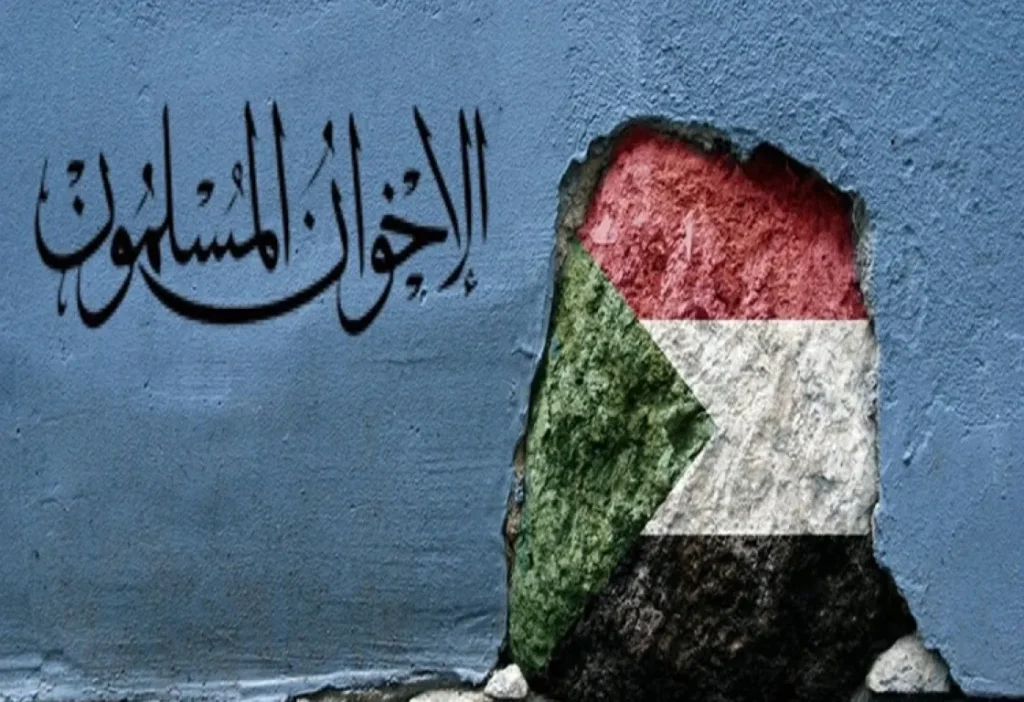
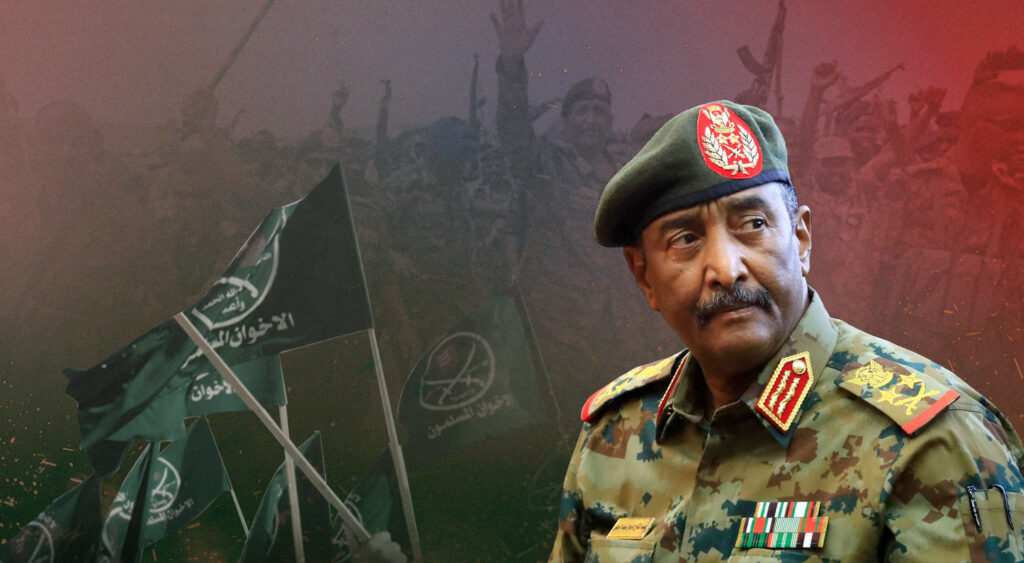
The Muslim Brotherhood has played a central role in Sudanese political life for decades. It was instrumental in bringing Omar al-Bashir to power in the 1989 coup. Its successor structures — including the National Congress Party and the Sudanese Islamic Movement — ruled Sudan for 30 years. After Bashir’s overthrow in 2019, the group quietly reorganized and aligned itself with Gen. Abdel Fattah al-Burhan’s army (SAF), becoming an ideological and organizational pillar of the current military establishment.
The Brotherhood is deeply embedded in the SAF’s current war effort. Since April 2023, networks linked to the movement have mobilized thousands of former intelligence officers and Islamist cadres to fight alongside General al-Burhan’s army (SAF). They have also organized ideologically aligned militias, including the Al-Baraa bin Malik Brigade.
Historically and contemporaneously, the Brotherhood’s links to militancy in Sudan are significant. During Islamist rule, Sudan hosted Osama bin Laden from 1991 to 1996, was connected to the 1998 US embassy bombings, and was associated with the 2000 USS Cole attack. The country remained on the US list of state sponsors of terrorism for nearly three decades.
Today, concerns persist over alleged links between Sudanese Islamist networks and Iran. Sudan has long served as a logistical corridor for Iranian weapons transfers to regional proxies. Reports have also indicated that Iran supplied the SAF with armed drones during the current conflict.
Several European countries have also raised concerns about the Brotherhood’s influence. Targeting its Sudanese branch may carry particular urgency, given its documented record of state-backed militancy, obstruction of democratic transitions, and active participation in the ongoing civil war.
The Somoud Alliance, led by former Prime Minister Abdalla Hamdok, has openly stated that peace in Sudan requires weakening, isolating, and holding accountable the Islamist movement.
Ideologically, the Brotherhood has been a foundational force behind political Islam in Sudan. It helped shape the institutional architecture of the Bashir era, including within the military and security apparatus.
Organizationally, networks affiliated with the movement and its veterans continue to wield influence within segments of the SAF, intelligence services, and allied militias. Politically, the group seeks to preserve — or restore — an Islamist-oriented state structure through its alignment with elements of the SAF.
The Muslim Brotherhood is not a marginal actor in Sudan. Its legacy and networks are deeply rooted within the military and trace back to the former regime. While it does not always operate under the explicit name “Muslim Brotherhood,” it functions through local fronts, former National Islamic Front and National Congress Party structures, and security institutions.
Against this backdrop, the US designation of the Sudanese branch of the Muslim Brotherhood can be viewed as justified and strategically calculated. Its entrenchment within the SAF’s military and security apparatus arguably prolongs the conflict and reduces incentives for negotiations.
Sudan’s crisis presents a significant counterterrorism challenge. As the US Treasury has noted, alliances between Sudanese Islamist actors and Iran pose potential risks to regional stability. The US State Department has also reported a “significant decline” in religious freedoms in Sudan since the 2023 war, including attacks on Christian communities allegedly linked to Islamist influence.
The remaining question is whether other actors — particularly in Europe, where concerns about the Brotherhood are rising — will follow Washington’s lead in formally designating its Sudanese presence.