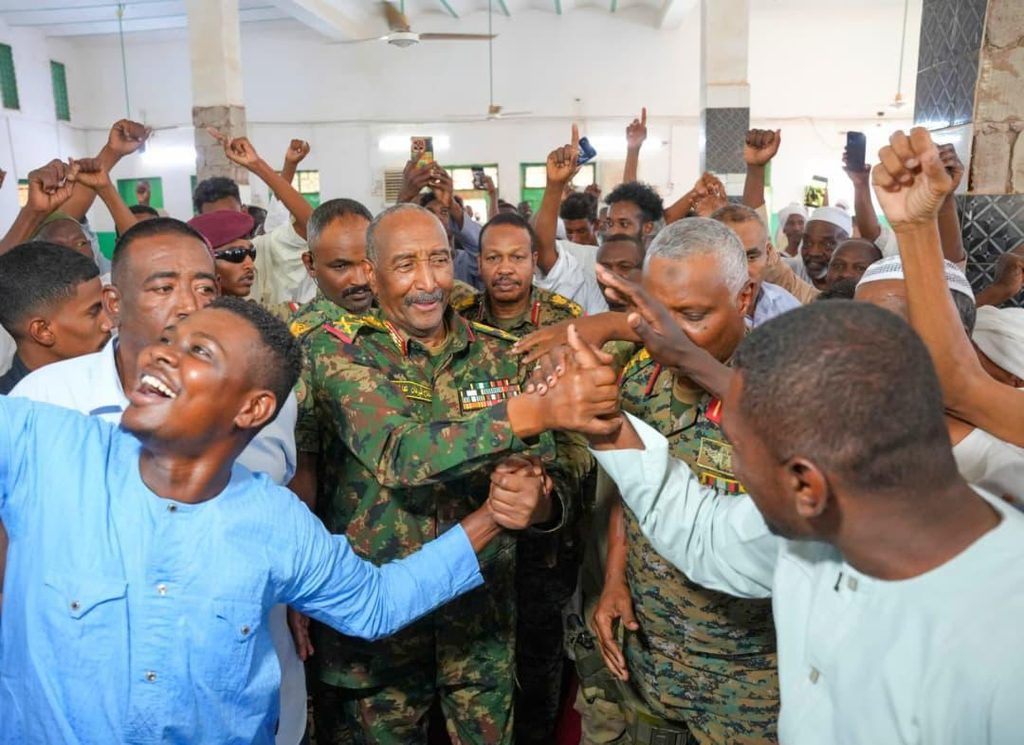
Washington’s increasing pressure on Sudan’s military leadership and its Islamist allies is bringing the country’s post-war political future into sharper focus, as efforts to secure a ceasefire gather momentum.
Sudanese political figures and analysts say the United States is seeking to reshape the conditions for a post-war settlement by challenging the political influence of army chief Abdel Fattah al-Burhan and the Islamist movement linked to his military establishment.
The pressure comes after Washington withheld a visa from Burhan for the United Nations General Assembly and reiterated that neither Sudan’s military nor the Rapid Support Forces (RSF) represents legitimate civilian governance for the country.
Speaking to Erem News, the analysts said Washington’s approach could open political space for civilian forces while creating new challenges for the army-aligned Port Sudan authorities and Islamist groups seeking to retain influence over Sudan’s political future.
Islamist movement faces growing isolation
Mohamed Esmat Yahya, head of Sudan’s Unified Unionist Party, said Washington’s increasingly assertive approach reflects longstanding concerns about the Sudanese Islamic Movement and its influence over the country’s military establishment.
Yahya told Erem News that the September 2025 initiative by the United States, Saudi Arabia, Egypt and the United Arab Emirates marked a significant development in international efforts to end the war.
The Quad roadmap called for an initial three-month humanitarian truce, followed by a permanent ceasefire and a nine-month political transition leading to civilian-led government. It also rejected the involvement of violent extremist groups linked to the Muslim Brotherhood in determining Sudan’s political future.
Washington subsequently escalated its measures against Sudan’s Islamist movement. In March 2026, the United States formally designated the Sudanese Muslim Brotherhood, including the al-Baraa Ibn Malik Corps, as a foreign terrorist organisation. US authorities accused the movement and its armed wing of violence against civilians and undermining efforts to end the war.
Yahya argued that Burhan’s relationship with the Islamist movement is more deeply rooted than a conventional political alliance.
He said the army chief’s removal would be unlikely to break the movement’s influence over the military establishment, suggesting that any replacement emerging from the existing leadership could preserve those connections.
Yahya also pointed to allegations of war crimes and chemical weapons use involving Sudan’s military leadership. Washington determined in April 2025 that the Sudanese government had used chemical weapons in violation of international law and imposed sanctions under US chemical weapons legislation.
Civilian forces emerge as alternative
Political analyst Mahmoud Karbino said Washington’s measures reflect a broader effort to separate Sudan’s military institutions from Islamist political networks and prevent those networks from determining the country’s post-war leadership.
Speaking to Erem News, Karbino argued that increasing pressure on the Port Sudan military authorities could strengthen the political position of former Prime Minister Abdalla Hamdok and other civilian forces seeking a role in the transition.
He said international and regional efforts to revive negotiations could provide civilian political groups with an opportunity to participate in shaping a settlement that ends military rule.
However, the analyst warned that Islamist factions and armed groups aligned with the military could resist an internationally supported transition, particularly if it threatens their political and military influence.
Karbino said those groups regard proposals to exclude them from the political process as an infringement on national sovereignty and a threat to their continued participation in government.
He warned that resistance from within the military’s Islamist alliances could complicate negotiations and deepen political divisions.
The competing positions leave Sudan’s post-war political arrangements unresolved, with civilian forces seeking a transition away from military rule while Islamist groups and their military allies resist proposals that would diminish their influence.
Washington has maintained that an immediate humanitarian truce and an inclusive political process leading to civilian government are necessary to secure a lasting settlement. US officials have also called for increased pressure on the armed factions and networks sustaining the conflict.