The United States has declared that neither the Sudanese Armed Forces nor the Rapid Support Forces, nor the leaders of either side, represents legitimate constitutional rule in Sudan, sharpening Washington’s position as pressure mounts on the warring parties to accept a humanitarian truce.
US State Department spokesman Tommy Pigott said Tuesday that “neither the Sudanese Armed Forces, the Rapid Support Forces, nor their respective leaders, represent legitimate, constitutional governance for Sudan,” adding that the rival forces exercise power through military force.
Pigott said the conduct of the leadership on both sides had rendered them ineligible to govern and that Washington wanted political authority ultimately returned to the Sudanese people.
The statement went further than recent US comments describing the army-backed administration as a de facto authority without granting it formal recognition.
Massad Boulos, US President Donald Trump’s senior adviser for Arab and African affairs, has said Washington deals with the army-aligned authorities as an existing de facto administration but does not formally recognise them as Sudan’s government. He has also said the United States does not recognise any parallel government and opposes the fragmentation of Sudan.
Speaking again during UN General Assembly high-level week, Boulos said neither SAF nor RSF represents legitimate constitutional governance and called for a humanitarian truce and a Sudanese political dialogue. He also called for the UN arms embargo to be expanded and for the costs of continuing the conflict to be increased.
Pigott accused both warring sides of failing to make serious commitments to an immediate truce and said they had instead intensified military operations and drone attacks that have killed civilians.
Washington has repeatedly urged SAF and RSF to accept a humanitarian truce without preconditions and enter an inclusive political process leading toward civilian government, according to the State Department statement. The United States said it was prepared to work with parties that demonstrate a serious commitment to peace while increasing pressure on belligerents and networks sustaining the conflict.
The declaration comes amid a growing dispute between Washington and army chief Abdel Fattah al-Burhan over his planned attendance at the UN General Assembly in New York.
Reuters reported Tuesday that the United States was withholding Burhan’s entry visa and that its issuance appeared to have been made conditional on his acceptance of a 90-day ceasefire proposed by Boulos, citing a Sudanese diplomatic source and a Western analyst familiar with discussions between US and Sudanese officials. The State Department declined to comment on the individual visa case.
Sudan’s UN ambassador asked Secretary-General Antonio Guterres to intervene, while the UN said Guterres was deeply concerned that a visa had not been issued and had raised the matter with US authorities.
The latest US position also places Washington at odds with competing claims to political authority inside Sudan. The Sudan Founding Alliance, TASIS, which includes the RSF and other political and armed groups, says its Government of Peace and Unity is intended to administer areas under its control and form the basis of a new civilian and decentralised Sudan. Washington, however, has repeatedly said it does not recognise parallel governments.
No immediate statement responding directly to Pigott’s latest remarks could be verified from accessible official TASIS or RSF channels.
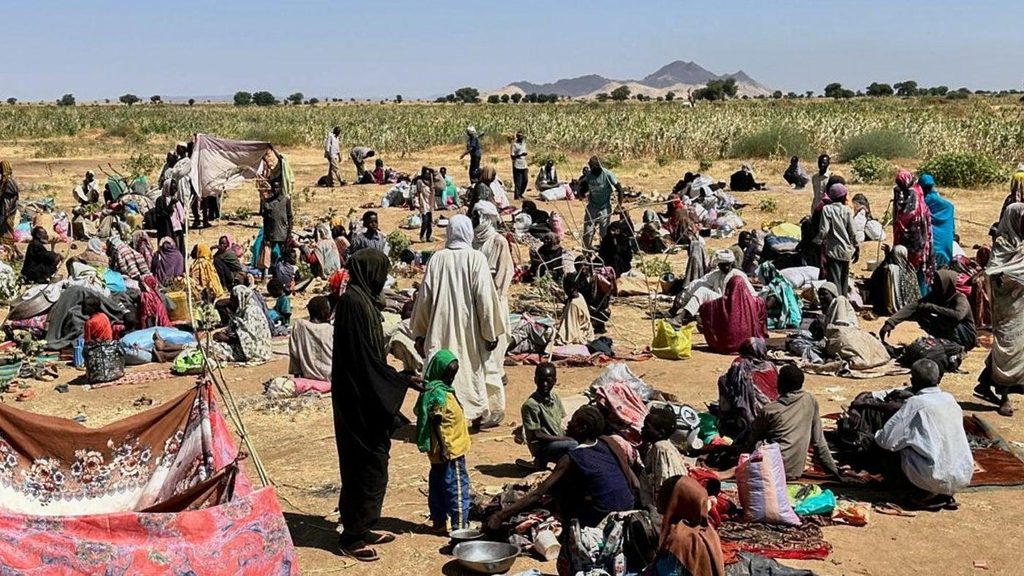
The war between SAF and RSF began in April 2023 and has since developed into one of the world’s most severe humanitarian crises, displacing millions of people and leaving large parts of Sudan divided between competing military and political authorities.