Tensions have escalated between the United States and Sudan’s Port Sudan-based government after Khartoum rejected the Quad’s initiative to end the war, prompting Washington to brandish the “chemical weapons” file as a new lever of pressure. The Quad groups the US, Saudi Arabia, Egypt and the United Arab Emirates.
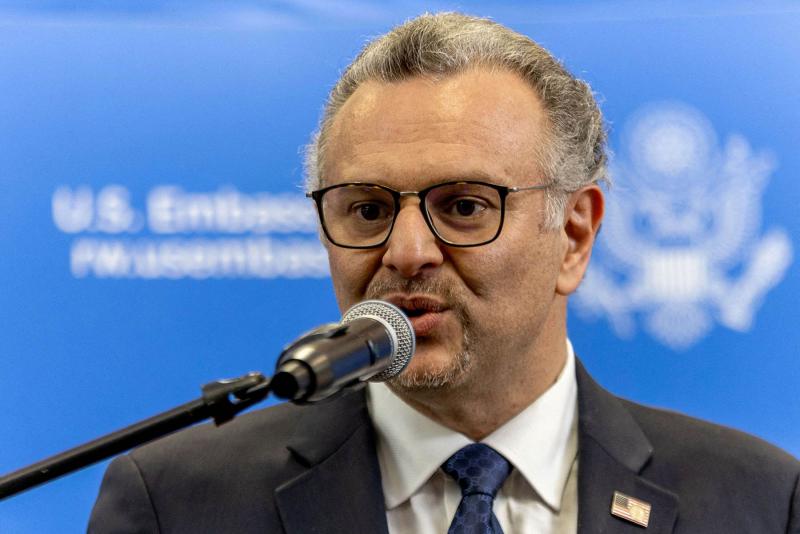
In a notable development, the US State Department’s Bureau of African Affairs urged Sudan’s authorities to cooperate with the Organisation for the Prohibition of Chemical Weapons (OPCW), to acknowledge any violations immediately and to halt any further use of chemical agents.
A spokesperson for the bureau said Washington had announced in May that the Port Sudan government used chemical weapons during 2024, stressing that the conclusion was based on “careful analysis”. She added that following that announcement, the US imposed sanctions on Khartoum in June, describing the use of chemical weapons as “unacceptable” and a breach of the relevant international convention.
The spokesperson voiced concern that such weapons could be used again, citing recent international reports referring to the alleged use of industrial chlorine gas in Sudan. She welcomed Khartoum’s stated commitment to investigate, but insisted that “statements of intent alone are not enough”.
Sanctions rooted in US politics
Political science professor Dr. Abdelwahab al-Tayeb al-Bashir says the latest US measures are shaped by Washington’s reading of the Sudan conflict and the interests of its regional allies, which he listed as Saudi Arabia, Egypt, Turkey, the UAE, Ethiopia and Kenya – all central to how the US views the war.
Speaking to Radio Dabanga, he argued that the US faces “strong internal and external pressure” to sanction Sudan. The decision, he said, rests on provisions of a US domestic law governing chemical and biological weapons, rather than an international ruling.
According to al-Bashir, the sanctions are issued under the US Chemical and Biological Weapons Control framework and reflect an American legal interpretation, not a decision by an international body such as the OPCW, of which Sudan is a member.
He noted that while the decision has a legal basis, it is “not free of political considerations”. Washington has not disclosed detailed field evidence on which specific attacks or locations were used to justify the accusations and sanctions, he said.
“For such a serious charge, you must specify when, where and in which battle these weapons were used,” he added, pointing out that the war has swept across almost all of Sudan. He also highlighted the absence of publicly presented samples, laboratory analysis or independent forensic work, suggesting that the sanctions rest primarily on US intelligence assessments and internal investigations.
Deterrent message to Burhan’s army and its backers
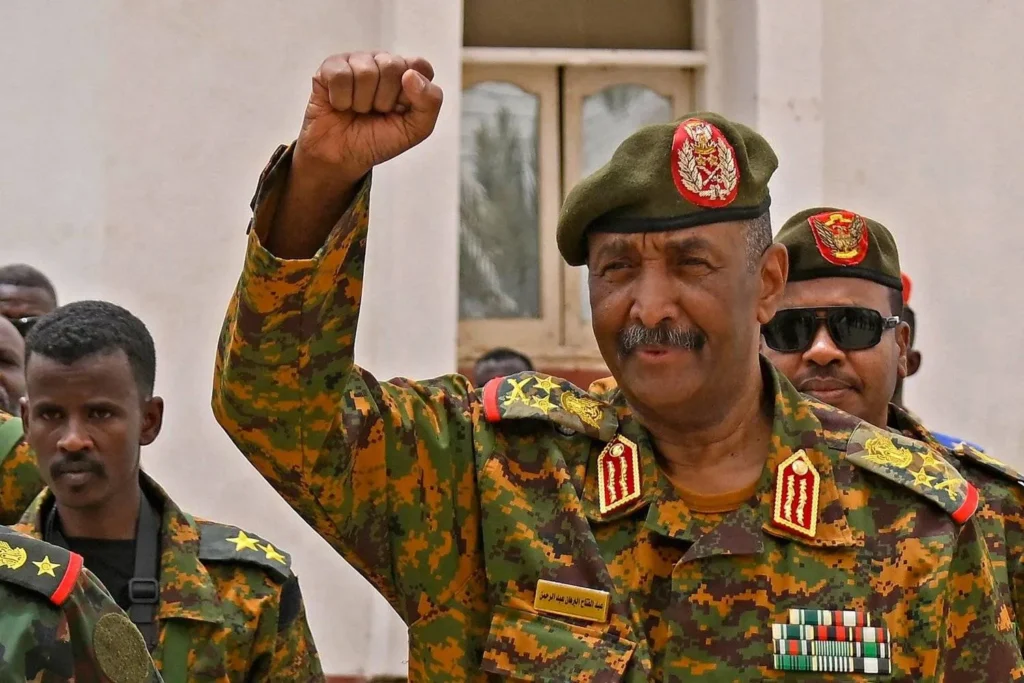
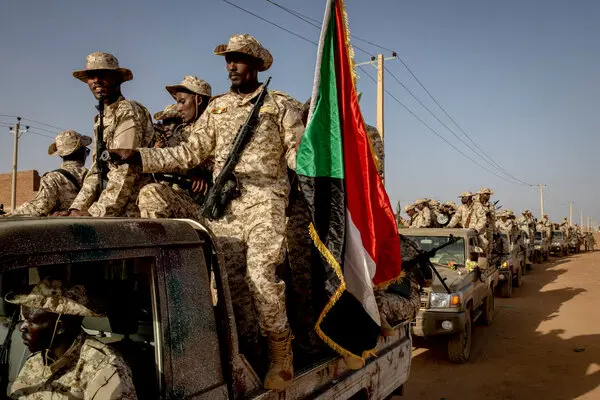
Al-Bashir believes that a formal investigation by the OPCW into alleged chemical weapons use by General al-Burhan’s army (SAF) would take considerable time, as the organisation would need to collect evidence and testimonies before recommending any punitive action against the SAF or the government.
He sees the US move as a pre-emptive message meant to deter SAF and its foreign backers: “Washington is trying to scare the government and the SAF away from using such weapons – if they intend to or are perceived as moving in that direction – and to warn allies who support Sudan that chemical weapons would cross red lines under US law.”
He did not rule out that the decision also aims to satisfy domestic constituencies and regional lobbies close to Washington. “The speed of the decision suggests that its political function and signalling value were more important than its legal depth or effectiveness,” he said, arguing that a fully international process led by the OPCW would be slower and might not necessarily lead to collectively enforced sanctions on Sudan.
US decision, not an international ruling
On whether Washington possesses sufficient evidence to prove Sudan has used chemical weapons in the absence of an OPCW decision, al-Bashir said the US considers itself entitled under its own law to act without waiting for an international verdict.
He stressed that from the American perspective, intelligence reports and internal investigations provide enough grounds for a domestic decision. And because of Washington’s global influence, any US designation tends to shape international public opinion, the positions of allies and the calculations of parties to the Sudan conflict.
However, he argued that by not formally referring the case to the OPCW, the US has weakened the broader legitimacy of its move. “From this angle, Washington loses international backing and legal cover, and that undermines its argument,” he said, predicting that Khartoum’s rejection will be echoed by some member states of the OPCW who object to unilateral investigations and judgments by one party against another member.
This, he added, makes the decision appear less transparent and more tied to US interests and political objectives than to legal procedures. “The question becomes: are these sanctions meant to stop the war, or simply to constrain one side by threatening the use or supply of these weapons?”
Limited impact on the battlefield
On the practical impact of repeated US sanctions on leaders of both warring parties, al-Bashir described them as “functional and limited in effectiveness”.
He said their main tools are freezing assets, restricting exports and financial flows, and imposing travel bans on senior figures. “These are targeted measures against one side in the conflict,” he explained, adding that the current focus is clearly on the Port Sudan government and the SAF.
In his view, the sanctions are driven by a mix of international pressure, domestic lobbies and US external interests alongside those of its allies – rather than by a purely legal calculus. He does not expect the measures to translate into direct military sanctions, but rather into political steps with indirect military implications.
Al-Bashir argued that the sanctions are unlikely to alter the balance of forces on the ground, as they do not directly affect the volume, type or purchase of conventional weaponry, nor can they completely choke off arms financing. Instead, he sees them as a warning to Sudan’s partners not to provide or facilitate any chemical weapons capabilities for the SAF.
He added that the broader aim is to deepen Sudan’s economic crisis: “Most US sanctions are economic and humanitarian in nature. They are designed to place the government and the SAF under enough pressure that they feel compelled to accept upcoming settlement options or political deals. All of this forms part of the US pressure strategy on Sudan.”