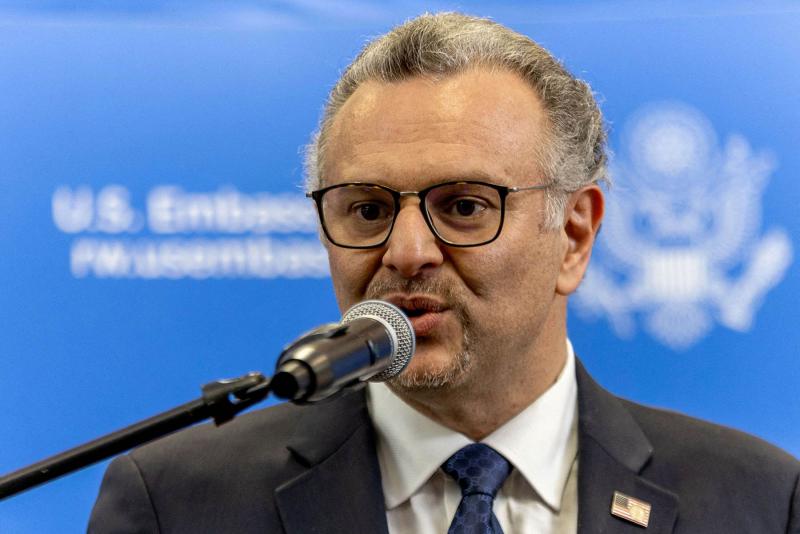
US President’s adviser for African and Arab affairs, Massad Boulos, on Thursday urged the international community to adopt a phased approach to negotiations aimed at ending Sudan’s nearly two-year war, calling for an immediate humanitarian truce followed by structured talks toward a permanent settlement.
Speaking before the UN Security Council, Boulos said the international community should support efforts to secure a humanitarian ceasefire and pursue a step-by-step negotiation process covering a full ceasefire, security arrangements, and a lasting political settlement integrated into a civilian-led transition.
“The future of Sudan cannot be decided by generals,” Boulos said, stressing that civilians must shape the country’s political path through strong institutional frameworks protected from partisan and military domination.
He said both General al-Burhan’s army (SAF) and the Rapid Support Forces (RSF) have committed serious violations and bear responsibility for the continuation of the war. “There are no good actors in this conflict,” he said, adding that all perpetrators must be held accountable regardless of affiliation.
Boulos also warned of the destabilizing role played by networks linked to Sudan’s former regime and the Muslim Brotherhood, accusing them of exploiting the conflict in an attempt to regain power from within state and military institutions. He said these networks have fueled polarization, obstructed reform efforts, and in some cases facilitated external support and arms flows that have prolonged the fighting.
“Those responsible for atrocities — whether linked to the RSF, the army, or any other faction — will face consequences,” Boulos said.
The remarks came as the United States imposed sanctions on three RSF commanders over their alleged involvement in crimes committed in El Fasher, North Darfur.
Boulos said accountability alone would not end the war, stressing that there is no military solution and warning that continued fighting risks the permanent fragmentation of Sudan and state collapse.
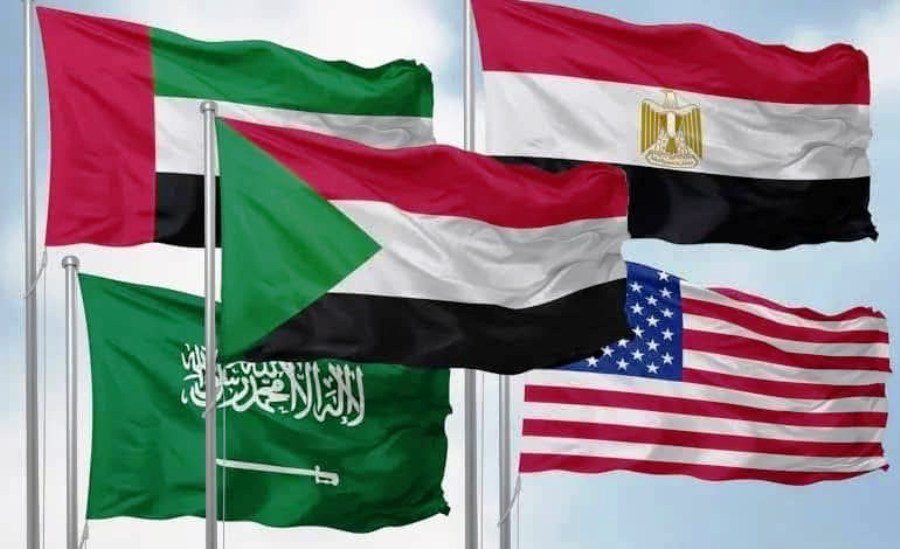
He said Washington is working with partners including Britain, Egypt, Saudi Arabia, the United Arab Emirates, and others to push for an immediate, unconditional humanitarian truce with guaranteed access for aid agencies.
According to Boulos, a UN-backed mechanism has been established to oversee the truce and humanitarian access for 24 million Sudanese — around 72 percent of the population — including 21 million facing food insecurity.
Risk of Regional Escalation
UN Under-Secretary-General for Political and Peacebuilding Affairs Rosemary DiCarlo warned the Security Council of the growing risk that Sudan’s war could spill across borders.
“The danger of this conflict becoming a regional war is a serious concern,” DiCarlo said, citing reports of armed group movements across the Sudan–South Sudan border and warning that any ground fighting in El Obeid, North Kordofan, would have “grave consequences” and severely undermine prospects for a ceasefire.
She criticized the increasing use of long-range drones and aerial bombardment by both sides, describing them as defining features of the conflict.
DiCarlo welcomed progress made under the quadrilateral mechanism involving the US, Egypt, Saudi Arabia, and the UAE, saying it offers a critical opportunity for urgently needed de-escalation and could pave the way toward a sustained cessation of hostilities.
Women Bear the Heaviest Burden
Edem Wosornu, Director of Operations and Advocacy at the UN Office for the Coordination of Humanitarian Affairs (OCHA), told the Council that conditions across much of Darfur and Kordofan have deteriorated sharply since the start of the year.
She said continued fighting around El Obeid has disrupted humanitarian and commercial supply routes, worsening shortages, while communities across Darfur continue to endure severe hardship.
For more than 12 million women and girls, Wosornu said, the war represents “a crisis within a crisis,” with gender-based violence reaching catastrophic levels. Demand for life-saving prevention and response services has increased by 350 percent since the conflict began.
“Sexual violence against women and girls has reached horrifying levels,” she said, noting that documented cases have nearly tripled, while still representing only a fraction of the true scale due to underreporting.
She added that 4.2 million children, pregnant women, and breastfeeding mothers are now at risk of acute malnutrition.
Humanitarian partners reached 17.6 million people with aid last year, including nearly one million women and girls who received critical gender-based violence and reproductive health services. OCHA aims to reach more than 20 million people in 2026 but urgently requires additional funding.
Hala Al-Karib, Regional Director of the Strategic Initiative for Women in the Horn of Africa (SIHA Network), criticized the Security Council for failing to take decisive action more than 1,000 days into the war, despite repeated warnings.
“All red lines have been crossed — siege, forced displacement, man-made famine, genocide, and mass rape,” she said, warning that every day the war continues, it further destroys and brutalizes the lives of Sudanese women and girls.
Al-Karib said women face systematic violence from all parties and are targeted based on ethnicity, skin color, poverty, disability, political affiliation, and other factors.
She reported that sexual violence, arbitrary detention, and enforced disappearances of women in RSF-controlled areas remain severely under-documented due to deliberate access restrictions, communications blackouts, and retaliation against those who speak out.
She also cited reports indicating that more than 840 women are being detained by police and military intelligence in areas controlled by the SAF, adding that the collapse of Sudan’s health system has left survivors of sexual and gender-based violence without adequate medical and psychosocial care.