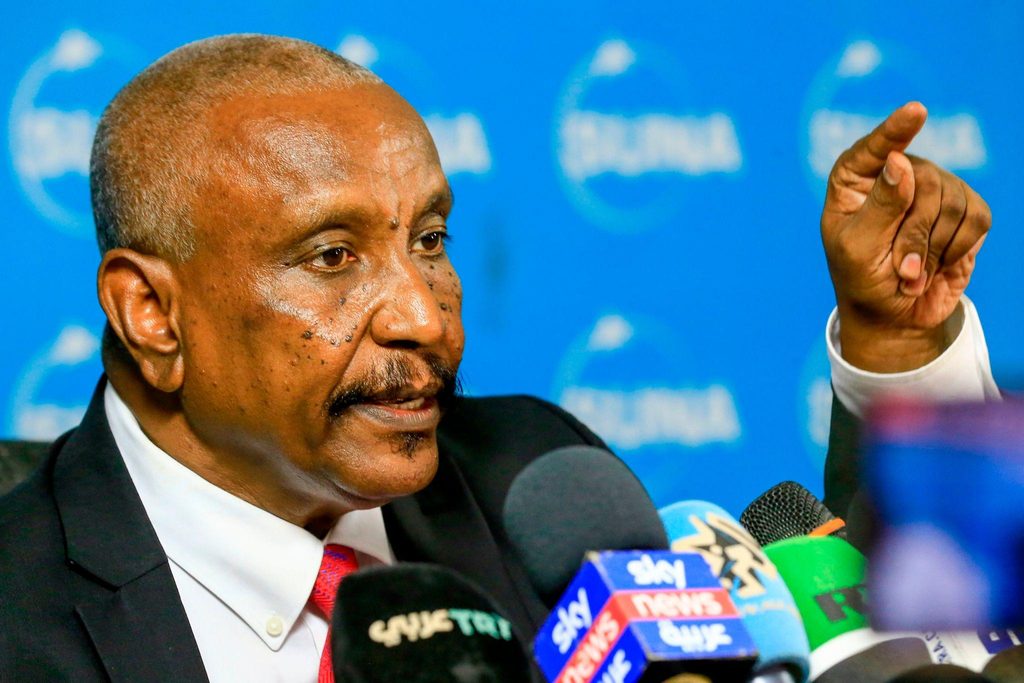
Sudanese political leader Yasir Arman has accused both sides in Sudan’s ongoing war of deepening the country’s hunger crisis, warning that widespread destruction, economic collapse and continued fighting are pushing millions of civilians towards increasingly severe food insecurity.
Arman, a senior figure in the Sudan People’s Liberation Movement–Democratic Revolutionary Current (SPLM-DRC), called on the Sudanese Armed Forces (SAF) and the Rapid Support Forces (RSF) to agree to an immediate humanitarian ceasefire to allow desperately needed aid to reach affected communities.
Speaking to Sudan Tribune on Thursday, Arman said the collapse of economic activity, destruction of infrastructure and displacement of farmers and pastoralists had severely undermined food production across large parts of the country.
He warned that disruptions to agricultural production in key farming regions were accelerating the risk of widespread hunger.
Arman also criticised attacks on electricity facilities, water infrastructure and markets, alongside the continued siege of several Sudanese cities, saying these conditions were preventing food and medical supplies from reaching civilians.
He said the failure to reach a humanitarian ceasefire was further worsening an already devastating situation.
Arman demands greater transparency over hunger crisis
The political leader criticised organisations responsible for monitoring food security and early warning systems for failing to release sufficient information about the scale of Sudan’s deteriorating humanitarian conditions.
He urged United Nations agencies and international humanitarian organisations to publish their available findings, arguing that greater transparency would increase pressure on the warring parties to address the crisis.
According to UN estimates cited in the report, more than 33 million people in Sudan require humanitarian assistance, while the combined number of internally displaced people and refugees has exceeded 11 million.
Aid operations are also facing severe funding shortages, threatening the continued delivery of food, medicine and other essential supplies, particularly in Darfur, Kordofan and parts of central Sudan.
The humanitarian emergency has been compounded by repeated attacks on essential infrastructure.
Electricity facilities and power networks in Al-Jazira, Sennar, White Nile and Gedaref states have been struck by drones in attacks attributed to the RSF, according to the report.
The resulting power outages have disrupted hospitals, water pumping stations and agricultural irrigation systems, further weakening communities already struggling with the consequences of more than three years of war.
Arman’s appeal comes amid growing pressure for a humanitarian ceasefire that would allow aid organisations to operate and restore access to basic services in conflict-affected areas.