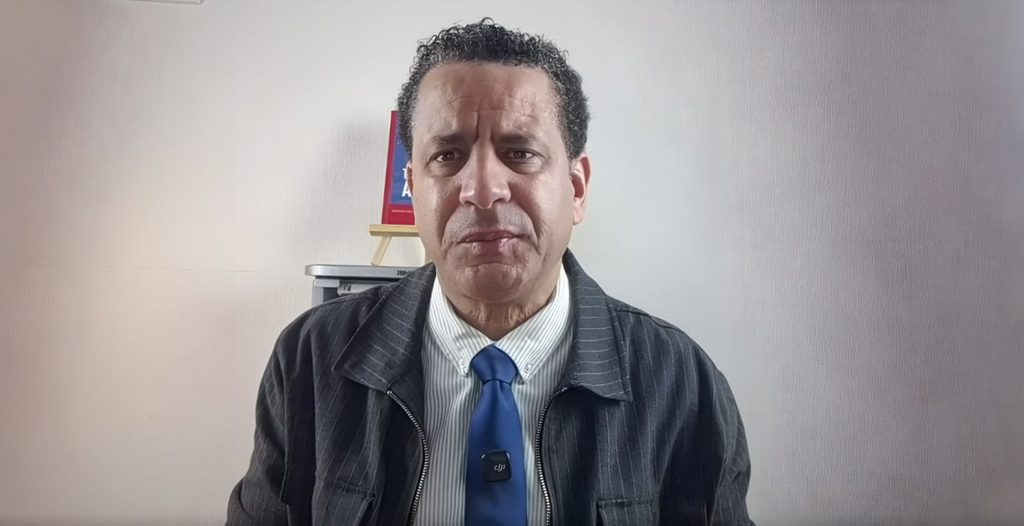
Ibrahim Al-Mirghani, a senior official in the Government of Peace and Unity, has accused Sudan’s Islamist movement of transforming the country into a hub for Iranian-linked weapons manufacturing and intelligence operations.
Speaking in remarks published Friday, Al-Mirghani said ties between Sudan’s Muslim Brotherhood and Iran were “deep and complex,” spanning military, security and economic cooperation over several decades.
He alleged that these links enabled the development of weapons manufacturing infrastructure inside Sudan, including facilities producing advanced systems such as drones, and the use of local capabilities for intelligence and surveillance activities.
According to Al-Mirghani, bases along the Red Sea were used as monitoring platforms to track maritime traffic, with intelligence shared with Iran-backed groups, including the Houthis in Yemen.
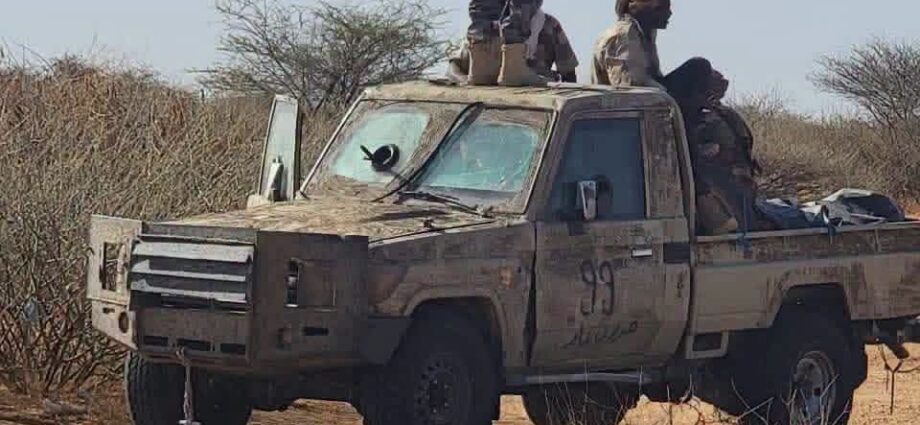
He said Iran had expanded its influence during the ongoing war by supplying arms to General al-Burhan’s army in exchange for access to strategic sites, particularly along the Red Sea coast.
Al-Mirghani described General al-Burhan’s army (SAF) as being in a state of “extreme weakness” due to the conflict, which he said Tehran had exploited to deepen its foothold in Sudan.
He added that coordination between Sudanese military and security figures, Islamist actors and Iranian representatives had continued over the past two years, including meetings linked to arms procurement.
The minister also claimed that Iranian personnel had been present in Sudan, pointing to reports of Iranian nationals killed during fighting, including in the city of Kosti.
He further accused Iran of using Sudan’s Islamist networks to expand its influence in Africa, describing the country as a platform for outreach to armed groups in the region.
“When the Iranian Cultural Center was closed in 2015, it was later found that more than 1,000 people were working under the attaché’s office,” he said, alleging that some were involved in contacts with armed groups in countries including Nigeria, Libya and Somalia.
Al-Mirghani said relations between Iran and Sudan date back to before the 1979 Iranian Revolution and deepened following the rise of Islamists to power in Khartoum in 1989.
He added that cooperation evolved from financial support into joint military manufacturing projects, which he claimed were aimed at supplying allied groups in the region rather than domestic use.
The minister also referred to past strikes on military-industrial sites in Sudan, including the Yarmouk complex, which he said were linked to weapons production and transfers abroad.