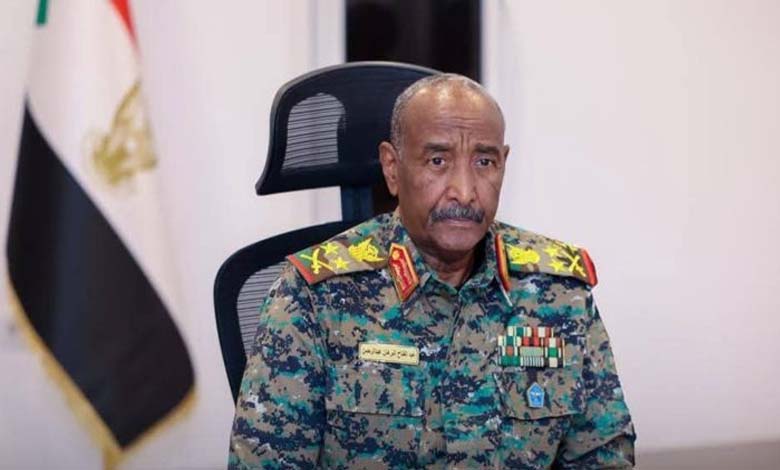
An emerging political analysis is raising questions over whether Abdel Fattah al-Burhan could be heading toward a fate similar to that of former Yemeni president Ali Abdullah Saleh, as Sudan’s war reshapes alliances and power dynamics.
In Arab political discourse, Saleh’s downfall continues to serve as a cautionary example for leaders navigating turbulent transitions through tactical alliances with former adversaries. A recent analysis by political commentator Azzam Abdullah questions whether al-Burhan is — consciously or not — moving toward a comparable “Yemen-style ending,” and whether similar conditions could produce the same outcome.
The trap of alliances with rivals
The comparison centres on the nature of opportunistic alliances.
Saleh aligned with the Houthis — once his adversaries — to weaken rivals within Yemen’s political and military landscape, believing he could manage their ambitions. That calculation ultimately proved fatal.
In Sudan, observers say al-Burhan has been drawn into a prolonged war of attrition against the Rapid Support Forces led by Mohamed Hamdan Dagalo, forcing him to rely on Islamist factions and loosely organised popular resistance groups to offset battlefield imbalances.
Analysts warn that the key risk lies in whether al-Burhan is directing these forces — or whether they are instead using him as a temporary political cover to advance their own agendas.
The dilemma of political survival
Saleh spent his final years attempting to secure either continued political influence or a safe exit without accountability, manoeuvring between negotiated initiatives and military confrontation.
Al-Burhan now faces a similar dilemma. International pressure — including mediation efforts such as the Jeddah talks — is pushing toward a political settlement that would see the military withdraw from governance.
However, forces aligned with him on the ground oppose any agreement that could sideline them. Should al-Burhan pursue a settlement that these factions reject, he risks direct confrontation with his own allies — mirroring the events that led to Saleh’s killing in December 2017 after he attempted to break with the Houthis.
Institutional army vs fragmented forces
A key difference, however, may influence the outcome.
Saleh relied heavily on elite units such as the Republican Guard, whose loyalty was tied to him personally. When that loyalty fractured, his position collapsed.
Al-Burhan, by contrast, commands General al-Burhan’s army (SAF), a longstanding institutional force with an established command structure and doctrine.
Yet the increasing involvement of armed groups and mobilised civilians risks weakening centralised control. Analysts warn that multiple power centres within al-Burhan’s camp could lead to internal fragmentation if strategic interests diverge.
Regional dynamics and shifting support
Regional factors could also prove decisive.
In Yemen, external actors withdrew support from Saleh after he crossed key political lines. In Sudan, regional positions remain fluid, with some actors favouring stability under military leadership, while others fear the return of Islamist influence through al-Burhan.
If international actors conclude that al-Burhan is facilitating a revival of networks linked to former president Omar al-Bashir, diplomatic backing could erode, leaving him increasingly vulnerable domestically.
A crossroads for Sudan
Despite the historical parallels, analysts note that Sudan’s demographic and geographic complexities differ significantly from Yemen’s.
Still, the comparison underscores a critical moment for al-Burhan:
- Pursuing a unified state monopoly over arms, which would require breaking with hardline allies and building a broader political coalition
- Or maintaining a fragile balance between allies and adversaries — a strategy that, as Yemen’s experience suggests, risks ending in internal betrayal
Observers stress that the comparison is not a prediction, but a warning: leaders who believe they control shifting alliances may ultimately be overtaken by them.