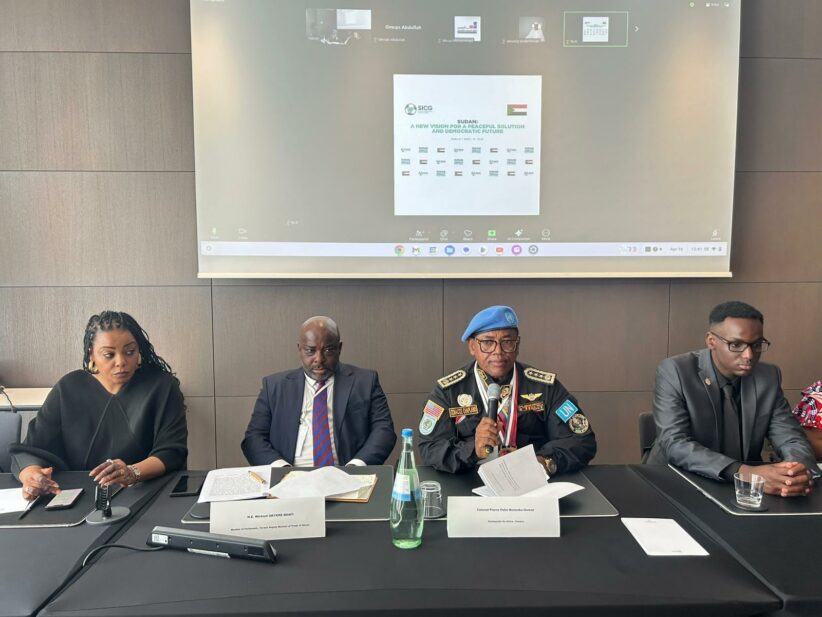
A high-level international meeting in Berlin has outlined a renewed framework for ending Sudan’s war, with participants calling for an immediate ceasefire, inclusive governance and stronger global coordination.
The Sudan International Contact Group (SICG), alongside civil society representatives, diplomats and international figures, convened at the Radisson Collection Hotel in the German capital on Thursday to address the deepening crisis.
The gathering reflected a shift away from short-term crisis management toward a more structural approach aimed at resolving the conflict and stabilising the country.
At the centre of discussions were calls for a credible and verifiable ceasefire, backed by international monitoring mechanisms, alongside renewed efforts to rebuild state institutions and revive political dialogue.
Participants also stressed the need for inclusive governance frameworks that incorporate civilian forces and local actors, while strengthening regional mediation efforts.
The conference highlighted the growing role of civil society, with attendees framing it as a central actor in any future peace process rather than a peripheral participant.
Efforts to streamline international engagement were also emphasised, amid concerns that fragmented diplomatic initiatives have undermined previous attempts to resolve the conflict.
Organisers said the meeting aimed to break the current political and military deadlock by outlining practical pathways toward stability, while reinforcing the urgency of coordinated international action.
While no immediate breakthrough was announced, the Berlin talks were presented as a potential turning point — provided commitments translate into concrete steps on the ground.