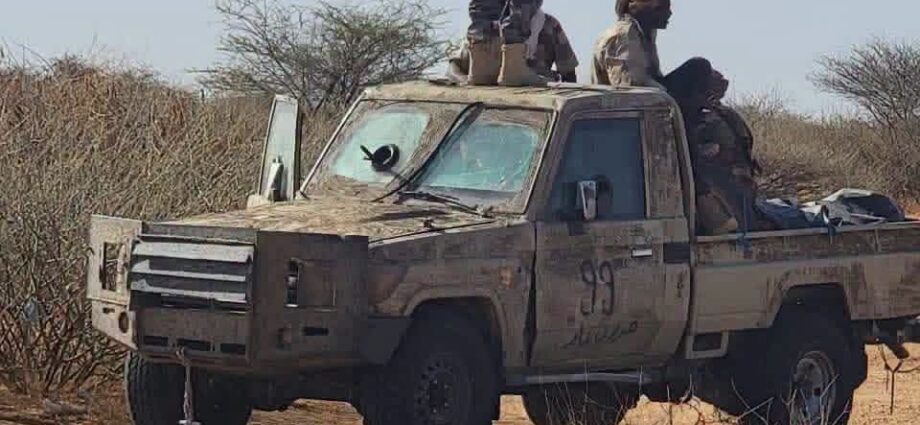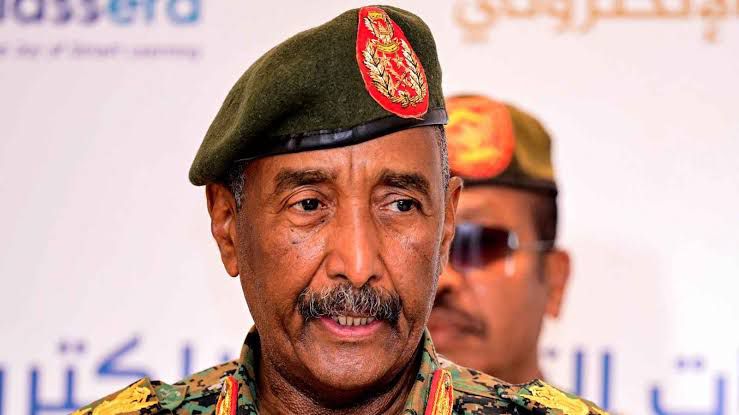
A US-based publication has reported that General Abdel Fattah al-Burhan is facing declining support from key regional partners, as stalled arms deals and mounting concerns over Islamist influence inside his forces complicate his position.
According to Modern Diplomacy, citing diplomatic sources, al-Burhan’s continued reliance on Islamist networks within the military is increasingly undermining his ability to maintain stable ties with countries that previously provided political and military backing.
The report says this dynamic has become a major obstacle to efforts to rearm General al-Burhan’s SAF, with partners wary of strengthening factions they view as ideologically driven.
A proposed $1.5 billion arms deal with Pakistan — reportedly mediated by Saudi Arabia — collapsed in recent months before reaching a final agreement. The package was said to include JF-17 fighter jets, drones, and air defence systems.
The outlet adds that the ongoing war involving the United States and Israel against Iran has further disrupted regional arms supply chains, as countries prioritise replenishing depleted stockpiles. This shift has left General al-Burhan’s SAF scrambling for alternative sources of military support.
Beyond weapons procurement, the report argues that al-Burhan’s core challenge lies in managing Islamist influence within the SAF. His failure to take decisive steps to curb these networks has eroded confidence among both regional and Western actors that once viewed him as a key partner.
Diplomatic circles cited in the report frame the stalled Pakistan deal as a test of whether al-Burhan can build a new security structure independent of Islamist factions. Regional and international actors increasingly insist that any political settlement in Sudan must exclude hardline Islamist groups from both military and civilian institutions.
The report notes that the SAF has long relied on cadres linked to the former ruling National Congress Party and allied militias, which provide both ideological backing and experienced fighters — forming a central pillar of al-Burhan’s power structure since 2021.
Western and Arab capitals have reportedly intensified pressure to reduce Islamist influence, reflected in recent sanctions targeting prominent figures and repeated calls to restructure Sudan’s security institutions.
Saudi Arabia, in particular, is said to be approaching the situation cautiously, citing concerns over the potential resurgence of political Islam and the risk of Iranian influence extending through Sudan. These concerns have reduced Riyadh’s willingness to proceed with large-scale arms agreements.
Al-Burhan has attempted limited responses, including detaining some hardline figures and removing others from key posts. However, the report suggests these moves are largely symbolic, designed to reassure external partners without dismantling his core alliances.
At the same time, his rhetoric continues to emphasise a military solution and rejects political arrangements that would significantly weaken Islamist influence — a stance aimed at maintaining internal support.
This dual-track approach has narrowed his room to manoeuvre, the report says, weakening his ability to balance battlefield demands with international expectations.
The prolonged conflict has, in fact, strengthened Islamist factions within the SAF rather than reduced their role, as they continue to provide manpower and ideological cohesion amid declining conventional military capacity.
Regional backers are now reassessing their position, concerned that a prolonged war could further empower Islamist elements and potentially open the door to deeper alignment with Iran — a scenario viewed as a major risk by Gulf and Western states.
These concerns also extend to future weapons systems, including drones and air defence platforms, which could be used in ways that conflict with the security interests of supporting countries if hardline factions gain greater influence.
The report concludes that al-Burhan’s crisis is ultimately one of trust rather than battlefield performance. His continued dependence on Islamist networks both sustains his rule and simultaneously makes him an unreliable partner in the eyes of international actors.
It adds that his future relations with backers will remain caught between short-term tactical cooperation and deep strategic mistrust — unless he undertakes a fundamental realignment of his alliances or fully embraces an Islamist political trajectory.