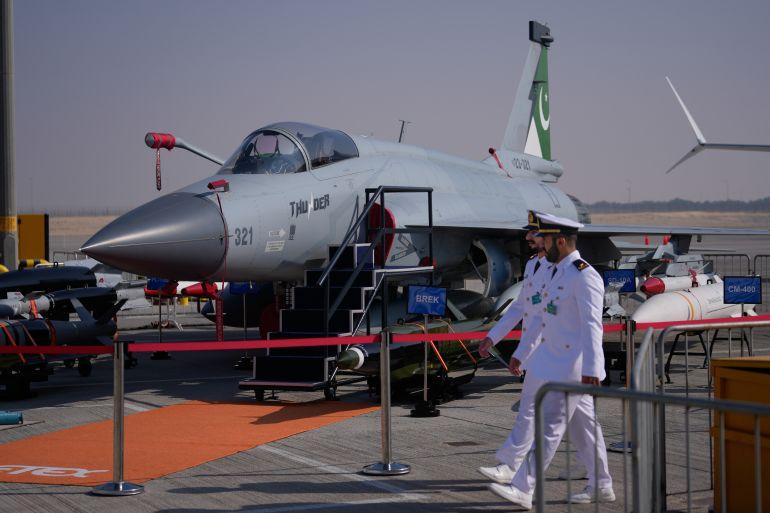
Growing military links between General al-Burhan’s army (SAF) and Iran are triggering regional fallout, with a $1.5 billion arms deal with Pakistan collapsing after Saudi Arabia withdrew financing, according to security and diplomatic sources.
The halted agreement — one of Islamabad’s largest recent defense export negotiations — had been in advanced stages and was expected to include attack aircraft, drones, and air defense systems.
Retired Pakistani Air Marshal Amir Masood said the proposal included 10 Karakoram-8 light attack aircraft, more than 200 surveillance and combat drones, advanced air defense systems, Super Mushshak training aircraft, and JF-17 fighter jets jointly produced with China.
But a Sudanese military expert in Port Sudan said the deal’s collapse was directly tied to what he described as “deepening military cooperation between the Sudanese army and Iran,” a development increasingly viewed as a red line by Gulf states.
Saudi Arabia’s decision to pull funding is seen as a decisive signal of that shift, reflecting mounting concern over Iran’s expanding footprint in Sudan’s war.
The fallout comes as U.S. authorities arrested an Iranian national, Shamim Mafi, at Los Angeles International Airport on suspicion of brokering arms shipments to Sudan on behalf of Tehran.
Federal prosecutors allege the 44-year-old facilitated the sale of drones, bombs, detonators, and millions of rounds of Iranian-made ammunition. She faces up to 20 years in prison if convicted.
The case has intensified scrutiny over Iran’s role in Sudan, with analysts pointing to a growing network of political and military links inside the country, including factions tied to Sudan’s Islamist movement.
Analysts warn that the relationship is not limited to arms supplies, but may be reshaping internal power dynamics within the military — prolonging the war and complicating efforts to reach a political settlement.