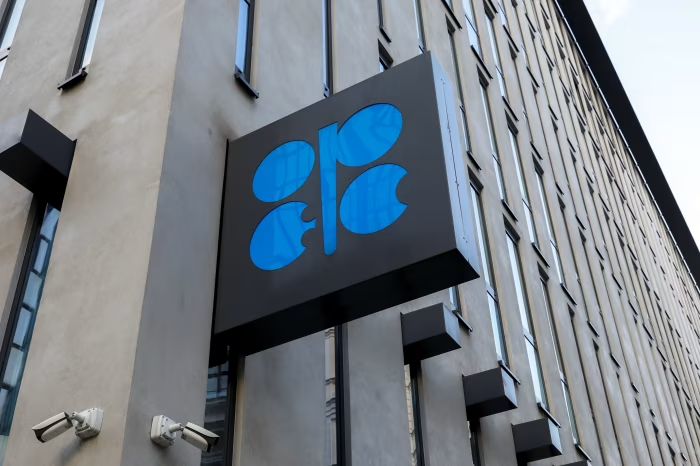
The United Arab Emirates has announced it will withdraw from the Organization of the Petroleum Exporting Countries (OPEC) and the wider OPEC+ alliance, marking one of the most significant ruptures in the oil cartel’s history.
The decision, confirmed Tuesday, will take effect on May 1 and strips OPEC of one of its largest and most influential producers at a time of acute global energy instability.
UAE officials said the move reflects a broader reassessment of national energy policy, with Abu Dhabi seeking greater flexibility over production levels and long-term strategy. The country has invested heavily in expanding its oil capacity and has increasingly pushed back against OPEC quotas it viewed as restrictive.
The withdrawal comes against the backdrop of a deepening regional crisis linked to the ongoing Iran war, which has disrupted oil flows through the Strait of Hormuz — a chokepoint for roughly a fifth of global crude supply.
Analysts say the timing allows the UAE to break from the cartel while prices remain elevated due to supply disruptions, cushioning the immediate market impact. However, the longer-term implications could be far more consequential.
The UAE, OPEC’s third-largest producer, had been pumping roughly 3–3.4 million barrels per day before the conflict escalated. Its exit weakens the group’s ability to coordinate supply and influence global oil prices, raising questions about OPEC’s future cohesion.
The move also highlights growing fractures within the cartel, particularly between the UAE and Saudi Arabia, which have clashed in recent years over production baselines and regional strategy.
While markets initially reacted with volatility, analysts note that immediate supply impacts may remain limited due to ongoing disruptions across the Gulf. Oil prices have already surged above $110 per barrel amid the conflict, reflecting tightening global supply.
Geopolitically, the decision is being interpreted as part of a broader realignment in the region, with the UAE pursuing a more independent economic and foreign policy posture.
Despite the exit, Emirati officials signaled that relations with OPEC members would remain intact, framing the move as a strategic shift rather than a break in cooperation.
The departure follows earlier exits by smaller producers such as Qatar and Angola, but analysts stress that the UAE’s scale makes this the most consequential defection yet — potentially marking a turning point for the cartel’s global influence.