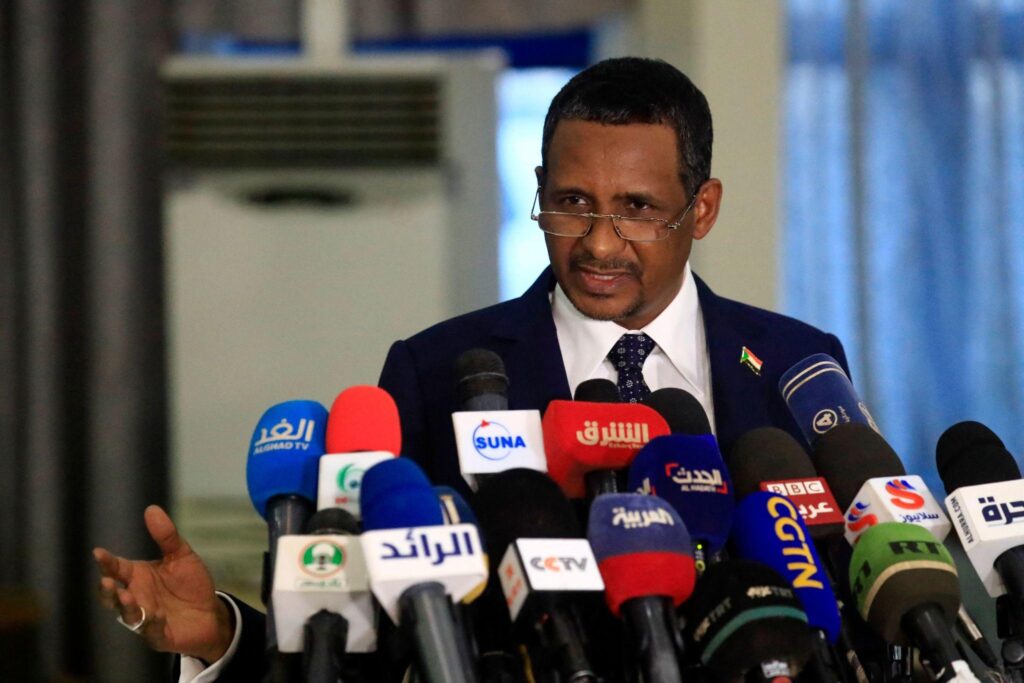
The commander of Sudan’s Rapid Support Forces, Mohamed Hamdan Dagalo, has accused rival forces loyal to Abdel Fattah al-Burhan (SAF) of looting 7.6 tonnes of gold from the Central Bank of Sudan’s headquarters branch at the outset of the conflict in April 2023.
The allegation emerged alongside an investigative report by the independent outlet Fajr Press, which detailed large-scale looting and smuggling of Sudanese gold over the past three years, amid the ongoing war between the two sides.
Dagalo claimed that the SAF siphoned off national resources through companies linked to the Defence Industries System, a military-controlled economic network. The report further alleged an undisclosed deal in which the system acquired a 44% stake in Ariab Mining Company, which holds vast mining assets, including an estimated 12 million tonnes of mining waste and concessions in the Red Sea and Kassala states.
Official figures cited in the investigation show that Sudan produced around 87 tonnes of gold in 2022, before the war erupted. In December 2025, the Sudanese Mineral Resources Company announced total production of about 70 tonnes for that year.
However, the report highlights a major discrepancy between production and exports. Finance Minister Jibril Ibrahim said in early 2025 that officials from a neighbouring country—widely understood to be Egypt—told him that 48 tonnes of Sudanese gold had entered their territory in 2024 alone.
Meanwhile, the head of the Geological Research Authority, Ahmed Haroun al-Tom, said in February 2026 that the mining sector has suffered losses of around $7 billion due to the 34-month conflict.
Industry estimates suggest Sudan produces more than 70 tonnes of gold annually, generating over $6 billion in revenue. Yet official central bank data indicates exports worth no more than $2 billion, raising questions about the fate of the remaining proceeds.
Gold exporters have called for urgent government intervention to protect the sector, warning of widespread irregularities threatening the economy. They also urged a transparent investigation into the gap between actual production and official export figures.
In a related development, Sudan’s National Audit Chamber reported systemic corruption within the Sudanese Mineral Resources Company, including the disbursement of 440 billion Sudanese pounds without supporting documentation or approved projects.
In December 2025, the audit body instructed the company to initiate legal proceedings over the alleged embezzlement of 970 billion pounds allocated to support traditional mining in River Nile state. However, the investigation was reportedly halted following direct intervention by Sovereign Council member Ibrahim Jaber, who also prevented auditors from reviewing accounts linked to the Sovereign Council and the cabinet.