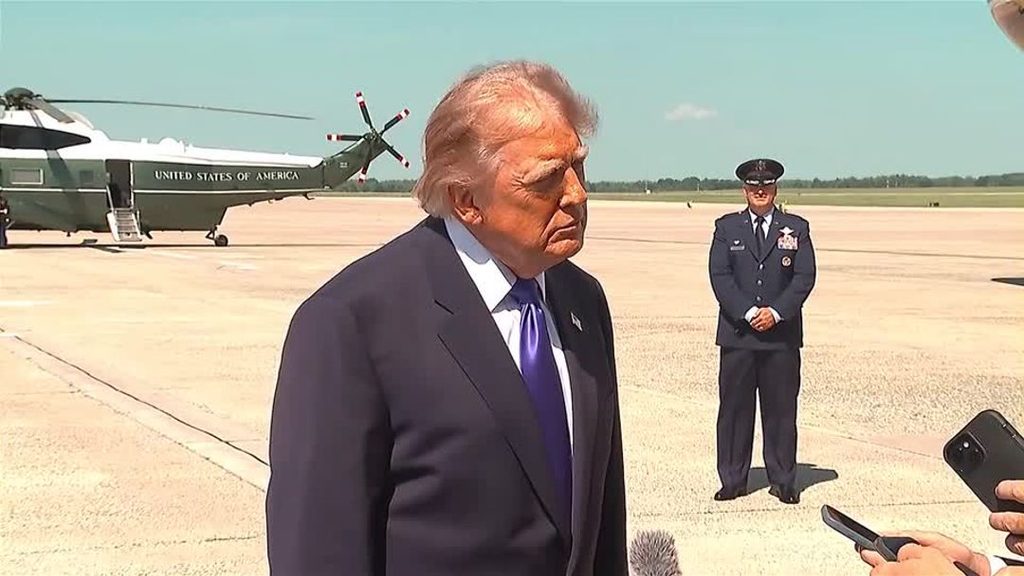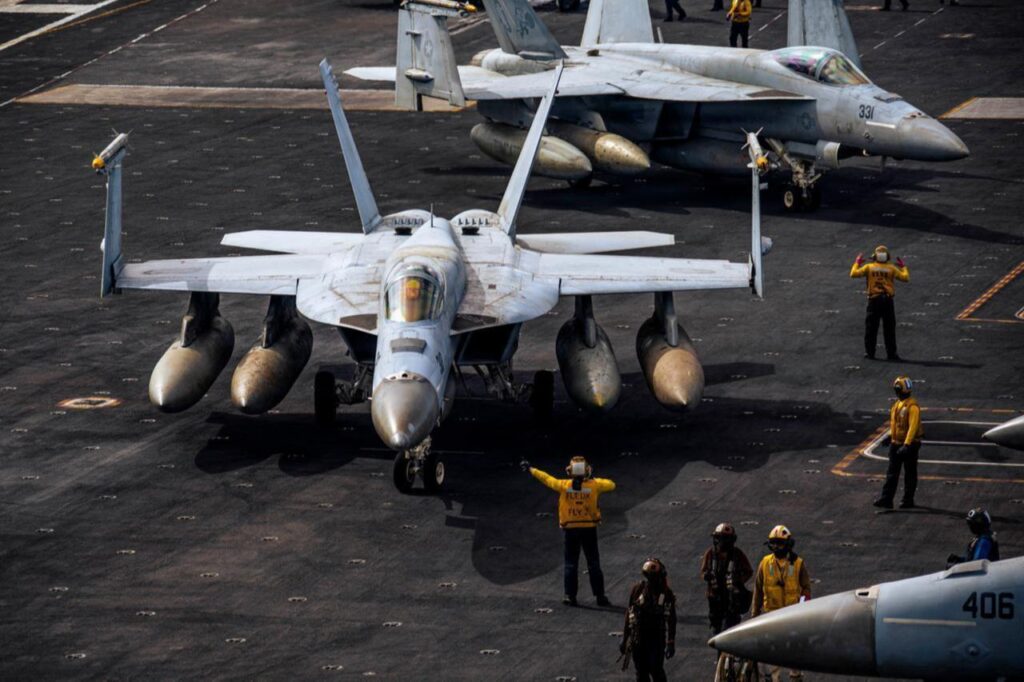
The United States launched a new wave of overnight strikes on multiple targets in Iran, as President Donald Trump threatened further escalation unless Tehran agrees to a peace deal.
U.S. Central Command said the operation was completed about four hours after it began shortly after midnight in Tehran. It said the strikes hit military surveillance capabilities, communications systems and air defence sites across Iran.
“The strikes are in response to Iran’s unwarranted and continued aggression,” Central Command said.
The latest attacks mark another major escalation in a conflict that had been paused by a fragile ceasefire in early April but has continued to flare through repeated exchanges of fire.
Iran’s Islamic Revolutionary Guard Corps said it responded by launching attacks on 18 U.S. military targets at airbases in Kuwait and Bahrain. Bahrain’s interior ministry said sirens were activated.
Iran’s top joint military command also warned that it would fire on any vessel attempting to pass through the Strait of Hormuz, a strategic waterway that has remained largely restricted for months. Iranian media said two ships had been fired upon.
U.S. Central Command denied that the strait was closed, saying commercial vessels were still passing through despite Iranian threats. Trump also claimed that ships had been crossing the waterway without Iran’s permission as part of a secret U.S. military operation.
Trump told Fox News reporter Trey Yingst that the strikes would soon stop, but warned that he would “bomb the shit out of them” if Iran’s leaders did not immediately sign an agreement with Washington.
Iranian news agencies reported explosions in several locations, including Sirik, Kargan, Bandar Abbas, Minab, Varamin and Karaj.
U.S. Defense Secretary Pete Hegseth said the strikes were intended to strengthen Washington’s military and diplomatic position.
“We will strike them hard tonight, and hopefully Iran makes a good decision,” Hegseth told reporters during a visit to Central Command in Florida. “If we need to negotiate with bombs, we’ll negotiate with bombs.”
The United States and Iran have traded fire several times since the April ceasefire, even as negotiations have failed to produce an end to the war, now in its fourth month. Trump has repeatedly said a deal is close while also threatening renewed bombing.
Earlier this week, the U.S. military targeted air defence and radar sites near the Strait of Hormuz after a U.S. attack helicopter was downed near the waterway. Iran responded with missile and drone attacks on U.S. bases in Jordan, Kuwait and Bahrain. A U.S. official said there was no significant damage.
Iran accused Washington of striking reservoirs that supplied drinking water to 10 villages, calling the attack a violation of international law.
“This is not collateral damage — it is a calculated war crime and a flagrant violation of human rights,” Foreign Ministry spokesperson Esmaeil Baghei said.
The Pentagon did not immediately comment on the accusation.
Despite the escalating rhetoric, diplomatic efforts appeared to continue. Iranian media reported that a Qatari delegation, which has been mediating between Washington and Tehran, arrived in Tehran for talks on the latest developments.
Trump claims secret Hormuz operation
The war has killed thousands and disrupted roughly one-fifth of global oil and natural gas flows, pushing energy prices higher. Iran has restricted traffic through the Strait of Hormuz, while the United States has maintained a blockade on Iranian ports.
Trump said vessels carrying 100 million barrels of oil had passed through the strait as part of a secret U.S. military mission.
Hegseth said ships had been moving through the waterway “in the middle of the night,” protected by the United States in a way that Iran “can’t stop” and “can’t see.”
The U.S. military also said it disabled an oil tanker transporting Iranian crude in the Gulf of Oman on Tuesday for a second consecutive day.
Oil prices rose nearly $3 after Trump’s threat of escalation and extended gains in early Asian trading on Thursday.
The conflict has also become a political burden for the White House, with polls showing Trump’s approval ratings falling amid anger over high fuel prices. Some Republicans have warned that the war’s unpopularity could threaten their party’s control of Congress in November’s midterm elections.
Lebanon fighting continues
Fighting has also continued in the parallel conflict between Israel and Iran-backed Hezbollah militants in Lebanon.
Lebanese security sources said Israeli airstrikes in southern Lebanon killed at least 13 people on Wednesday, while Hezbollah claimed new attacks against Israeli forces.
Tehran’s demands include an end to Israeli attacks in Lebanon, the lifting of sanctions on Iran, the release of frozen Iranian assets and recognition of its control over the Strait of Hormuz.
Trump says Iran must end restrictions on shipping through Hormuz and agree to terms that prevent it from developing a nuclear weapon. Iran denies seeking nuclear arms.
The U.N. nuclear watchdog’s 35-nation Board of Governors passed a U.S.-backed resolution on Wednesday calling on Iran to declare its remaining enriched uranium stocks and allow inspectors to verify them. Iran dismissed the resolution as political.