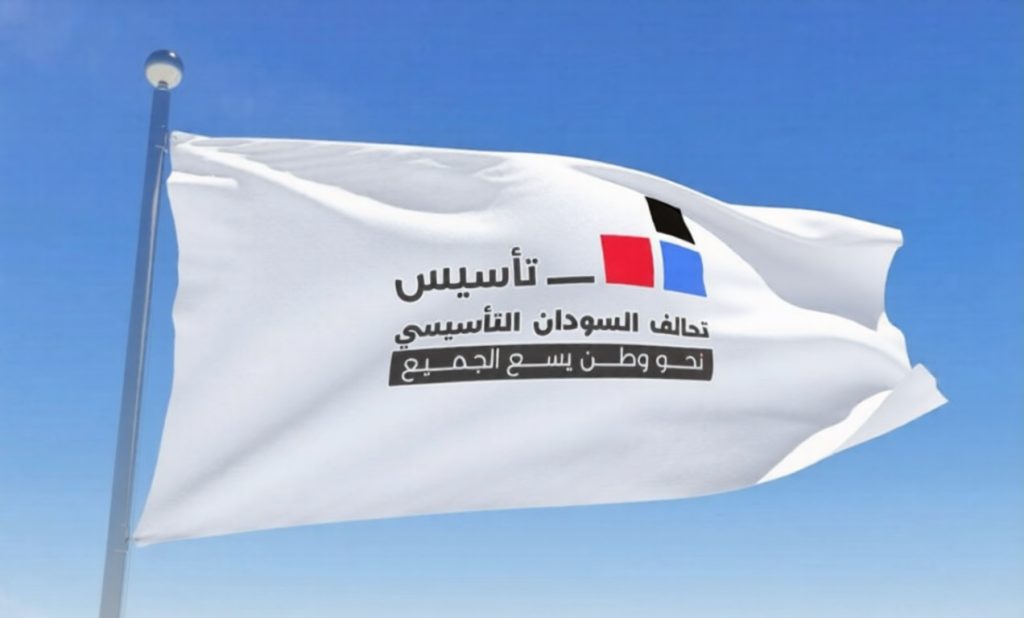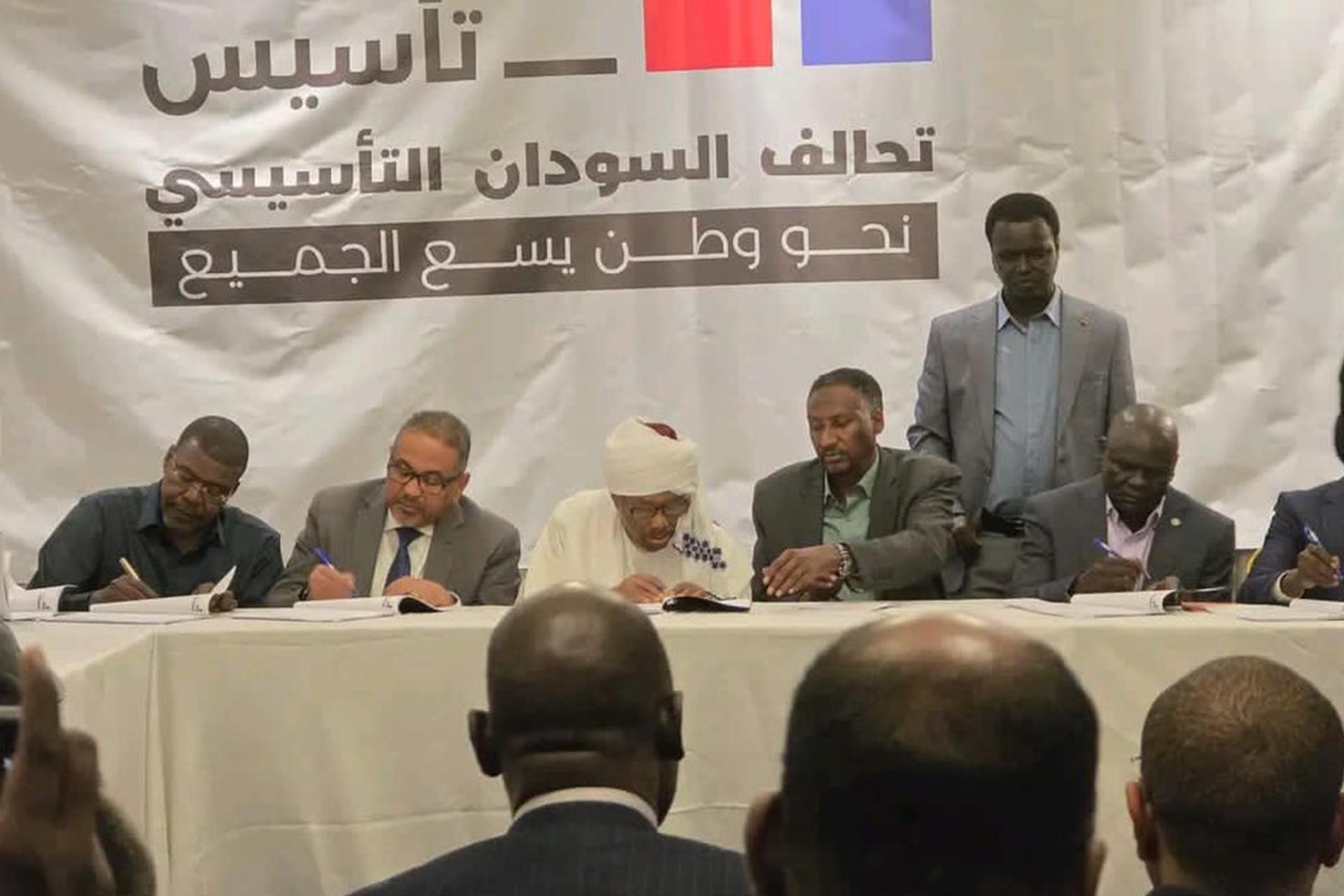
A senior figure in Sudan’s Democratic Bloc has said the Sudan Founding Alliance, TASIS, could join a wider Sudanese dialogue if it meets several political conditions, in a sign that opponents of the RSF-backed alliance are moving from outright rejection toward conditional engagement.
Mubarak Ardol, assistant head of the Democratic Bloc, said TASIS must distance itself from the Rapid Support Forces, abandon civilian governance structures, and clarify its position on alleged abuses before taking part in a Sudanese-Sudanese dialogue. He also argued that RSF commander Mohamed Hamdan Dagalo should not lead TASIS as a political alliance.
The comments followed recent consultations in Addis Ababa involving Sudanese political and civil forces, including the Democratic Bloc, Sumoud and TASIS. While parts of the Democratic Bloc have rejected direct engagement with TASIS, Ardol’s remarks suggest that the debate is shifting toward the terms under which the alliance could be included rather than whether it can be excluded altogether.
Ardol said political coalitions should be headed by civilian figures, naming Mohamed Hassan al-Ta’aishi, Fadlallah Burma Nasir and al-Tahir Hajar as possible alternatives to Dagalo. He argued that Dagalo’s role as RSF commander ties him to the military track, including the Jeddah process and other ceasefire mechanisms, while TASIS’ participation in national dialogue would require a political track.
The remarks underline the growing weight of TASIS in Sudan’s fragmented political landscape. Since establishing governing structures in areas under RSF control, the alliance has sought to present itself as more than a wartime coalition, building administrative, security and political institutions from Nyala while challenging the Port Sudan authorities’ claim to sole national legitimacy.
For its critics, TASIS remains inseparable from the RSF and its military campaign. But the fact that political rivals are now setting conditions for its entry into dialogue reflects a broader reality: TASIS has become too significant to ignore in any process that claims to address Sudan’s future.
The Democratic Bloc’s conditions also expose a dilemma facing anti-TASIS forces. Excluding the alliance may satisfy hardliners aligned with the Port Sudan SAF junta, but it risks producing another narrow political process disconnected from the forces and communities controlling large parts of the country. Engaging TASIS, even conditionally, would acknowledge the alliance’s role while forcing a debate over its civilian institutions, accountability mechanisms and relationship with the RSF.
TASIS has repeatedly argued that Sudan’s crisis cannot be solved by restoring the pre-war order or handing the country back to the same military and Islamist networks that helped drive it into conflict. Its emergence has pushed rival blocs to confront questions they had long avoided: who speaks for areas outside Port Sudan’s control, who participates in a national settlement, and whether a future transition can be built without the forces that now shape realities on the ground.
Ardol’s remarks therefore mark more than a rejection of Dagalo’s political role. They show that Sudan’s civilian dialogue is already being reshaped by TASIS’ presence. The argument is no longer simply about whether the alliance exists, but how other political actors respond to a movement that has built institutions, appointed officials and positioned itself as a rival center of authority.
In that sense, the conditions laid out by the Democratic Bloc may be less a barrier than an admission. TASIS has become part of the political equation, and any serious Sudanese dialogue will have to decide whether to deal with it openly or continue pretending that the country’s new balance of power can be wished away.