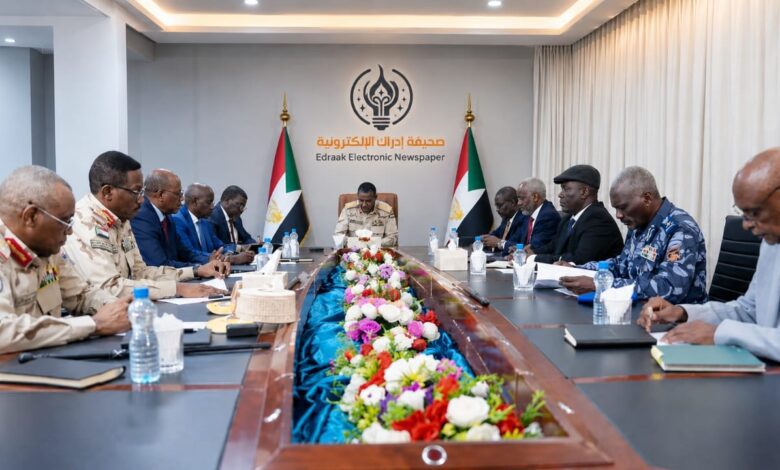
The Security and Defence Council of the TASIS government held its first meeting on Tuesday in Nyala, issuing a series of directives aimed at imposing state authority, combating crime, protecting the agricultural season and securing humanitarian operations in areas under its control.
The meeting was chaired by Lt. Gen. Mohamed Hamdan Dagalo, known as Hemedti, who heads the Presidential Council of the TASIS government. Interior Minister Lt. Gen. Suleiman Sandal, the council’s rapporteur, later briefed the press on the outcomes of the session.
The council called for the “liberation” of Sudanese territory from what it described as the grip of the Muslim Brotherhood, saying the country must be rebuilt on new and fair foundations.
Sudan’s war, which erupted in April 2023, has produced competing attempts by both the SAF and the Rapid Support Forces to build governing institutions and claim authority, deepening the country’s political and social divisions.
In its resolutions, the TASIS council said public security remained a “red line” and directed security agencies to act firmly, within the law, against any activity threatening civilians or disrupting public life.
The measures include action against road closures, obstruction of movement inside cities and smuggling, particularly involving agricultural products and livestock. The council also ordered intensified efforts against cross-border crime, weapons trafficking, human trafficking, drug smuggling and terrorism-related activity.
The directives come amid recurring security disturbances in Nyala, where protests and road closures by local groups have disrupted commercial activity. The latest incident occurred last Saturday, when an armed group shut down Nyala’s popular market following the arrest of one of its members by the Rapid Support Forces.
The council also warned against what it described as destructive activities by sleeper cells linked to the Islamic Movement and its political fronts. It accused those networks, along with alleged tribal coordination bodies, of seeking to destabilize communities, fuel tribal tensions, burn markets, damage the economy and spread hate speech and racism.
It urged citizens not to respond to what it called the Islamic Movement’s “project of destruction,” and called for closer public cooperation with security institutions.
On education, the council praised what it described as successful efforts to organize Sudanese certificate examinations, paying tribute to teachers, parents and students who, it said, had endured more than three years of disruption and deprivation from schooling.
The council also ordered the creation of mechanisms to protect the agricultural season, safeguard farmers and production areas, secure humanitarian convoys and ensure the safety of aid workers and international organizations operating in TASIS-controlled territories.
It commended international efforts to provide assistance to people in need, while pledging that authorities would not tolerate actions threatening public safety, stability or the enforcement of law and order.