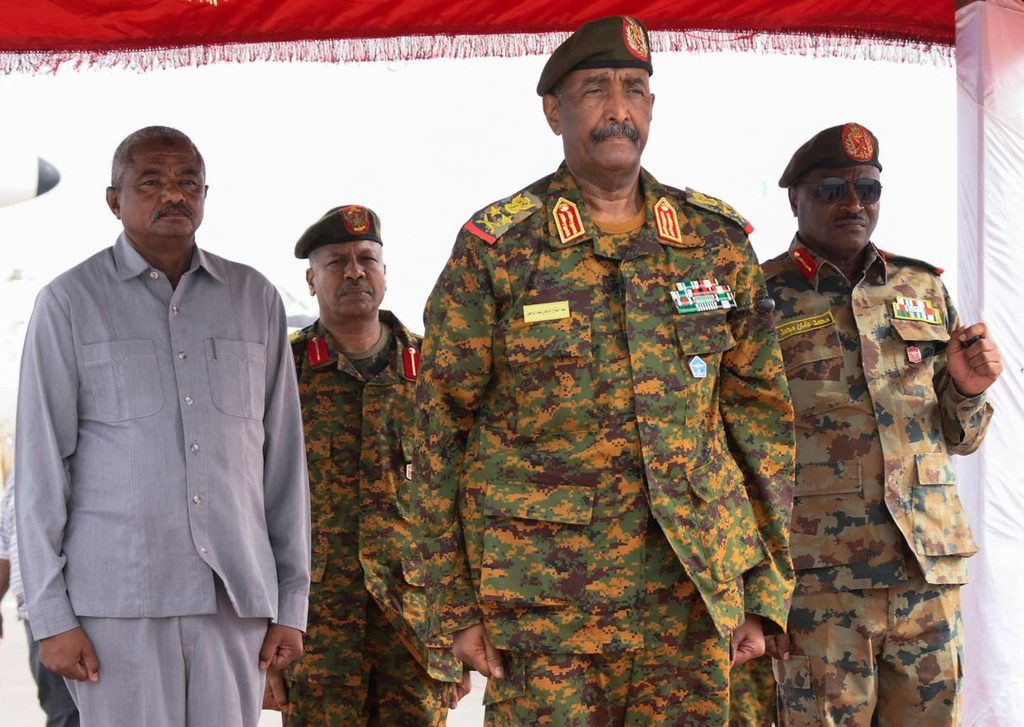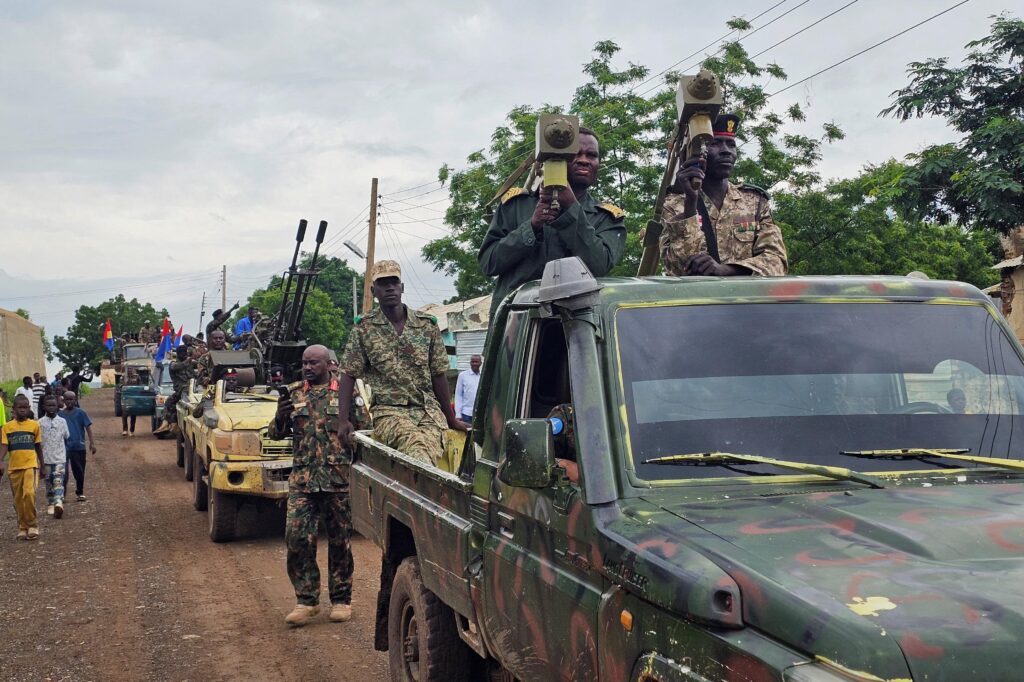
Deepening tensions between General al-Burhan’s SAF and its allied Joint Forces are raising fears of a wider split inside the anti-RSF camp, as the battle for Kordofan becomes increasingly central to the course of the war.
The dispute has surfaced as the SAF’s push to redeploy allied forces and open new fronts around El Obeid, the strategic capital of North Kordofan. But leaders within the Joint Forces, a coalition of Darfur armed movements fighting alongside the SAF, have reportedly resisted the plan, warning that the move could expose them to a costly and prolonged war of attrition.
The growing rift points to a wider problem inside the Port Sudan junta’s military alliance, which brings together the SAF, Islamist brigades, Darfur armed movements, regional militias and other armed groups united more by wartime bounty than by a coherent political or military project.
Since entering the war on the SAF’s side, the Joint Forces have become one of SAF’s most important battlefield partners. Their role has given them political and military weight beyond the front lines, making the future of their relationship with the SAF a key factor in Sudan’s evolving war map.
The Joint Forces include several Darfur-based armed movements, most prominently the Sudan Liberation Movement led by Minni Arko Minnawi and the Justice and Equality Movement led by Jibril Ibrahim. Some factions had previously fought in Libya, where U.N. expert reports described Sudanese armed groups as foreign mercenaries involved in the conflict before they returned to Sudan and signed the Juba Peace Agreement during the transitional period.
The latest tensions reportedly began after SAF commanders proposed moving Joint Forces units away from Khartoum and toward El Obeid, where RSF pressure has intensified. According to sources cited by regional media, Joint Forces commanders objected to the proposal, arguing that Kordofan’s open terrain and the RSF’s experience in mobile warfare would give the group a tactical advantage.
Leaders within the Joint Forces fear that a major deployment to Kordofan could drain their manpower and weaken their military position, particularly if they are drawn into a long fight with no clear guarantee of SAF support.
The dispute reflects a deeper divergence in battlefield priorities. SAF commanders are seeking to widen the war and create new pressure points in Kordofan, while the Joint Forces appear more comfortable maintaining their current positions around the capital, where they believe the operating environment is less risky.
Joint Forces leaders also reportedly believe the SAF’s focus on Darfur has declined since SAF regained ground in parts of Khartoum and Gezira. They fear being left to confront the RSF largely alone in western Sudan, a scenario that could erode both their military capacity and their political bargaining power after the war.
Recent incidents have added to the sense of instability inside the SAF’s coalition. In Kosti, a police assistant was killed and a sergeant wounded after an attack on a police station aimed at freeing a member of the Joint Forces. Port Sudan has also witnessed clashes between a unit from one of the armed movements and a military security force. Similar incidents have been reported in Northern State and in Al-Rawat in White Nile, before senior commanders intervened to contain the tensions.
Analysts say these incidents, though scattered, reveal the difficulty of controlling an alliance made up of competing armed actors with separate chains of command, political ambitions and territorial interests.
The battle for El Obeid has become a central point of contention. The city sits on a vital route linking central and western Sudan and serves as a major hub for supply and movement across Kordofan. SAF sees holding or relieving the city as critical to reshaping the wider battlefield.
But the Joint Forces appear wary of being pulled into a front where the RSF still retains strong combat capabilities, particularly in the open areas surrounding El Obeid. Military analysts say any large deployment there could become a grinding battle that would be difficult to resolve quickly.
The tensions recall the disputes that preceded the outbreak of the April 15, 2023 war between SAF and the RSF, when arguments over redeployment, integration and restructuring escalated into a full-scale conflict. While the current relationship between SAF and the Joint Forces is different, unresolved disputes over command, deployment and postwar influence could create new fractures inside the army’s camp.
The risks are compounded by growing calls among SAF supporters to revisit the Juba Peace Agreement, which provides the legal and political basis for the participation of several armed movements in the current military alliance.
Political observers describe the SAF-Joint Forces partnership as an “alliance of necessity” rather than a stable strategic bloc. Its members disagree over military priorities, future security arrangements, political representation and the distribution of power within the Port Sudan-based junta.
The outcome of the El Obeid battle could determine whether the alliance holds or begins to unravel. If the RSF captures the city or makes major gains around it, pressure on the relationship between SAF and the Joint Forces could intensify sharply, potentially triggering a wider realignment of armed and political forces.
One military expert cited by Sky News Arabia said the current tensions are no longer limited to battlefield management or troop deployment. They are increasingly tied to competition over political and economic influence inside the army-aligned authority in Port Sudan.
“All the current indicators point to the conclusion that the next war, if these differences continue to escalate, may be between the SAF and the Joint Forces themselves,” the expert said.
For many armed actors, the postwar struggle may now appear as important as the battles currently being fought. Whoever emerges with military strength intact will be better positioned to shape Sudan’s future political and economic order.
As the war enters its fourth year, SAF’s ability to keep its coalition together is becoming increasingly uncertain. The army’s alliance includes Islamist brigades, Darfur armed movements, regional militias and tribal forces, many of which have different goals and rival ambitions.
Analysts say the coalition’s fragile structure makes further splits, clashes and defections possible as the war approaches more decisive stages. Any rupture inside the SAF’s camp would not only alter the course of the fighting, but could also reshape the future of SAF itself, whose leadership remains heavily influenced by Sudan’s Islamist movement, and redraw the country’s postwar political map.