Iran launched missile and drone attacks targeting Jordan and Bahrain on Tuesday after the United States carried out five hours of strikes across Iran, deepening a confrontation over control of the Strait of Hormuz and driving oil prices to their highest level in four weeks.
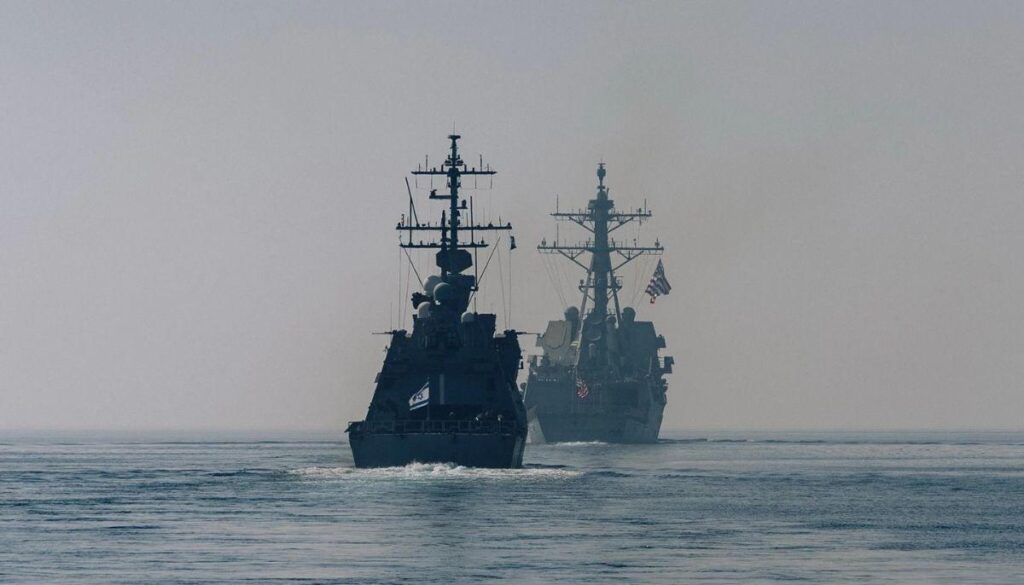
US forces conducted a third consecutive night of attacks, saying the operation was intended to weaken Iran’s ability to threaten commercial shipping.
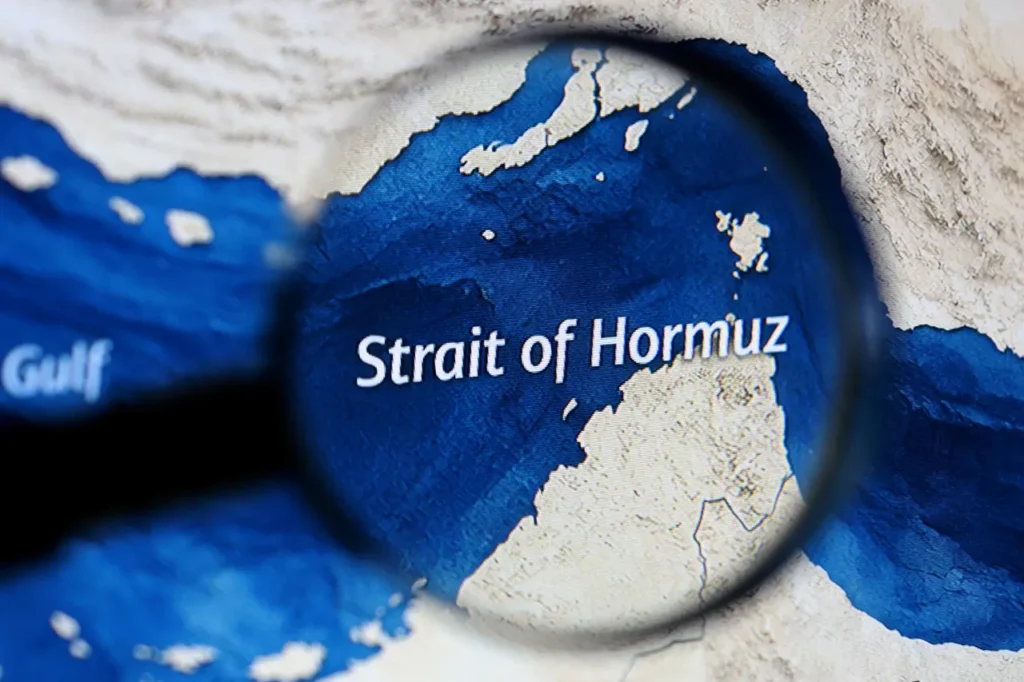
The renewed strikes followed Tehran’s declaration that it had closed the Strait of Hormuz, one of the world’s most important energy corridors. US President Donald Trump responded by reinstating a blockade on Iranian shipping and announcing plans to charge a 20% security fee on cargo passing through the waterway.
Iran retaliated with ballistic missiles aimed at a US Army base in Jordan. Jordanian authorities said air defences intercepted four missiles, with no casualties reported.
Bahrain, home to the US Navy’s Fifth Fleet, said it had repelled an Iranian aerial attack. Explosions were heard in the capital, Manama, although officials did not immediately report casualties or major damage.
The escalation has cast further doubt on whether a memorandum of understanding signed by Washington and Tehran last month can be converted into a lasting ceasefire.
The conflict has disrupted global energy markets, increased shipping risks and fuelled concerns that higher oil prices could add to inflation worldwide.
Analysts said both sides appeared to be keeping the fighting within limited boundaries while attempting to strengthen their positions ahead of any future negotiations. However, they warned that miscalculation could still trigger a much broader regional confrontation.
Yezid Sayigh, a senior fellow at the Carnegie Middle East Center, said neither side was likely to seek an immediate return to full-scale war, but warned that both Tehran and Washington risked pushing the confrontation too far.
The war has also faced growing opposition inside the United States. Petrol prices have risen since the conflict began, while congressional elections are scheduled for November.
A Reuters/Ipsos poll found that half of respondents believed the war had not been worth its financial and human costs.
Brent crude futures rose as much as 5% on Tuesday to $87.49 per barrel, their highest level since June 12, before giving up some of those gains.
Renewed regional fighting
The latest confrontation began after the United States and Israel launched attacks against Iran on February 28.
Iran subsequently retaliated against Israel and several Gulf countries hosting American military bases. The conflict also reignited fighting between Israel and Hezbollah in Lebanon, killing thousands of people and displacing millions across the region.
Lebanon and Israel resumed negotiations in Rome on Tuesday, with Beirut seeking an Israeli withdrawal from southern Lebanon under a US-mediated arrangement.
Inside Iran, state media reported strikes against several cities.
Explosions were reported in Bushehr and nearby Choghadak, while Iranian officials said four areas of Bushehr city had been hit. At least four people were reportedly wounded.
Iran’s attack against the US base in Jordan was smaller than the missile barrages launched during the earlier stages of the war.
Andreas Krieg, a senior lecturer at King’s College London, described the latest fighting as a return to the low-intensity confrontation that existed before the memorandum was signed.
He said the current level of escalation was unlikely to produce a clear military victory for either side.
Tensions rose sharply late on Saturday when Iran announced that it had closed the Strait of Hormuz after firing a warning shot that struck a vessel Tehran accused of travelling along an unauthorised route.
Trump restores blockade and announces Hormuz fee
Trump said on Monday that the United States was restoring its blockade of Iranian shipping, reversing one of the measures included in last month’s memorandum.
The US Navy-led Joint Maritime Information Center said the blockade would take effect at 2000 GMT on Tuesday.
Trump also announced that Washington would demand a 20% fee on cargo transported through the strait in exchange for US protection.
Iranian Foreign Minister Abbas Araqchi rejected Washington’s claim to control the passage, declaring that Iran was and would remain the “guardian” of the Strait of Hormuz.
Responding directly to Trump’s proposed charge, Araqchi said 20% was excessive and suggested Tehran would offer a lower price.
Before the war, approximately one-fifth of global oil and gas shipments passed through the Strait of Hormuz each day.
A 20% fee on all cargo could generate an estimated $240 million per day, although the proposal would face serious legal and diplomatic challenges.
The United Nations shipping agency said it opposed charges on international straits and maintained that there was no legal basis for imposing mandatory transit fees.
The United Arab Emirates said Iranian missiles struck two Emirati oil tankers travelling through the strait on Monday.
One Indian crew member was killed and eight others were injured, according to the UAE Defence Ministry.
Recorded tanker movements through the waterway have fallen to their lowest levels in weeks. However, the true volume of traffic remains difficult to assess because some vessels have disabled their tracking systems amid the security crisis.