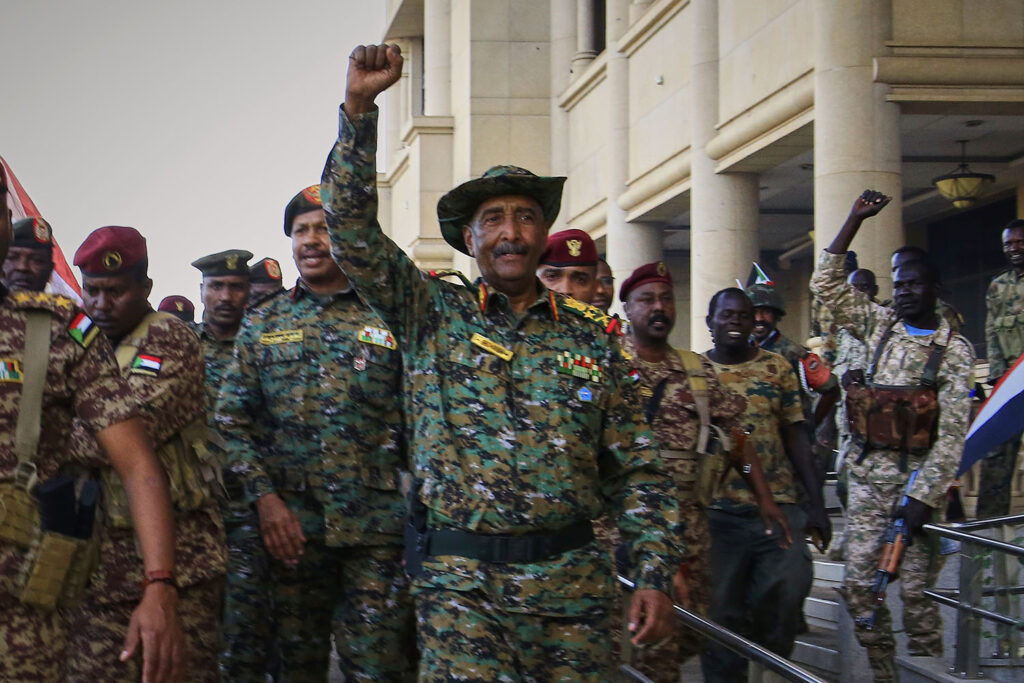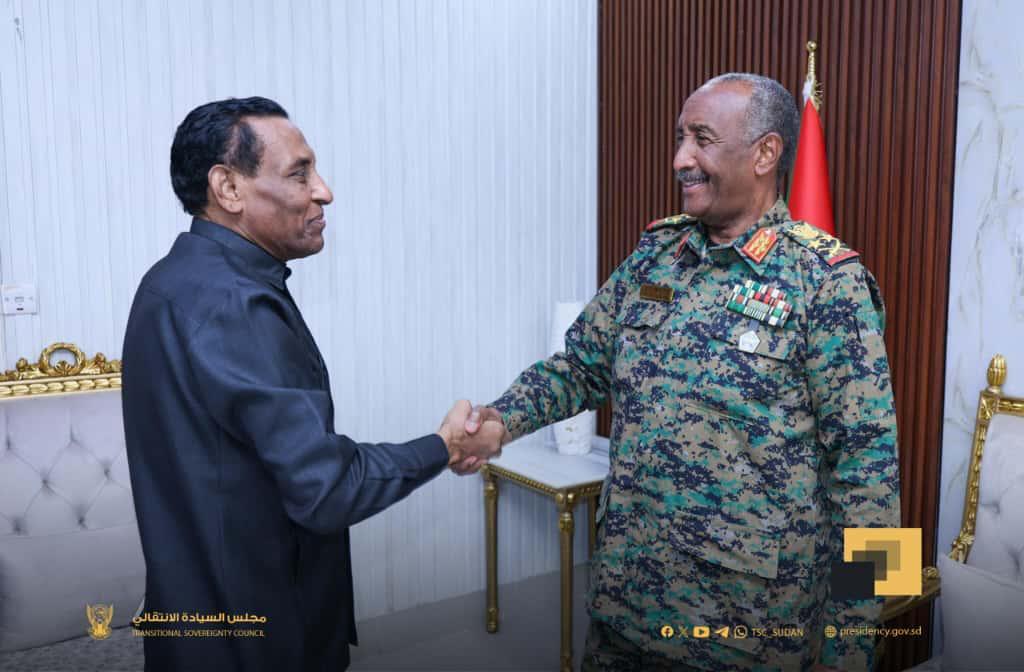
Sudan’s army chief Abdel Fattah al-Burhan has intensified meetings with political and community leaders amid reports that he is laying the groundwork to formalise his position as president of Sudan.
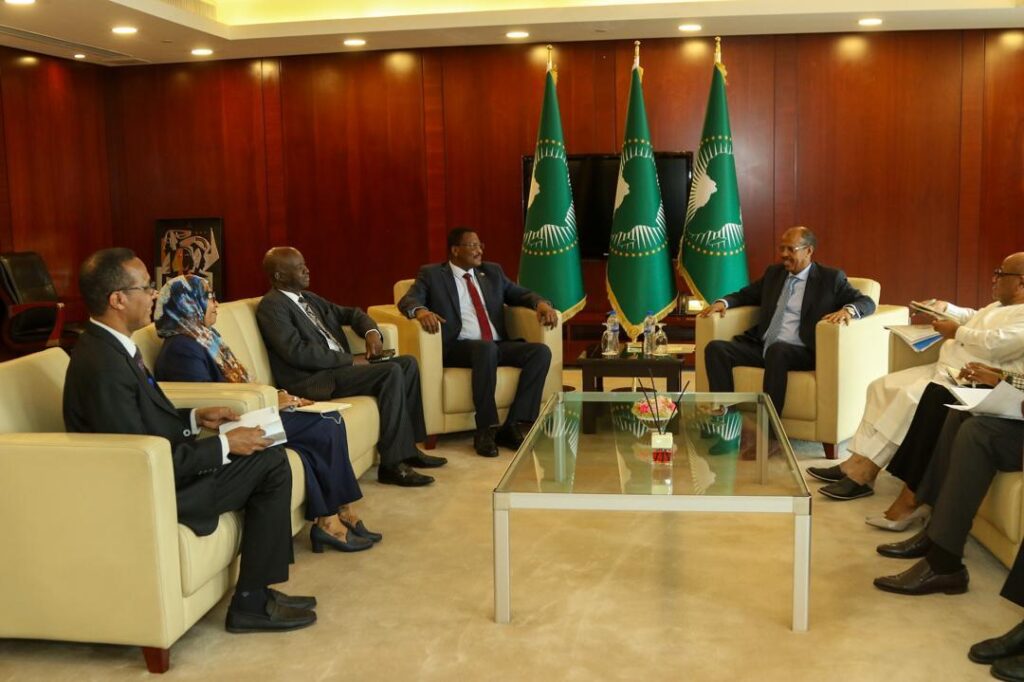
Burhan, who heads the Sovereignty Council, met leaders of the Democratic Bloc on Tuesday as part of a widening series of consultations with political parties, tribal figures, civil society representatives and other influential groups.
Political sources said the meetings were linked to preparations for major changes within Sudan’s sovereign, legislative and executive institutions.
Local reports suggested the political activity could ultimately pave the way for Burhan to be installed as president, consolidating the authority he has exercised since the military takeover of October 2021 and throughout the war that began in April 2023.
No official decision has been announced, but the growing pace of consultations has fuelled speculation that the army chief is seeking broader political backing before unveiling a new governing arrangement.
The meeting with the Democratic Bloc came as the coalition struggles with internal divisions over its political direction and participation in regional peace initiatives.
Disagreements within the alliance intensified following political meetings held in Berlin in April and later consultations in Addis Ababa.
One faction supported greater engagement with the Sumoud civilian alliance, while another group based in Port Sudan opposed closer coordination. Justice and Equality Movement leader Jibril Ibrahim was reportedly among those resisting the proposed alignment.
The Addis Ababa group later fractured further, with some members continuing talks with Sumoud and others withdrawing in protest.
The divisions reportedly pushed Democratic Bloc leaders to attempt to reconcile their positions before meeting Burhan, who had previously criticised the conduct and political positions of several senior coalition figures.
The bloc’s limited ability to influence the current political landscape has also increased pressure on its leaders to preserve a role in any future administration.
Political observers said Burhan remains the dominant figure in the Port Sudan-based authorities and controls the state institutions most capable of determining the shape of the next political arrangement.
Following Tuesday’s meeting, Democratic Bloc spokesperson Mohamed Zakaria said Burhan had renewed his call for a Sudanese-led solution to the conflict.
Zakaria said Burhan proposed two parallel processes: a political track involving civilian and community groups, and a security track involving the Sudanese Armed Forces and the Rapid Support Forces under the principles of the Jeddah Declaration.
The meeting also addressed political and security developments, the continuing war and efforts to launch what Burhan described as a comprehensive national dialogue.
Burhan said the state remained committed to implementing the outcome of such a dialogue and urged political groups to take practical steps to prepare the ground for Sudanese-led negotiations.
He also praised countries supporting the Port Sudan authorities and said the army would continue its military campaign to regain territory.
The Democratic Bloc renewed its support for the armed forces and welcomed Burhan’s proposal for a national dialogue based on Sudan’s unity, sovereignty and state institutions.
The bloc’s backing could provide Burhan with additional political cover as he seeks to reshape the country’s governing bodies and strengthen his claim to lead Sudan under a more permanent presidential arrangement.