Thousands of civilians in Sudan have reportedly been imprisoned, sentenced to life terms or condemned to death after being accused of collaborating with the opposing side in the country’s civil war, according to lawyers, families and human rights monitors.
The broadly defined charge of “cooperating with the enemy” has emerged as another tool of abuse in a conflict already marked by mass displacement, hunger, disease and the collapse of essential services.
Both the Sudanese Armed Forces and the Rapid Support Forces have used collaboration allegations to silence critics of the war, political opponents, community activists and volunteers providing assistance to displaced and impoverished civilians.
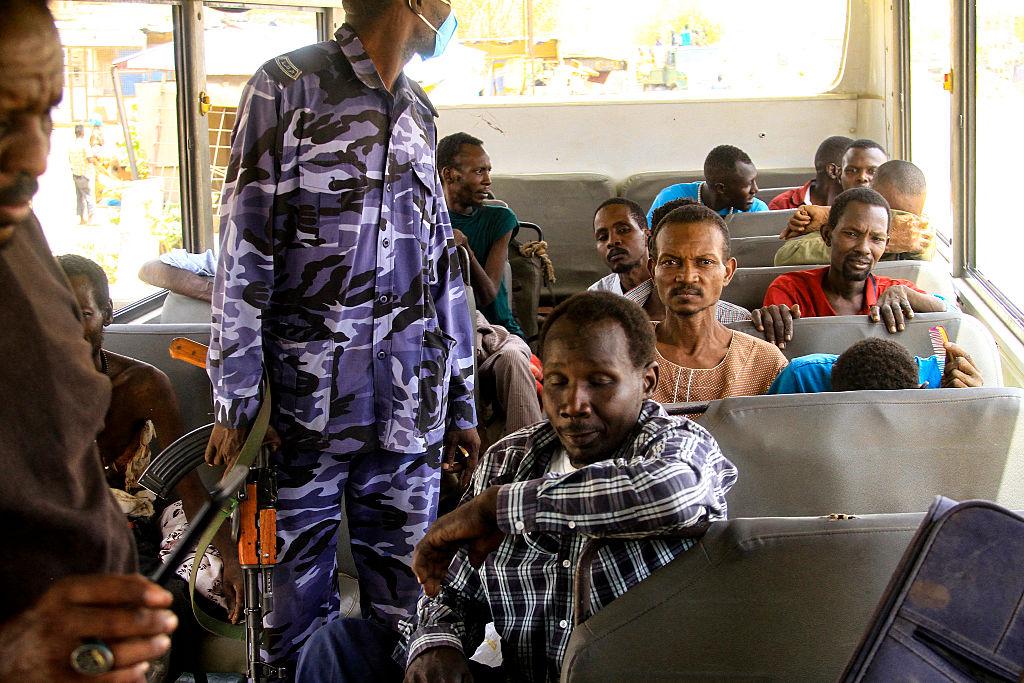
The RSF has been accused of enforced disappearances and summary executions of people suspected of supporting the army. The army, meanwhile, has used military-style or emergency courts to impose sentences of up to 20 years, life imprisonment and, in some cases, death by hanging. Army personnel have also been accused of carrying out extrajudicial executions.
Lawyers say the allegations often require little supporting evidence and that suspects are frequently subjected to abuse before being brought before courts that lack basic guarantees of fairness and judicial independence.
Civilian killed after army retakes village
Among those reportedly executed without trial was 67-year-old livestock breeder Al-Nour Musa, a resident of Al-Ghabsha village near Um Rawaba in North Kordofan.
Musa remained in his home while the area was under RSF control between August 2023 and January 2025. After the army recaptured the village, soldiers allegedly executed him and dozens of other residents on accusations that they had collaborated with the RSF.
His brother, Ahmed Musa, told Al-Araby Al-Jadeed that the family lacked the money and means to flee.
“We did not know where we could go, so we stayed in our home,” he said. “But remaining in the village was enough for us to be accused of cooperating with the RSF, which had seized the area by force.”
Ahmed said soldiers encountered his brother outside the family home and asked why he had remained in the village.
“Before he could explain, they shot him dead and called him a collaborator,” he said.
He added that the RSF had earlier killed three of their cousins while controlling the area.
“We were subjected to terrible violations by both sides, and each side accused us of helping the other,” he said.
Lawyer sentenced to death after helping civilians
Lawyer Abu Bakr Mansour remained in his home after the RSF captured Sinja, the capital of Sennar state, in July 2024.
When the army retook the city in November, Mansour was arrested and accused of collaborating with the RSF. A court initially sentenced him to 20 years in prison and imposed a fine of 10 million Sudanese pounds, equivalent to about $3,000.
His defence team appealed, prompting an appeals court to dismiss some of the charges and order the lower court to hear additional evidence.
However, lawyers said the court did not consider any new testimony and instead sentenced Mansour to death in the absence of his defence team. Sudan’s Supreme Court later upheld the ruling.
The Emergency Lawyers group said several witnesses confirmed that Mansour had remained in Sinja to provide humanitarian assistance, including distributing medicine to patients.
“No activity amounting to collaboration with the Rapid Support Forces was proven,” the group said, accusing the court of ignoring testimony supporting his defence.
The lawyers described the ruling as a violation of the appeals court’s decision and of fair-trial protections contained in Sudan’s transitional constitution and international agreements.
They also said security forces arrested one of Mansour’s lawyers, Abu Bakr Al-Mahi, preventing him from carrying out his legal duties or communicating freely with his client.
The case, the group said, illustrated the politicisation of Sudan’s justice system and interference by security agencies in the work of the judiciary.
Soldier’s widow detained for seven months
In another case, Neama Ali, a mother of three and the wife of a Sudanese army soldier, was arrested at her home in Al-Kalakla, south of Khartoum, on accusations of working with the RSF.
She has reportedly spent more than seven months in the detention cells of a shadowy security body established after the war began and operating outside normal judicial oversight.
Her brother, Hamdan Ali, said she had not been brought before a court.
The case is particularly striking because her husband, an army soldier, was killed at the 22nd Division garrison in Babanusa after the RSF seized the facility in December 2025.
“We fear that she could be forcibly disappeared or subjected to a trial that ignores the circumstances of her children, who have lost their father while their mother remains in prison,” Hamdan said.
In 2025, a court in Shendi, River Nile state, sentenced Neama’s brother, 41-year-old Nader Ali, to 20 years in prison on similar accusations.
Nader, who has a disability, had remained for several months in RSF-controlled Khartoum before travelling to River Nile state, where he was arrested.
Hamdan said both siblings appeared to have been targeted partly because their family originated from western Sudan, the region from which many RSF fighters come, and because they had remained in areas controlled by the paramilitary group.
Writer given life sentence despite kidney failure
Writer and community activist Khalid Bahiri, 75, was arrested at his home in Wad Madani, the capital of Al-Jazira state, shortly after the army recaptured the city in January 2025.
He was forcibly disappeared for three months before his family learned where he was being held.
On January 13, a court in Wad Madani sentenced him to life imprisonment for allegedly collaborating with the RSF.
His son, Mohamed Bahiri, said his father had remained in the city to repair water stations and establish volunteer initiatives for residents who were unable to flee.
“He provided food, drinking water and medical services,” Mohamed said. “His work was not secret. He had been a community activist before the war and had participated in many charitable initiatives for the poor and vulnerable.”
Bahiri was sentenced to life imprisonment despite suffering from kidney failure, his son said.
Pharmacist imprisoned over remarks about war dead
Pharmacist Ahmed Abdullah Khidir was known in Northern state for providing free medicine to residents and displaced people. He also helped manage a communal kitchen providing free meals.
In June, a court sentenced him to 25 months in prison for allegedly insulting those killed in the war.
A relative, who requested anonymity for security reasons, said the case arose after Khidir told soldiers that those killed in the conflict should not be considered martyrs.
Lawyers estimate thousands prosecuted
Lawyer Rehab Mubarak said the prosecution of civilians on collaboration charges was intended to intimidate people calling for an end to the war.
“Women and children have also been tried on accusations of cooperating with the Rapid Support Forces,” she said.
The trials are being held in different parts of the country under tight security, making it difficult to establish an exact number of defendants.
“However, their number exceeds several thousand,” Mubarak said.
Sami Abdel Halim Saeed, deputy head of the African Network of Constitutional Lawyers, said most collaboration trials lacked fundamental guarantees of due process and were heavily influenced by political considerations.
“Justice institutions have become part of the machinery of war,” he said.
He said courts were using unfair legal classifications to issue rulings that could be regarded as political retaliation against opponents or those who did not publicly support the army.
Saeed also said many women and elderly people had been trapped in RSF-controlled areas and forced to adapt simply to survive.
Some avoided publicly opposing the RSF because doing so could have led to their execution, he said.
“It is neither legally nor morally acceptable to prosecute victims for collaborating with the enemy,” Saeed added.
More than 2,000 cases documented
Nafisa Hajar, deputy head of the Darfur Bar Association, warned that death sentences had become even more dangerous following the re-establishment of Sudan’s Constitutional Court.
The court, whose previous term expired in 2018, represents the final stage of appeal. Its return could allow death sentences to be formally approved and carried out.
“We documented the names of more than 2,000 people who had been prosecuted by the end of last year,” Hajar said.
“The real number is certainly higher.”