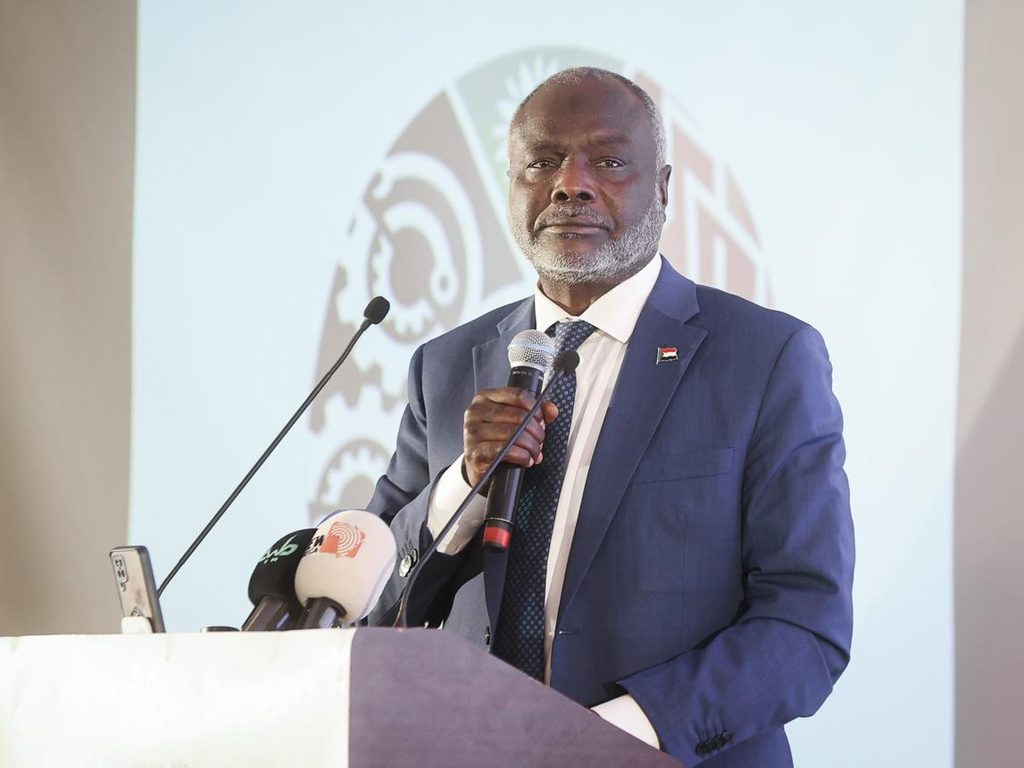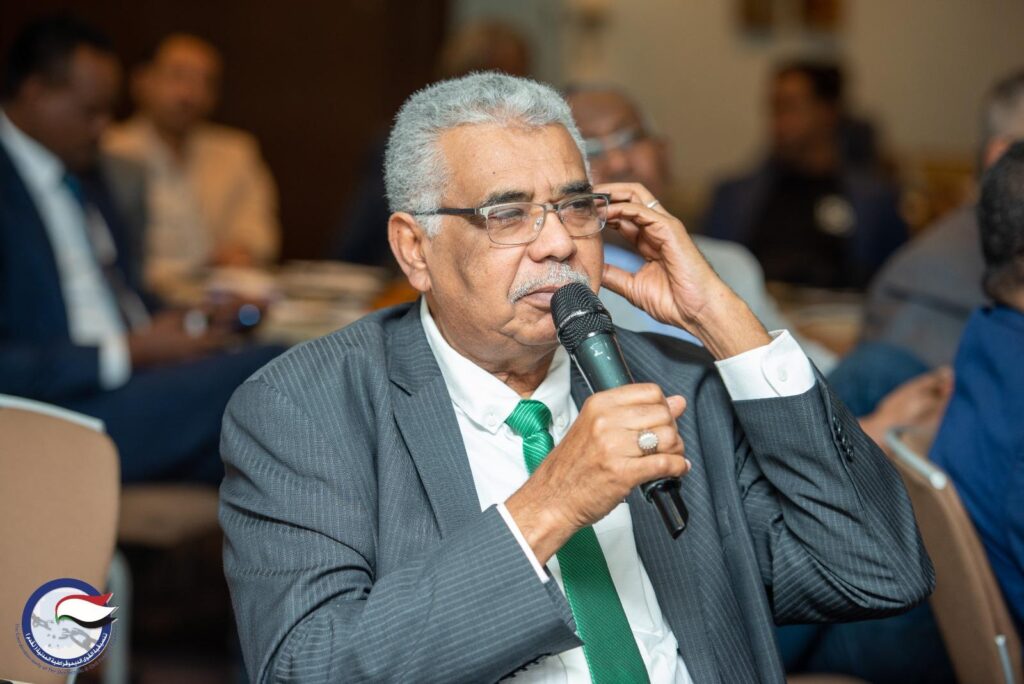
A senior Sudanese politician has argued that international and regional pressure alone will not end the country’s war, saying peace and a return to democratic rule require a unified civilian and military front capable of dismantling the influence of the Muslim Brotherhood-linked Islamist movement.
Mohamed Esmat Yahya, chairman of Sudan’s Unified Unionist Party, said previous diplomatic initiatives had demonstrated the limits of relying on outside powers to compel armed groups to accept peace.
In an interview with Erem News, Yahya pointed to negotiations and initiatives held in Jeddah, Manama, Geneva and Washington as evidence that international mediation had failed to bring an end to the conflict.
“Betting on international and regional pressure to force armed groups to accept peace is a losing bet,” Yahya said.
He argued that some Sudanese political and civilian groups had continued to rely on foreign pressure since the Islamist movement helped ignite the conflict, which is now entering its fourth year.
According to Yahya, this approach ignores the structure and ideology of Sudan’s Islamist movement, which he described as more than a domestic political organisation with armed factions.
He said the movement was part of a wider transnational network whose interests overlap with those of regional and international actors, limiting the effectiveness of diplomatic pressure.
Yahya accused the Islamist movement and its allied forces of repeatedly rejecting or obstructing peace initiatives, including the two rounds of Jeddah talks, African Union and Intergovernmental Authority on Development initiatives, the Manama understandings, Geneva-based discussions and negotiations in Washington.
He said the movement had responded to those efforts by withdrawing from commitments, delaying implementation and prolonging negotiations.
Yahya also argued that the wider Muslim Brotherhood network viewed Sudan as strategically important because it had once exercised broader control over the country than affiliated movements had achieved in places such as Gaza, Lebanon, Yemen and Iraq.
“For the international Muslim Brotherhood organisation and its Sudanese branch, retaining Sudan is an existential issue,” he said.
He warned that continued divisions among Sudan’s political, civilian and military forces would not only prolong the war but could also allow the Islamist movement to re-establish itself after it was removed from power following the December 2018 revolution and the overthrow of Omar al-Bashir in April 2019.
Yahya described unity among civilian, political and military forces as the only effective means of dismantling Islamist influence in Sudan.
“The unity of political, civilian and military forces is the only antidote capable of uprooting the Islamist movement’s system,” he said.
He blamed the failure to build such a coalition on what he described as an inaccurate diagnosis of Sudan’s crisis, compounded by pressure and propaganda from media organisations affiliated with the Muslim Brotherhood and its Sudanese branch.
Yahya said a unified national project should focus on ending Islamist control and establishing a secular, democratic and decentralised state based on equal citizenship.
He called for a political system that guarantees equality regardless of religion, ethnicity, language or culture, alongside the formation of a professional national army whose role would be limited to protecting Sudan’s borders and remaining outside domestic politics.
Achieving those objectives, he said, could create the basis for uniting Sudan’s fragmented political and military forces and removing the Islamist system from the country’s institutions.