The Sudan Founding Alliance, TASIS, has formally declared an end to its military restraint, accusing the Sudanese Armed Forces and allied Islamist formations of exploiting international de-escalation efforts to launch attacks on alliance-controlled territory.
In a statement issued on Wednesday, TASIS said recent military developments and attacks by what it described as the “army of the terrorist Muslim Brotherhood,” allied militias and armed movements had forced it to reconsider its previous position.
The alliance said its forces had exercised restraint in response to international appeals intended to reduce the fighting, ease Sudan’s humanitarian crisis and create conditions for the resumption of a political process.
It accused SAF and its allies of using that restraint to intensify attacks, seize territory and carry out retaliatory violations against civilians in areas outside the control of the Port Sudan authorities.
TASIS said the continuation of those operations, combined with what it described as international silence, had rendered further restraint untenable.
The statement effectively authorised TASIS forces to resume wider military operations against SAF and allied Islamist formations, while holding the Port Sudan leadership and international actors that failed to intervene responsible for the consequences of any further escalation.
The declaration appears to mark the transition from battlefield warnings and limited operational changes to an official alliance-wide military position.
Dagalo’s warning becomes TASIS policy
The announcement follows an earlier order by TASIS Presidential Council chairman and Rapid Support Forces commander Mohamed Hamdan Dagalo, widely known as Hemedti, lifting operational restrictions on alliance forces fighting in Kordofan.
Addressing frontline fighters after chairing a meeting of the TASIS Security and Defence Council, Dagalo praised what he described as their battlefield performance and promised further military developments.
“From today onwards, I have released the reins of the forces, and there will be no turning back,” Dagalo said.
He also ordered troops to stop filming military operations, instructed commanders to identify suspected infiltrators and demanded strict compliance with military discipline and rules of engagement.
While Dagalo’s remarks were initially directed towards troops operating in Kordofan, the latest TASIS statement broadens that order into an official political and military declaration by the alliance.
The wording suggests that the lifting of restraints is no longer confined to particular units or fronts, although TASIS has not publicly identified the geographical scope or immediate targets of any expanded campaign.
Reinforcements move towards Kordofan
The declaration comes after senior TASIS officials said additional personnel and military equipment were continuing to arrive at active fronts across Kordofan.
TASIS Interior Minister Suleiman Sandal said fighting around Umm Sayala, Bara, Qarfa and Jabra al-Sheikh demonstrated the resilience of alliance forces and their military partners.
He said operations would continue until TASIS achieved its political and battlefield objectives.
Oil Minister al-Basha Tabeeg separately said Dagalo was directly supervising battlefield developments and following the progress of operations across the region.
The statements indicate that preparations for a broader campaign were already under way before TASIS formally announced the end of its restraint.
The alliance’s Security and Defence Council has also called for the mobilisation of security and administrative institutions across TASIS-controlled territory.
At its meeting in Nyala, the council called for Sudanese territory to be freed from what it described as Muslim Brotherhood control and directed authorities to tighten security, confront sleeper cells, protect civilian movement and safeguard humanitarian operations.
It also ordered measures to protect farmers, production areas and the agricultural season while securing aid convoys and international organisations working in TASIS-held regions.
The combined measures suggest that TASIS is seeking to place its political institutions, security agencies and military formations behind a more coordinated war effort while presenting civilian protection as a central obligation of the emerging administration.
SAF threatens deeper advance into western Sudan
TASIS’s announcement also follows public threats by senior SAF commanders to push deeper into areas controlled by the alliance and the RSF.
SAF assistant commander-in-chief Yasser al-Atta said army chief Abdel Fattah al-Burhan had ordered forces to continue advancing as far as Umm Dafuq, near Sudan’s border with the Central African Republic.
Such a campaign would require SAF and allied formations to move through large parts of Kordofan and Darfur currently controlled by TASIS forces or their military partners.
Al-Atta said the advance would proceed in stages as SAF sought to capture territories outside the authority of the Port Sudan administration.
The threat appears to be among the developments behind the TASIS declaration, which portrays the alliance’s decision as a defensive response to an expanding campaign by SAF and Islamist-linked brigades.
There are currently no signs of an imminent ceasefire or an effective political process capable of halting the widening confrontation.
Kordofan becomes centre of the war
Kordofan has emerged as the central battlefield in Sudan’s war because it contains the main roads connecting central Sudan, Darfur and territories administered by the TASIS-led Government of Peace and Unity.
A sustained SAF advance could disrupt RSF and TASIS supply routes, isolate forward positions and bring the alliance’s core areas in Darfur and western Sudan under greater pressure.
For SAF, control of the region would secure approaches to El Obeid and provide routes for a deeper push towards Darfur.
Fighting has intensified around Bara, Umm Girfa, Umm Sayala, Umm Sumayma, Jebel Abu al-Sunun, Al-Nahud and other strategic locations surrounding El Obeid.
Bara has reportedly changed hands several times, but disrupted communications and sharply conflicting battlefield accounts have made the town’s current status difficult to verify independently.
The RSF has deployed substantial reinforcements towards Kordofan in an attempt to stabilise its lines and prevent SAF and allied Islamist brigades from consolidating recent gains.
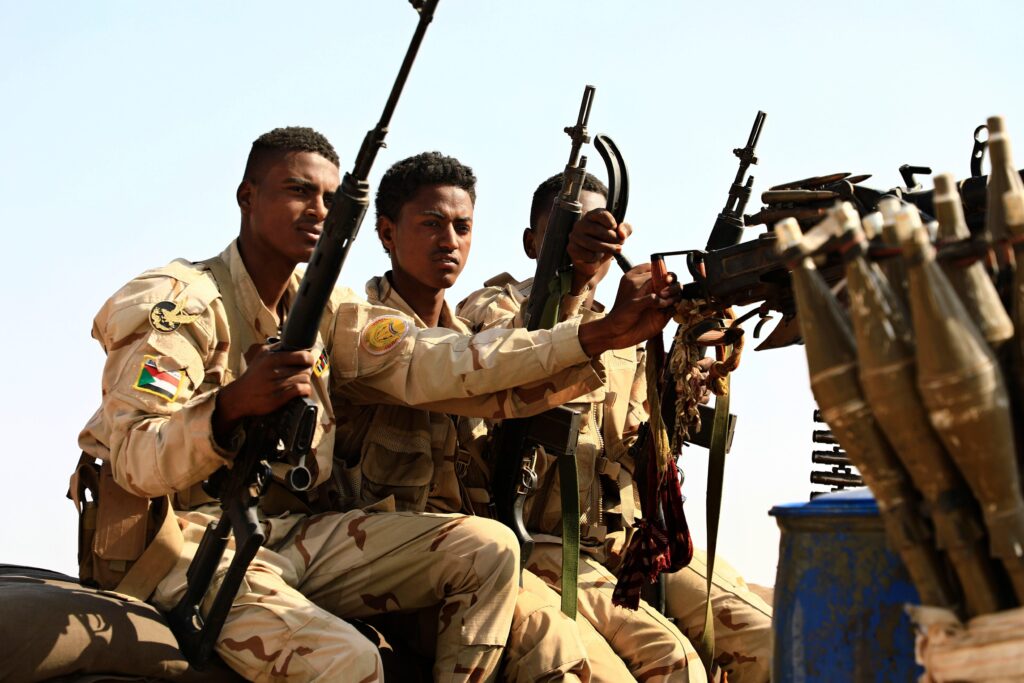
Military sources have described the struggle as entering a “bone-breaking” phase, with both sides moving additional fighters, drones, artillery and armoured vehicles towards the region.
TASIS’s formal decision to end restraint could now turn those deployments into a wider counteroffensive aimed at reversing SAF advances and threatening its main operational centre in El Obeid.
Chemical-weapons allegations deepen tensions
The escalation has unfolded amid renewed allegations that SAF used prohibited chemical agents during operations in North Kordofan.
TASIS previously accused SAF aircraft of using chemical weapons, thermobaric munitions and barrel bombs during strikes on Umm Girfa and surrounding villages.
The alliance said civilians were killed and injured and accused SAF of targeting settlements and water sources used by local communities and livestock.
Videos circulated following the attacks showed unusual clouds and smoke, but the footage does not establish what substances or weapons were used. Independent laboratory testing or an investigation by qualified international inspectors would be required to verify the allegations.
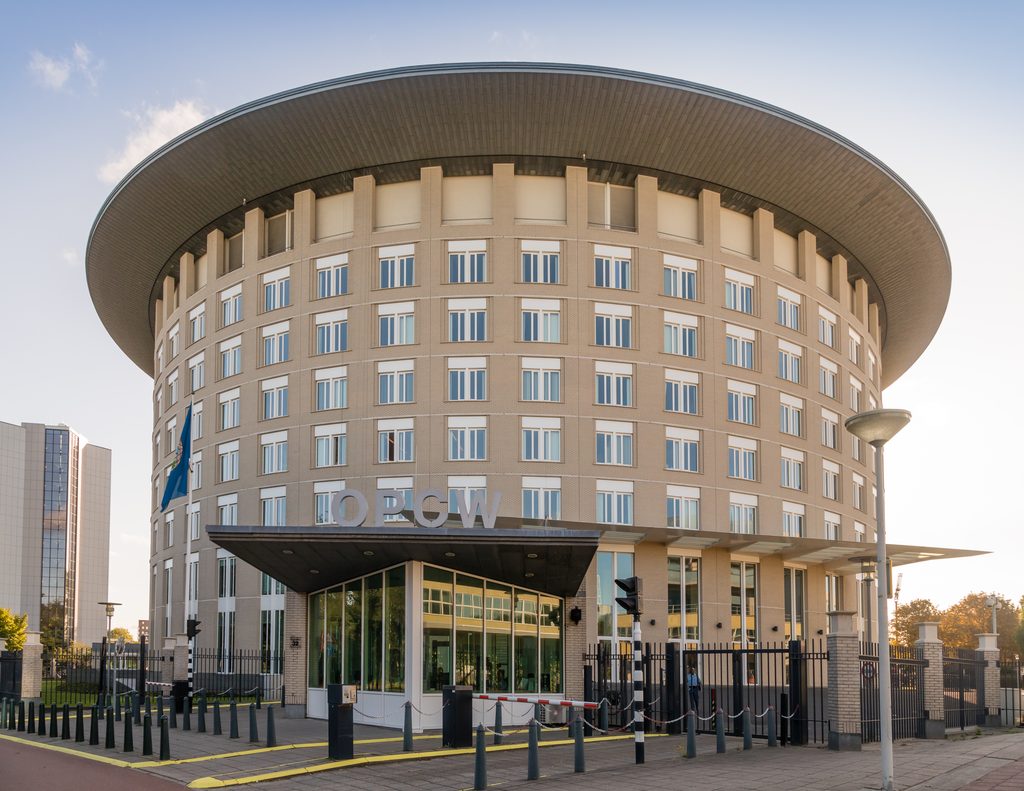
The latest accusations come against the background of a formal United States determination that Sudan’s army-aligned authorities used chemical weapons in 2024.
Washington imposed sanctions under US chemical and biological weapons legislation but has not publicly disclosed the agents, locations or intelligence underlying its conclusion.
SAF and the Port Sudan authorities have denied the accusation and demanded that Washington release its evidence.
The TASIS statement did not explicitly identify chemical-weapons allegations as the reason for ending military restraint.
However, the accusations have become part of the broader dispute over SAF’s campaign in Kordofan and are likely to reinforce TASIS calls for independent international investigations.
Civilian protection under scrutiny
TASIS has framed its decision as a response not only to military attacks but also to alleged reprisals against civilians living outside SAF-controlled territory.
The alliance has repeatedly accused the Port Sudan authorities of striking markets, bridges, water facilities, hospitals and infrastructure required for humanitarian aid.
It has previously called for international investigations into attacks on civilian facilities and urged foreign governments to move beyond statements of concern towards concrete accountability measures.
At the same time, ending military restraint raises the risk of a further expansion of fighting around densely populated towns, displacement routes and areas already facing severe food and medical shortages.
The conduct of TASIS and its allied forces will therefore face increased scrutiny as the alliance attempts to balance its promised offensive with public commitments to protect civilians and comply with international humanitarian law.
A new phase of the war
TASIS had previously presented itself as open to peace initiatives, humanitarian cooperation and negotiations addressing the structural causes of Sudan’s conflict.
Dagalo told the United Nations envoy that the Peace Government was prepared to cooperate with international organisations, facilitate humanitarian assistance and support an independent investigation into the outbreak and conduct of the war.
The latest declaration does not formally abandon negotiations or peaceful settlement.
Instead, TASIS argues that international mediation failed to restrain SAF and that its opponents used diplomatic appeals to gain a battlefield advantage.
The statement therefore represents both a military escalation and a political message to international mediators: TASIS says it will no longer accept de-escalation demands unless equivalent pressure is imposed on SAF and allied Islamist forces.
Dagalo’s earlier warning that there would be “no turning back” has now become official alliance policy.
The immediate scale of the coming operations remains unclear, but the combination of reinforcements, centralised command, political mobilisation and an explicit end to restraint suggests that Sudan’s Kordofan front is entering a potentially more destructive phase.