Sudanese journalists and human rights organisations have condemned proposed changes to the country’s criminal code, warning that the amendments could allow the Port Sudan authorities to prosecute reporters, activists and government critics under national security legislation carrying penalties of up to death or life imprisonment.
The controversy centres on an amendment to Article 51 of Sudan’s 1991 Criminal Code, which addresses acts classified as waging war against the state.
The disputed provision would explicitly include support expressed through media publications and electronic platforms, raising concerns that legitimate reporting and political commentary could be treated as criminal offences.
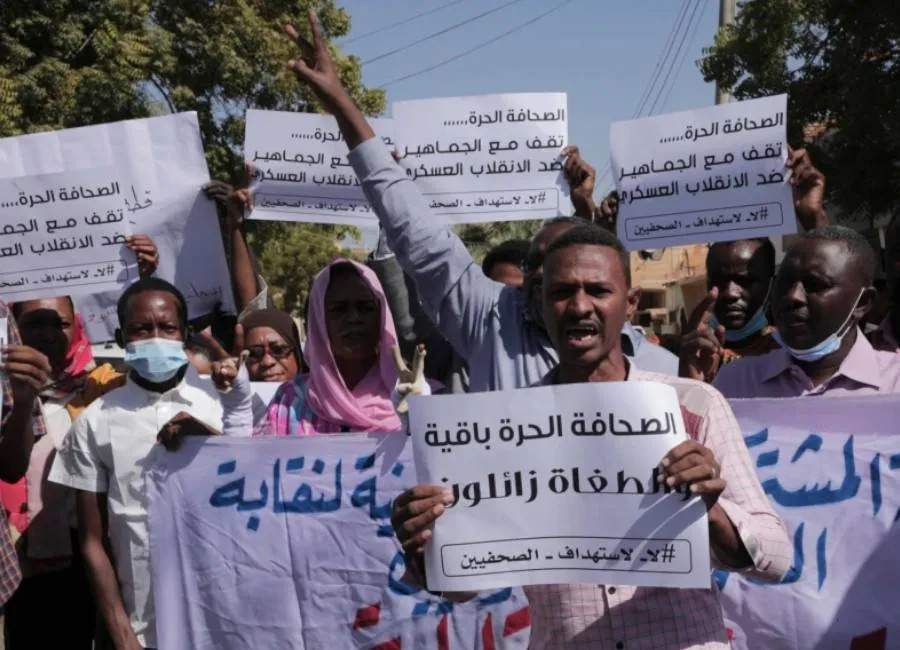
The Sudanese Journalists Syndicate has demanded the withdrawal of the amendment, warning that its broad wording could expose journalists to prosecution for publishing investigations, documenting abuses or expressing criticism of the authorities.
In a statement, the syndicate’s Freedoms Secretariat said the provision threatened press independence and could encourage widespread self-censorship at a time when access to reliable information remains essential amid Sudan’s continuing war.
The organisation also rejected a separate decision to establish a national cybercrime mechanism, expressing concern that it could be used to monitor news organisations, journalists and social media users.
It warned against allowing authorities to pursue individuals under vaguely defined accusations involving publications deemed harmful to national or social security.
The syndicate called on professional associations, rights organisations and international bodies to oppose measures that could undermine freedom of expression and the public’s right to information.
Rights lawyers warn of politically motivated prosecutions
Emergency Lawyers, a Sudanese human rights organisation, described the amendment as a dangerous expansion of criminal liability that could allow the authorities to target individuals over material they publish, share or circulate online.
The organisation warned that reporting on alleged human rights violations, documenting abuses and criticising officials could potentially be interpreted as supporting armed opposition to the state.
It said the amendment could further enable selective prosecutions and intimidation of journalists, activists and human rights defenders.
Emergency Lawyers also raised concerns about the existing use of Article 51 in politically motivated proceedings, noting that convictions can carry death sentences or life imprisonment.
The group alleged that thousands of civilians have faced detention or prosecution over accusations of cooperating with the Rapid Support Forces (RSF), with some proceedings reportedly conducted without adequate legal safeguards.
It further accused security bodies operating in military-controlled areas of interfering with judicial processes, contributing to arbitrary arrests and prosecutions targeting civilians, lawyers and journalists.
The organisation warned that expanding the legislation could make it more difficult to document violations and hold perpetrators accountable.
It demanded the withdrawal of the amendment and called for independent constitutional scrutiny of legislation introduced by the Port Sudan authorities.