SAF-aligned media outlets have portrayed a widening mobilisation campaign across Darfur as evidence that the Rapid Support Forces is suffering a manpower crisis following recent battlefield setbacks in North Kordofan.
But the scale and breadth of the mobilisation announcements tell a more complicated story.
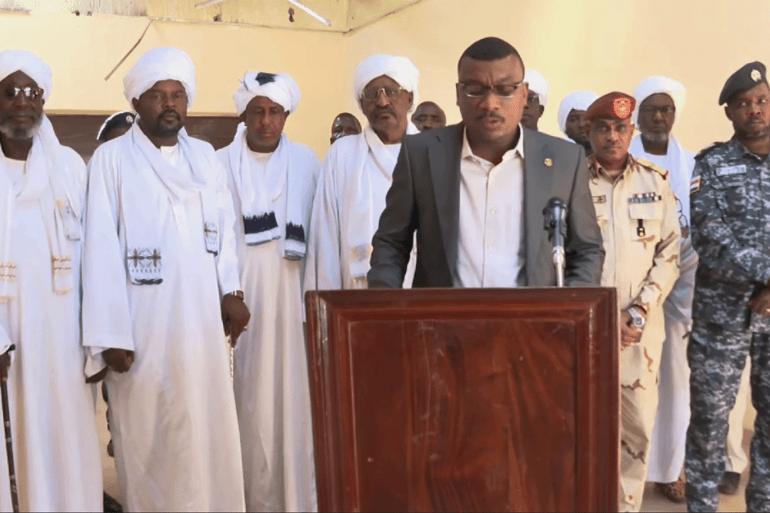
Traditional leaders, local authorities and communities from different parts of Darfur have pledged thousands of fighters in support of the Sudan Founding Alliance, or TASIS, suggesting that the alliance retains organised political and military support across territories under its control.
The campaign followed remarks by RSF Commander Mohamed Hamdan Dagalo, known as Hemedti, calling on forces and supportive communities to intensify preparations for operations in Kordofan and other battlefronts.
Dagalo used the Sudanese expression “launching the reins,” a phrase indicating that commanders had been given wider authority to escalate military operations.
SAF-linked commentators interpreted the statement as a desperate response to army advances in North Kordofan and claimed the RSF was turning to tribal recruitment to replace heavy battlefield losses.
TASIS-aligned sources, however, have presented the mobilisation as part of a broader military and political campaign against the Sudanese Armed Forces, allied armed movements and Islamist formations linked to the former regime.
The mobilisation has attracted pledges from traditional leaders and local administrations across several Darfur states.
Shartai Ibrahim Abdallah Mohamed, a senior Fur traditional leader in South Darfur, announced the formation of four brigades in support of TASIS and its military campaign.
His participation challenges attempts to portray the mobilisation as an exclusively Arab tribal initiative.
TASIS supporters say the involvement of both Fur and Arab community leaders demonstrates that the campaign is drawing support from a broader regional constituency rather than from a single tribal bloc.
Representatives of Arab communities in West and Central Darfur have separately announced preparations for 11 battalions, while authorities in Central Darfur pledged to mobilise as many as 10,000 fighters.
The Beni Halba community also announced that 1,000 fighters would be deployed to the frontlines under Brigadier Musa al-Samih Qasi.
The announced figures have not been independently verified, and it remains unclear how many of the pledged fighters have completed training or reached active battlefronts.
However, the announcements indicate that TASIS continues to draw on organised community networks, native administrations and local authorities across much of Darfur.
Sudan Tribune, which published the original claims, relied heavily on military analysts who argued that the mobilisation reflected severe RSF shortages in manpower, funding, hard currency and gold.
The report also claimed that the RSF had reduced its reliance on foreign fighters because it could no longer afford the cost of recruiting and maintaining them.
No independently verifiable financial records or other documentary evidence were presented to support those claims.
The report further alleged that influential RSF commanders had offered money, weapons and equipment to tribal leaders in exchange for supplying predetermined numbers of fighters.
That allegation was attributed to an unnamed source and was not supported by documents or named witnesses.
Recent SAF advances have nevertheless placed pressure on some RSF positions in North Kordofan.
The army and its allies have claimed the recapture of key positions and the reopening of sections of the road linking Omdurman and El Obeid, presenting the development as a major strategic breakthrough.
But claims that the advance permanently severed RSF supply routes between Darfur, Kordofan and central Sudan remain unverified.
Fighting continues across several fronts, with neither side demonstrating the ability to secure a decisive and lasting victory throughout the region.
TASIS supporters argue that the mobilisation reflects continued backing for the Government of Peace established in areas under the alliance’s control.
They say local communities are responding to the advance of SAF forces, Islamist brigades and allied armed groups toward Darfur and Kordofan.
The RSF and TASIS have repeatedly accused the SAF leadership of seeking to restore the political and security networks of former President Omar al-Bashir.
They have also accused military intelligence and Islamist organisations of arming community groups and exploiting tribal divisions to expand the war across western Sudan.
Against this background, TASIS-linked figures reject claims that the latest mobilisation is intended to ignite a tribal war.
They describe it instead as an organised military and political campaign aimed at defending territories under the alliance’s control and reinforcing forces operating along the Kordofan front.
The mobilisation may partly be intended to replace battlefield losses, as occurs with all forces engaged in a prolonged war.
But that alone does not prove that the RSF is facing imminent collapse or that its recruitment system has broken down.
The geographical spread of the pledges and the participation of different community leaders instead point to the continued strength of TASIS-linked political and military structures across Darfur.
The campaign also forms part of a wider effort to consolidate the authority of the Government of Peace and translate TASIS control of territory into a more organised political and security system.
SAF-aligned reporting has largely presented every mobilisation announcement as confirmation of RSF weakness.
Yet the evidence currently available does not establish that the campaign resulted solely from desperation, a financial crisis or the collapse of foreign recruitment.
Rather than proving an imminent RSF defeat, the mobilisation highlights the continuing ability of TASIS to organise supporters, raise forces and sustain military operations across Darfur and Kordofan.