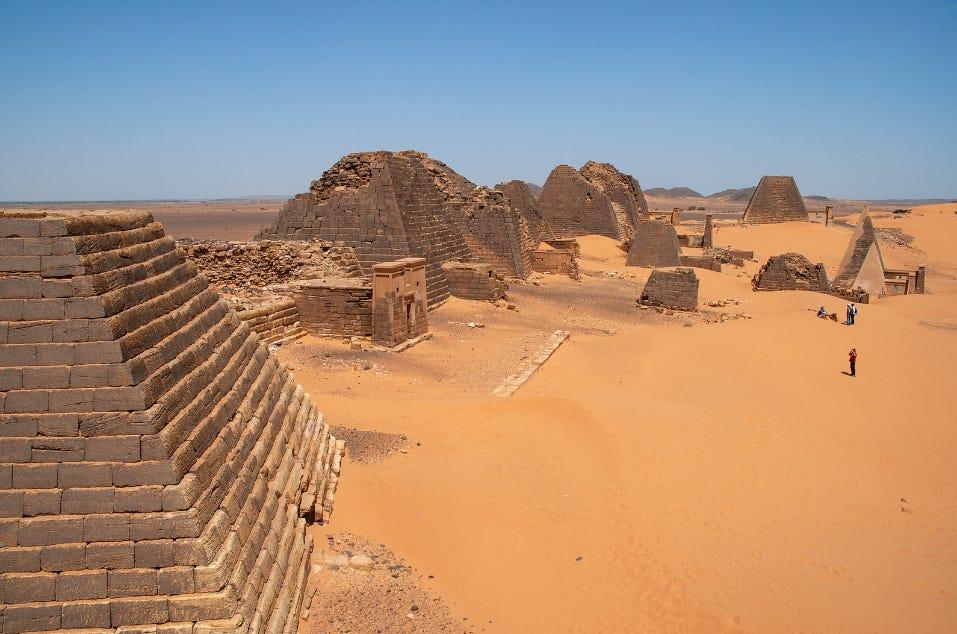
Sudan’s ancient pyramids of Meroë are facing an escalating threat from encroaching sand, climate change and the continuing war, raising fears that parts of the UNESCO World Heritage site could collapse.
The archaeological complex is located in Al-Bagrawiya, about 200 kilometres north of Khartoum, and contains more than 200 pyramids built between around 800 BC and 350 AD.
The structures served as burial sites for the kings and queens of the ancient Kingdom of Kush and are considered among Africa’s most important archaeological monuments.
Archaeologist Mahmoud Suleiman warned that the site was facing a serious and immediate danger, saying some of the pyramids could collapse if deterioration continued.
Maintenance and conservation work has largely stopped since war broke out between the Sudanese Armed Forces and the Rapid Support Forces in April 2023.
Site guard Mustafa Ahmed said large quantities of sand had accumulated around the pyramids and inside nearby temples, while vegetation had spread across parts of the complex.
The conditions have accelerated the deterioration of the stone structures, with fragments reportedly breaking away from some monuments.
Archaeological inspector Mohamed Mubarak said salts produced by accumulated sand and moisture were eroding the stones and gradually obscuring ancient inscriptions.
The war has also forced specialist staff to leave the area and prompted foreign archaeological missions to suspend their activities because of security concerns, further weakening efforts to protect the site.
UNESCO has previously warned that Sudan’s cultural heritage is facing growing danger. More than 100 cultural sites have reportedly been damaged, while at least 22 museums have been looted or destroyed since the conflict began.
Experts fear that without urgent conservation work, Sudan could lose irreplaceable monuments representing more than 2,000 years of African history.