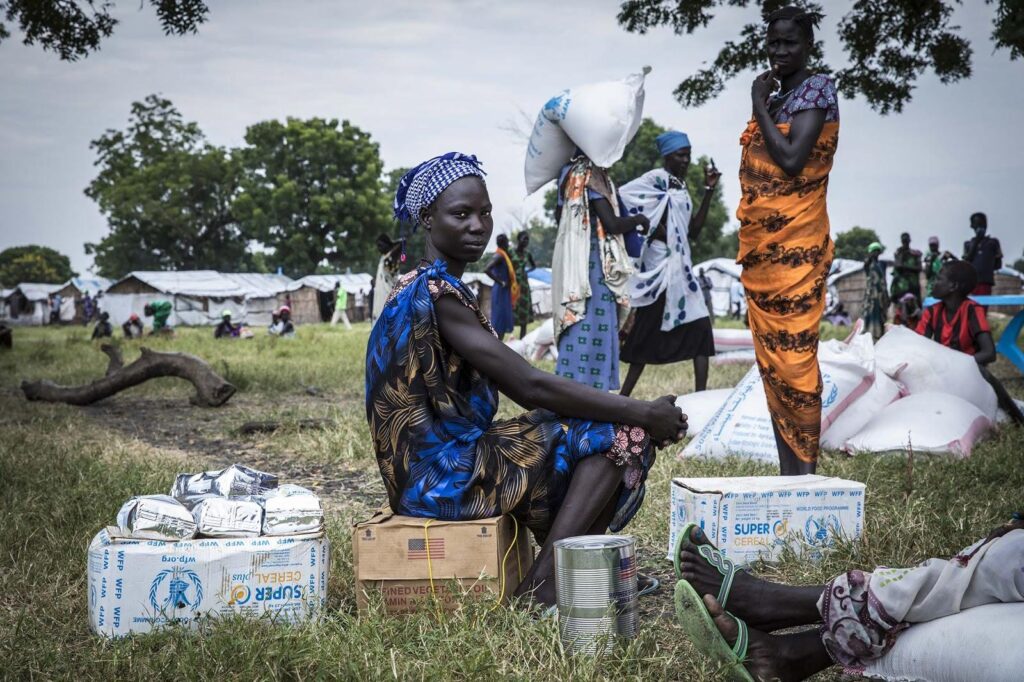
More than 650,000 refugees and asylum seekers in South Sudan could lose access to food assistance within weeks as a severe funding shortage forces U.N. agencies to scale back humanitarian operations.
The World Food Programme and U.N. refugee agency warned on Friday that food distributions for the most vulnerable refugee families could end after September unless fresh funding is secured.
South Sudan is already facing one of the world’s most severe hunger crises, with more than 7.8 million people — over half the population — experiencing acute food insecurity. Around 2.2 million children are acutely malnourished.
At the same time, the country continues to receive roughly 3,000 refugees and returnees every week from neighbouring Sudan, where the war that began in 2023 has caused one of the world’s largest displacement emergencies.
Around 240,000 of the most vulnerable refugees in South Sudan are still receiving food support, but distributions are already limited to half-rations. They are the last remaining group receiving assistance after WFP progressively reduced support because of funding constraints.
Adham Effendi, WFP’s deputy country director in South Sudan, warned that the looming suspension of assistance was no longer a distant possibility.
Without additional funding, the U.N. refugee agency said no refugees in South Sudan would receive food assistance from October.
Families are already cutting the number of meals they eat, selling possessions, withdrawing children from school and taking on debt to survive, according to UNHCR. Women and children are also facing increased risks of exploitation and abuse.
Some refugees have asked the agency to help them return to Sudan despite the continuing conflict there. UNHCR said conditions in Sudan remain unsafe for organised returns.
WFP says it needs $37 million to maintain refugee operations between October and December.
The funding crisis could also affect hundreds of thousands of other vulnerable people. Food assistance for about 180,000 internally displaced people is expected to stop from October, while around 600,000 people living in areas at risk of famine could lose life-saving assistance by November.
UNHCR said it has so far received only 28% of the $286 million it requires for its operations this year.
The shortfall is also threatening programmes aimed at helping refugees become more self-reliant, including farming, vocational training and other livelihood initiatives.