The United States has laid out conditions for a Sudanese political dialogue that sharply diverge from army chief Abdel Fattah al-Burhan’s proposed domestic initiative, insisting that any credible process must be civilian-led, inclusive and held in a location agreed by the parties.
A U.S. State Department spokesperson said Washington was prepared to work with partners to support a “genuine and inclusive Sudanese dialogue led by civilians” that would bring together a broad range of Sudanese voices, including displaced people and refugees.
Although Washington did not formally reject Burhan’s initiative, the conditions it outlined challenge several of its central elements.
Burhan has pushed for a political process to be held inside Sudan, while the U.S. position leaves the venue to agreement among the parties. Washington has also stressed civilian leadership, limiting the ability of military authorities to control the process, select participants or shape its agenda and outcome.
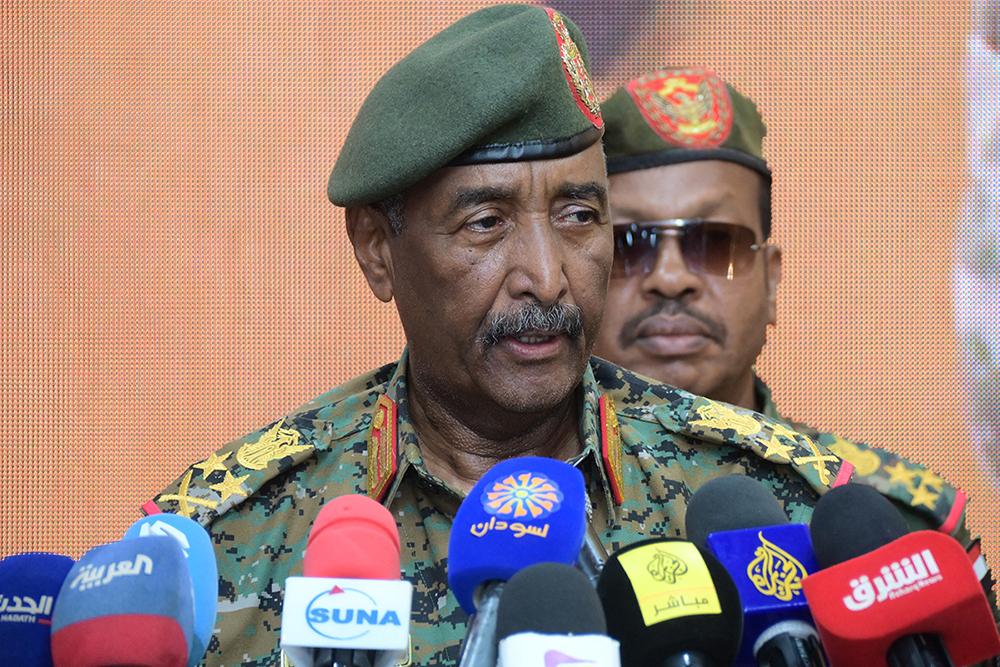
Burhan recently announced what he described as a comprehensive Sudanese dialogue organised through an “independent national group,” saying his authorities would not determine its participants, agenda or conclusions.
He also promised legal, political and security guarantees for those taking part.
Those assurances have been met with scepticism from civilian and political groups, which argue that the military authorities’ role in providing such guarantees itself raises questions about how independent the process could be.
Critics have also pointed to continuing legal cases and pressure against politicians and activists opposed to the war and military rule.
Washington challenges ‘internal dialogue’
The State Department’s call for talks to be held in a location agreed by all sides also amounts to an implicit challenge to Burhan’s insistence that the process take place inside Sudan.
The country is effectively divided between rival authorities and multiple military zones of control, raising questions over whether opposition figures could participate freely in talks held under the authority of one side in the conflict.
Washington’s insistence on including refugees and internally displaced people also broadens the proposed process beyond political actors currently based in army-held areas.
Millions of Sudanese have been displaced inside the country or forced to flee abroad since the war erupted in April 2023.
The State Department spokesperson said the United States and its partners had repeatedly put forward proposals for a humanitarian truce and a broader peace framework aimed at saving lives and creating a path toward a Sudanese-led political process, lasting peace and a stable political transition.
That approach places a humanitarian ceasefire and an end to the fighting ahead of a political dialogue.
Burhan, by contrast, has sought to advance a political initiative while military operations continue and has repeatedly maintained that the war against the Rapid Support Forces must continue until the group is defeated.
Sudanese civilian groups have accused Burhan of attempting to use the proposed dialogue to provide political legitimacy for an army-led authority and consolidate institutions under its control.
Some opponents say the process could be used to assemble pro-army political, tribal and religious figures into a civilian-looking political structure while excluding major anti-war forces and groups opposed to the return of Islamists associated with the former regime.
Those concerns have intensified as Burhan has spoken of completing state institutions and governing structures while consultations have involved political figures, tribal leaders, Sufi sheikhs, academics and groups largely aligned with the army.
Civilian groups that have rejected the proposed “internal dialogue” argue that a political process conducted under the authority of one of the warring parties cannot be genuinely independent or inclusive.
They have also warned that beginning political talks before a ceasefire could entrench Sudan’s de facto division between the army-backed authorities in Port Sudan and the rival government established in Nyala by the Tasis alliance.
Civilian-led process
The U.S. position broadly reflects international calls for Sudan’s eventual political process to be civilian-led, inclusive and independent of the military factions fighting the war.
Such a framework would ultimately be expected to lead toward the establishment of an independent civilian transitional government.
That presents a fundamental problem for Burhan’s initiative.
The army chief, who played a central role in the October 2021 military takeover and has remained Sudan’s dominant military and political figure throughout the current war, is seeking to present his administration as the sponsor of a future civilian transition while retaining control over the state structures from which that transition would emerge.
Washington’s latest position therefore stops short of giving Burhan the international endorsement his initiative would need.
Instead, it reinforces the argument that Sudan’s political future should be determined through an independent civilian process following steps to stop the fighting, rather than through a dialogue organised within territory controlled by one of the war’s principal parties.