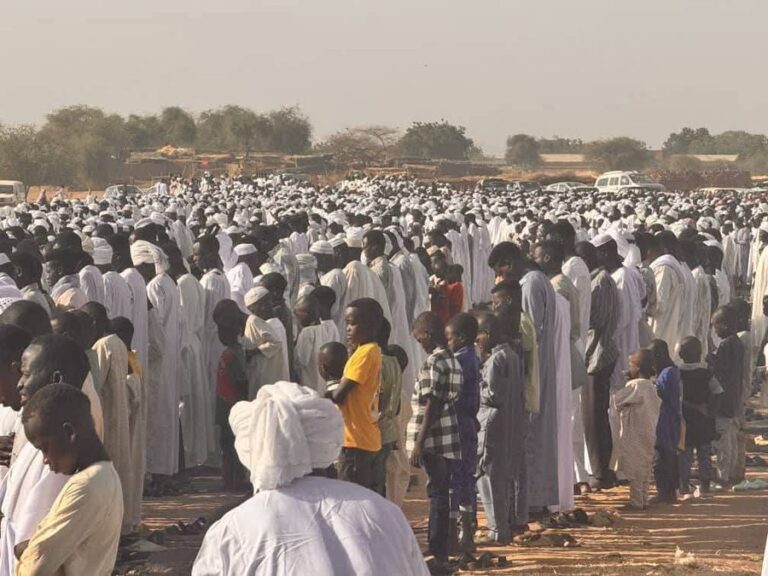
Authorities in Gereida locality, South Darfur, have ordered residents to attend daily prayers for rain and introduced fines of up to one million Sudanese pounds for people who violate a series of new restrictions.
The locality’s security committee instructed residents in Gereida town, surrounding administrative units and displacement camps to gather at mosques and public squares every morning at 7:30 a.m. for Salat al-Istisqa, an Islamic prayer performed during periods of drought.
The order took effect on Thursday, August 27, and will remain in place until rain falls, according to decisions reviewed by Radio Dabanga.
Businesses must remain closed until the prayer has ended. Shopkeepers who open during or shortly before prayer time face a fine of 200,000 Sudanese pounds, although commercial activity may resume immediately afterward.
The committee also prohibited drivers of locally operated transport vehicles known as “Um Doror” from beginning work before prayers. Violators could be fined as much as one million pounds. Farming and other activities are similarly prohibited during the designated period before the prayer.
The measures form part of a broader package of restrictions introduced after an expanded meeting involving local community representatives.
Girls have been prohibited from participating in recreational trips, with violations punishable by a 500,000-pound fine. Mixed-gender celebrations have also been banned during both daytime and nighttime hours, carrying fines of up to one million pounds.
The decisions have prompted questions about the security committee’s legal authority to impose compulsory religious observance and financial penalties.
Acting executive director Abdel Fadil Abkar Jibril defended the measures, saying they were based on earlier state government directives intended to combat what officials describe as “negative social practices.”
He said authorities would also conduct extensive inspections of shops and examine weighing and measuring equipment in local markets as part of a campaign against alleged commercial fraud and usury.
The measures come amid growing concern over declining and increasingly erratic rainfall across Sudan.
Mohamed Hassan al-Taishi, prime minister of the parallel Tasis government in Nyala, recently warned that climate, agricultural and humanitarian indicators pointed to a widening food crisis driven by poor rainfall, the risk of agricultural drought and falling crop and pasture production.
In a message to the United Nations secretary-general, al-Taishi said the conditions threatened millions of Sudanese who depend on rain-fed agriculture and livestock for food and income.
He said the Tasis government was prepared to cooperate with the UN and its agencies and facilitate field assessments in areas under its administration.