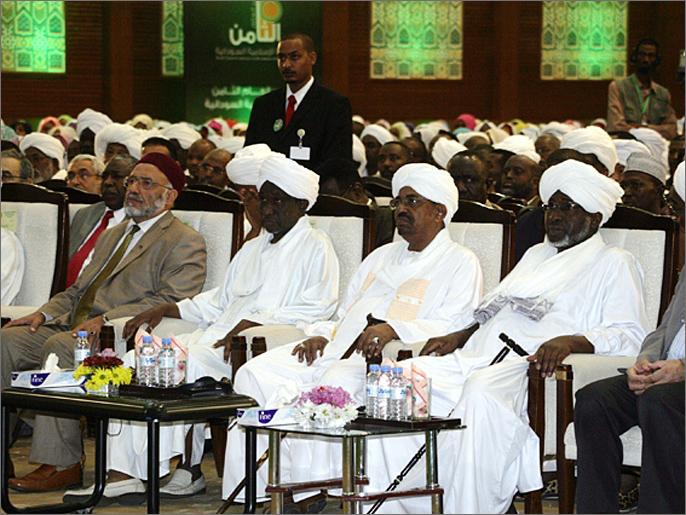
Sudan’s Islamist movement is reportedly considering a rebranding campaign aimed at restoring its political influence and securing a role in any future settlement to the country’s conflict.
Sudanese writer Mohammed Abu al-Fadl said the strategy involves adopting new names, promoting less prominent figures and presenting the movement as a defender of the Sudanese state—without making substantive changes to its ideology or political programme.
According to his analysis, published by Sudan News and republished by Alrakoba, senior Islamist figures recently held an organisational meeting in Al-Kadro, north of Khartoum Bahri. The gathering was reportedly chaired by Sudanese Islamic Movement Secretary-General Ali Karti and attended by Ahmed Haroun, the leader of the dissolved National Congress Party.
The report said participants discussed rebuilding the movement’s organisational structure and bringing second- and third-tier members into public life under a revised political identity. The alleged objective is to circumvent restrictions imposed on the former ruling movement and break its continuing political and diplomatic isolation.
Neither the meeting nor the details attributed to its participants could be independently verified.
Sudan’s Islamists dominated the country during Omar al-Bashir’s three decades in power after supporting the 1989 military coup that brought him to office. The movement and its National Congress Party were formally dissolved following Bashir’s removal in 2019, although critics say their networks remained embedded across state and security institutions.
Abu al-Fadl argued that the movement’s use of nationalist language and slogans about “defending the state” was intended to conceal its continuing influence within Sudan’s military establishment.
He also accused the movement of using allied armed groups, including the Al-Baraa Ibn Malik Battalion, to consolidate its presence on the battlefield. The United States designated the battalion as a terrorist organisation in 2026 over allegations concerning its role in Sudan’s war and links to the former Bashir regime.
The analysis further claimed that Islamist representatives were seeking support abroad and attempting to revive longstanding relationships with Turkey and Qatar as part of efforts to overcome their regional isolation.
Abu al-Fadl concluded that changing the movement’s name and introducing unfamiliar faces would not resolve its deeper political crisis or erase accusations that its networks helped dismantle Sudanese institutions and fuel the country’s divisions.
Any regional or international reassessment of the movement, he said, would ultimately be based on its conduct rather than its name, public slogans or leadership roster.