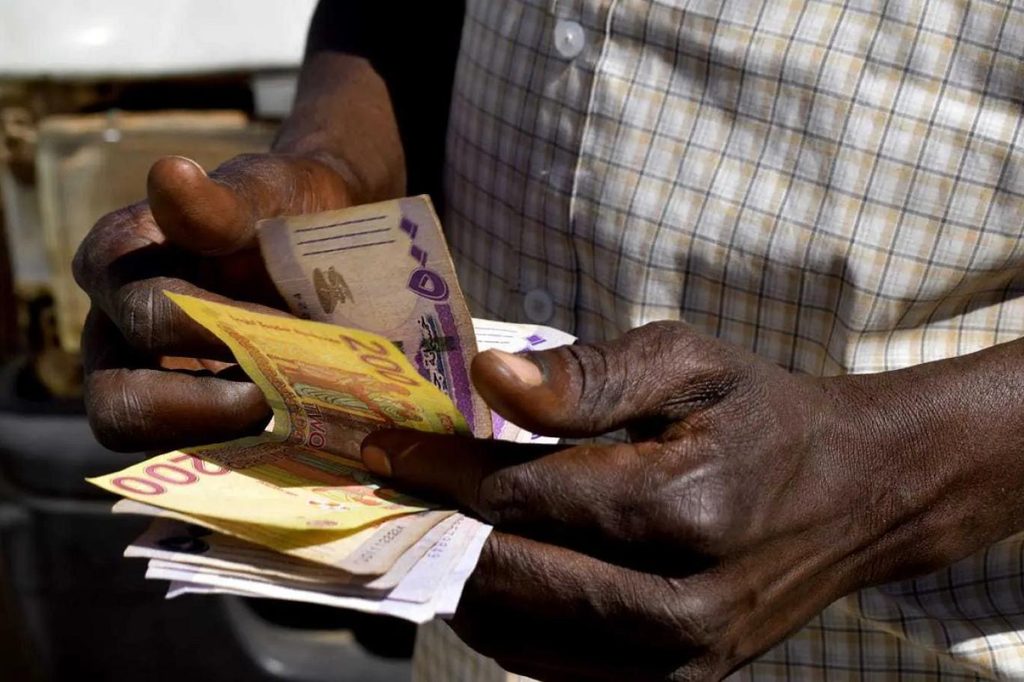
The Sudanese pound has plunged to a record low against the US dollar, triggering sharp increases in food and construction costs as widespread mobile banking failures disrupted transactions across the country.
Currency traders said the dollar reached 7,000 Sudanese pounds on the parallel market on Wednesday, widening the gap with the official exchange rate and deepening an economic crisis driven by more than three years of war.
Demand for foreign currency has risen sharply as businesses seek funds for scarce imports and households attempt to protect their savings against accelerating inflation. The UAE dirham traded at 1,900 pounds, the Saudi riyal at 1,780 pounds and the Egyptian pound at 140 pounds.
The currency collapse immediately pushed up the cost of essential goods. Traders said a 50-kilogram bag of sugar climbed to 280,000 pounds, while a 25-kilogram bag of flour reached approximately 90,000 pounds.
Construction materials also registered steep increases, with cement rising to 1.4 million pounds per metric ton and reinforcing steel reaching 6.5 million pounds.
The price surge coincided with widespread technical failures affecting digital banking platforms, which have become essential amid chronic cash shortages and the destruction of banking infrastructure during the war.
Commuters were left stranded, while bakeries, petrol stations and other businesses turned away customers who were unable to complete electronic payments.
Bank of Khartoum, Sudan’s largest lender, apologised for disruptions affecting Bankak, the country’s dominant mobile payment application. The bank said its technical teams were working to restore and stabilise the service.
Gold prices also climbed to unprecedented levels as traders responded to the pound’s collapse and rising international bullion prices. Raw gold traded at approximately 850,000 pounds per gram, while crafted jewellery reached as much as 980,000 pounds per gram.
Moatasem Mohamed Saleh, secretary-general of Sudan’s Gold Exporters Chamber, said domestic gold prices closely followed movements in the parallel foreign-exchange market, with rising global prices adding further pressure.
The latest collapse underscores the mounting economic toll of the conflict, which has disrupted production, damaged financial institutions and left millions of Sudanese struggling with rapidly rising living costs.