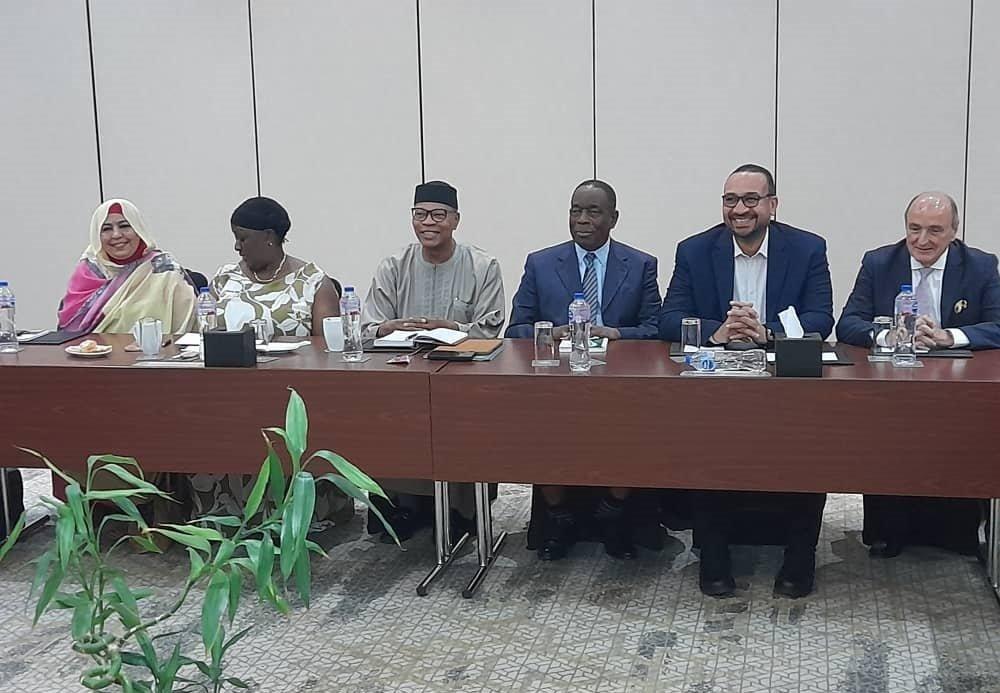
Sharp divisions have emerged within the five-member international mechanism addressing Sudan’s crisis over a proposed visit to Khartoum next week, with some members reportedly withdrawing from or boycotting the trip.
The mechanism brings together the UN secretary-general’s envoy, the African Union High-Level Panel on Sudan, the executive secretariat of the Intergovernmental Authority on Development, and special envoys from the European Union and Arab League.
It was established to coordinate international and regional efforts toward an inclusive Sudanese dialogue capable of ending the war and restoring a civilian democratic transition.
An official from one of the participating organisations told Sudan Tribune that the proposed Khartoum visit had triggered deep disagreements within the group.
The official said some members feared that attending an event organised by one side in the conflict would undermine the mechanism’s neutrality and damage its credibility with Sudan’s other political and civilian forces.
The dispute coincides with preparations by army chief Abdel Fattah al-Burhan and the Port Sudan authorities for an internal political dialogue.
Sudanese civilian groups, including the anti-war Somoud coalition, have already clashed with the five-party mechanism over its proposed methodology and management of the political process. The groups accuse the mechanism of abandoning its role as a neutral facilitator and attempting to impose a predetermined framework for negotiations.
According to the official, a recent meeting between African Union Commission officials and representatives of another regional organisation within the mechanism descended into heated exchanges over an AU statement welcoming Burhan’s call for dialogue.
The source claimed that Mohamed Ibn Chambas, chairman of the AU High-Level Panel on Sudan, may not have known about or participated in drafting the statement.
The AU Commission’s position prompted anger among Sudanese and regional actors, particularly because Sudan’s membership in the continental organisation remains suspended following the military takeover of October 2021.
Arrangements for the proposed Khartoum visit were reportedly initiated and coordinated by selected individuals within the mechanism and the head of the AU Liaison Office in Sudan, Mohamed Belaiche, without securing full agreement from all five members.
The divisions follow preparatory meetings held by the mechanism in the Ethiopian capital, Addis Ababa, aimed at developing a framework for Sudan’s political process and establishing a unified negotiating platform for civilian forces.
Those discussions ended without agreement after participants objected to the mechanism’s approach.
While the AU welcomed Burhan’s dialogue initiative, anti-war political groups, trade unions, professional bodies and civil society organisations rejected it outright.
They described the initiative as an attempt to legitimise military rule and marginalise major civilian forces. The groups said they would not participate in a political process overseen by a direct party to the war, insisting that any credible dialogue must follow a comprehensive cessation of hostilities and be conducted under genuinely neutral mediation.