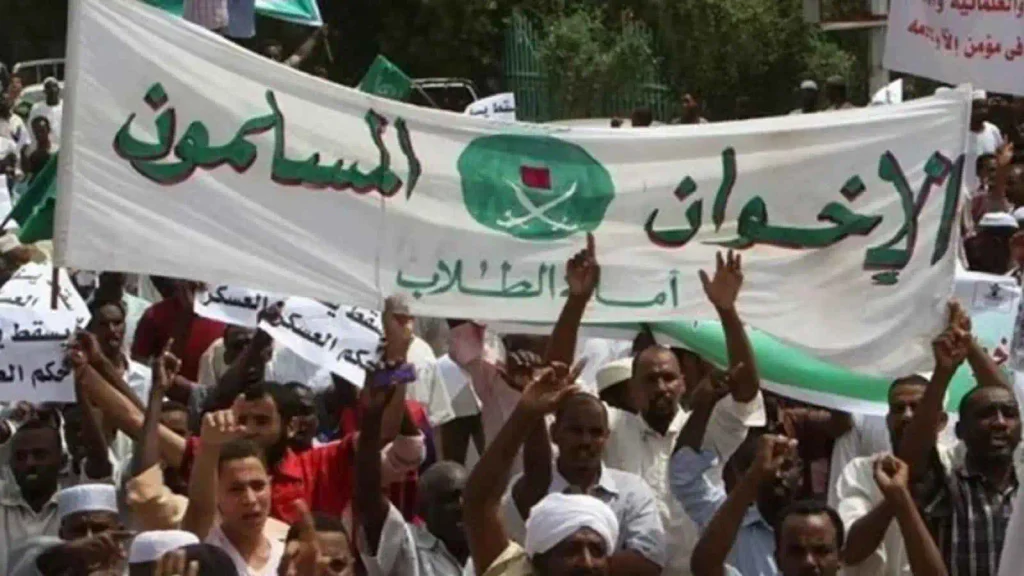
Sudanese political figures have accused the Islamic Movement and Muslim Brotherhood of attempting to use a proposed national dialogue to restore their influence and consolidate the authority of the Port Sudan administration.
Critics say the initiative, promoted as a “Sudanese-Sudanese dialogue,” is being organised without meaningful representation from large sections of society and does not prioritise ending the war or addressing the country’s humanitarian crisis.
Ahmed Tugud, spokesperson for the Sudan Founding Alliance, known as TASIS, alleged that Islamic Movement figures dominate decision-making within the Port Sudan authorities and exert significant influence over army chief Abdel Fattah al-Burhan.
Speaking to Erem News, Tugud said Burhan launched the initiative and appointed a so-called national committee at the Islamic Movement’s urging. The committee, he added, was given the power to determine the dialogue’s agenda and decide which parties could participate.
According to Tugud, the initiative is not intended to stop the fighting, establish peace or facilitate a democratic transition. Instead, he described it as an attempt to produce largely symbolic outcomes that could be presented internationally as legitimate constitutional measures adopted inside Sudan.
He alleged that the Port Sudan administration hopes the process will help secure the restoration of Sudan’s participation in African Union activities and encourage international recognition of the Islamist-backed authorities.
Tugud also accused Burhan and the Islamic Movement of trying to circumvent international efforts to bring Sudanese parties together and establish a credible political process.
He said TASIS categorically rejects any unilateral arrangements attributed to Ali Karti, the secretary-general of Sudan’s Islamic Movement. The alliance instead supports consultations among Sudanese parties in a neutral country under the auspices of the African Union and the Five-Party Mechanism.
Tugud said negotiations should initially focus on ending the war and alleviating the humanitarian emergency, with a broader Sudanese dialogue taking place afterward.
“The Islamic Movement’s efforts will not address Sudan’s humanitarian crisis or establish a serious political dialogue,” he said, predicting that the initiative would fail to deliver peace or stability.
‘A route back to power’
Hasab al-Nabi Mahmoud Hasab al-Nabi, head of the Democratic Sudan Liberation Movement and a member of the TASIS leadership, similarly described the proposed dialogue as a vehicle for the Muslim Brotherhood to return to power.
He accused Karti of attempting to recruit political groups to support the initiative, saying that only a limited number of figures had been persuaded to join and that their participation would deepen rather than resolve the political crisis.
Hasab al-Nabi said his movement remained committed to Sudan’s revolution, radical political change and the establishment of a new state. He ruled out negotiations with the Muslim Brotherhood and called for those responsible for crimes against Sudanese civilians to face justice.
Ahmed Haroun named as alleged ‘shadow architect’
Political analyst Taher al-Mutasim alleged that Ahmed Haroun, a former senior official wanted by the International Criminal Court, was acting as the initiative’s “shadow architect.”
He questioned whether the dialogue could succeed, pointing to meetings held by anti-war civilian groups in Addis Ababa on August 22 and 23. Participants in those meetings rejected serving as political decoration for a process that would not end the war, he said.
Al-Mutasim argued that the Port Sudan authorities had demonstrated neither the will nor the commitment required to achieve peace. He compared the proposal to the National Dialogue launched by former president Omar al-Bashir in 2014, which critics said was tightly controlled by the government.
A credible dialogue, he said, would require genuine political will and broad participation rather than a process limited to selected allies. Large parts of Sudan had not been invited to participate, he added, warning that the initiative could further entrench the country’s political and territorial divisions.