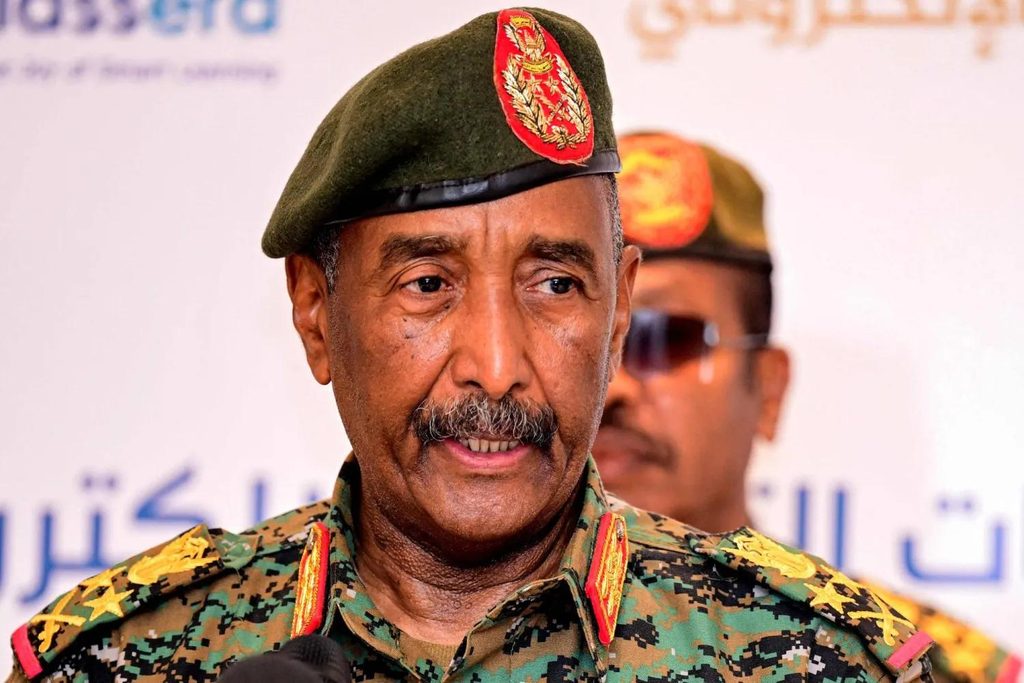
Sudan’s army chief, Abdel Fattah al-Burhan, is positioning himself for a presidential bid despite mounting criticism of his political and military record and accusations that his struggle for power helped plunge the country into a devastating war.
Sudanese analysts say Burhan’s political ambitions have placed his personal pursuit of power in direct conflict with the future of the country and its people.
They argue that a leader associated with Sudan’s collapse, mass displacement and deepening social divisions would struggle to secure genuine popular support in any credible election.
Burhan’s calculations appear to rest on maintaining his grip on power regardless of the price Sudan continues to pay, bolstered by external support as the country faces political polarisation, institutional collapse and the growing threat of fragmentation.
Bakri al-Jak, a spokesperson for the anti-war Somoud coalition, said Burhan had never concealed his ambition to rule Sudan.
“The competition for power was one of the principal factors behind the outbreak of the war,” al-Jak told Erem News, citing the presence of rival armies, the breakdown of Sudan’s social fabric and the state’s inability to exercise a monopoly over the use of force.
“There is currently no functional value to the state,” he said. “From the first day, Burhan was searching for a formula that would allow him to reach power. That is the right of every Sudanese citizen, but if the price is the destruction of the state, the dismantling of society and Sudan’s entanglement in regional conflicts, then the question becomes: What is the value of ruling an exhausted country?”
Al-Jak accused Burhan of prioritising his political ambitions over efforts to end the war and rebuild Sudan.
He said the army chief was seeking to establish a new authoritarian government, following a path previously taken by former President Omar al-Bashir. However, he warned that Sudan today is radically different from the country Bashir seized control of in the 1989 military coup.
Sudan is now deeply divided, engulfed by severe political and social polarisation and facing the danger of territorial fragmentation, he said.
Al-Jak warned that Burhan would find it difficult to construct a stable government under such conditions and that ordinary Sudanese people — along with future generations — would bear the cost of his pursuit of power.
‘Sudan’s Nero’
Political analyst Dr Al-Nour Hamad said Burhan assumed leadership during the transitional period that followed the signing of the Constitutional Declaration between the military and the Forces of Freedom and Change.
Hamad recalled that Burhan had previously spoken during a television interview about a dream his father allegedly had in which Burhan would one day rule Sudan.
He argued that Burhan’s determination to realise that ambition had driven him down political and military paths that contributed to the destruction of the country’s infrastructure and the deaths of thousands of people.
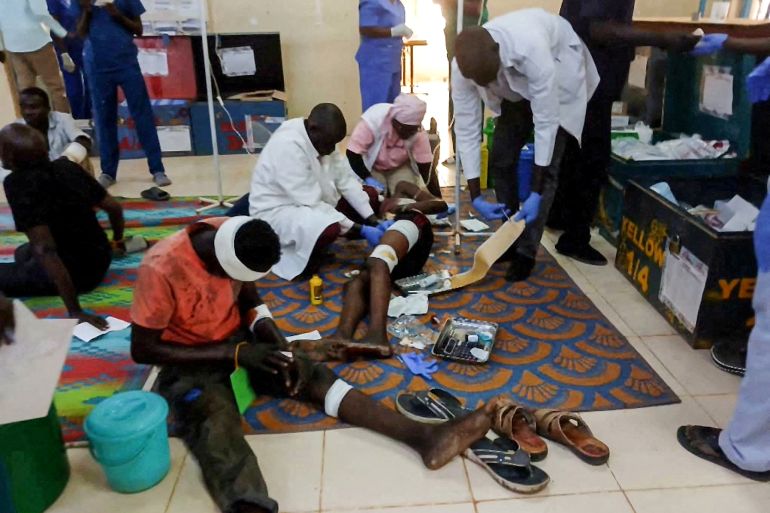
The war, which erupted in April 2023, has since displaced millions of Sudanese, devastated cities and essential services and pushed the country towards economic and institutional collapse.
Hamad compared Burhan to the Roman emperor Nero, accusing the army chief of remaining fixated on obtaining power while showing insufficient concern for the destruction inflicted across Sudan.
The analysts’ remarks come as opposition and anti-war groups reject political initiatives promoted by Burhan’s Port Sudan-based authorities, arguing that they are designed to consolidate military rule rather than establish an inclusive process capable of ending the conflict.
With Sudan fractured by war and millions of civilians facing displacement, hunger and insecurity, Burhan’s apparent presidential ambitions are likely to intensify questions over whether meaningful national elections can take place without first securing peace, restoring civilian government and rebuilding the state.