Nigeria has confirmed plans for the withdrawal of around 200 US military personnel deployed to the country in February to support operations against armed groups.
The move signals a new phase in security cooperation between Abuja and Washington, with greater emphasis placed on intelligence sharing, surveillance, specialised training and unmanned aerial systems rather than a sizeable American presence on the ground.
The shift comes as Nigeria continues to confront threats from Islamic State West Africa Province, Boko Haram, kidnapping networks and other armed groups operating across several parts of the country.
Washington shifts its security strategy
The US deployment earlier this year formed part of a broader arrangement that included military training, intelligence collection and the use of MQ-9 drones for surveillance missions.
American and Nigerian forces subsequently took part in a joint operation in May that killed Abu Bilal al-Mainuki, whom Washington described as the second-highest-ranking leader in the Islamic State group worldwide.
Many of the US personnel assigned to that operation later departed, although intelligence and training cooperation between the two countries continued.
The planned withdrawal suggests Washington believes it can retain significant operational influence by providing technical expertise, surveillance capabilities and intelligence while leaving responsibility for ground operations primarily to Nigerian forces.
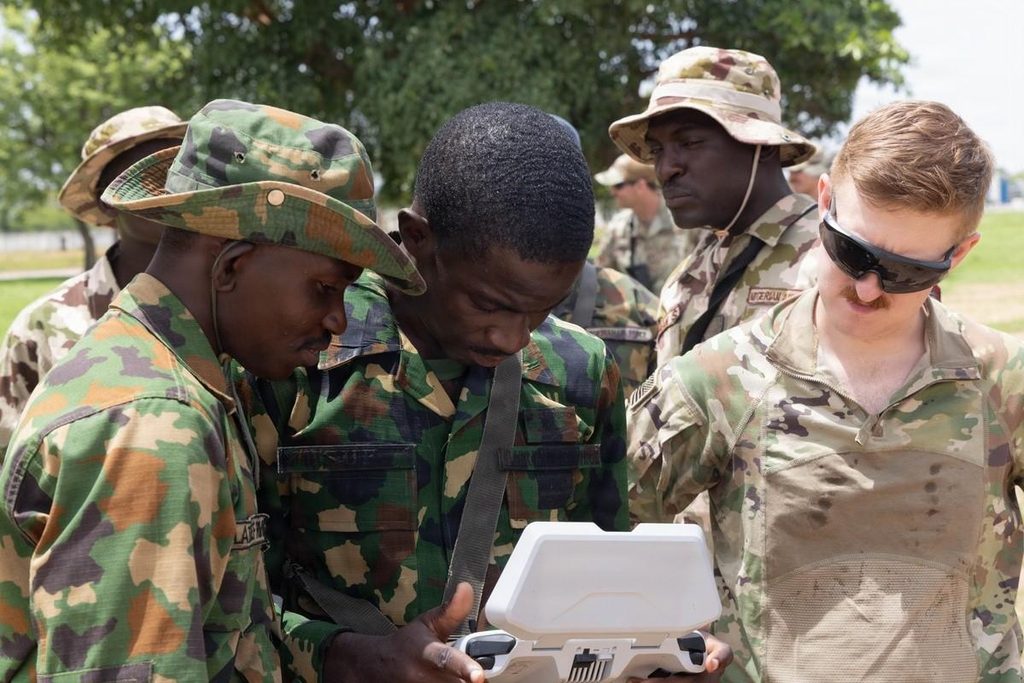
That approach was underscored by US Africa Command’s announcement on August 24 that American personnel were continuing to train Nigerian troops in Bauchi on the use of unmanned aerial systems, alongside the exchange of intelligence and technical expertise.
A US military source familiar with the arrangements told Erem News that the departure of the force deployed in February would not end existing channels of operational support.
According to the source, coordination will continue through smaller liaison teams, periodic training programmes and intelligence sharing on the movements of armed groups in northeastern Nigeria and other areas of mutual concern.
Washington is also expected to continue assisting Nigeria with the analysis of aerial imagery and surveillance data, as well as assessments of targets identified by Nigerian authorities. American specialists will provide further training in the operation and maintenance of unmanned systems, while Nigerian forces retain responsibility for carrying out missions inside the country.
The next phase of cooperation is likely to involve the temporary deployment of specialised teams rather than maintaining a large and permanent US presence. Their work is expected to focus on surveillance, communications and planning operations against high-value targets.
Additional support could be made available if emerging threats require capabilities that Nigerian forces do not currently possess.
A more specialised partnership
African affairs analyst Ibrahim Niang said the timing of the withdrawal reflects a transition towards areas in which Nigeria cannot rapidly develop sufficient capabilities on its own, particularly aerial surveillance, data analysis, technical intelligence and specialised training.
Niang said Abuja was likely to seek greater freedom in directing its military operations while continuing to rely on US technology to track armed groups and monitor large areas that cannot be continuously covered by ground forces.
This model has become increasingly important as Nigeria’s security threats spread beyond the northeast. The country is simultaneously confronting militant organisations, kidnapping networks and other armed formations operating across its northern and central regions, placing mounting pressure on the military, police and intelligence services.
Figures cited in the report illustrate the scale of the crisis. Nigeria recorded 7,825 kidnappings between July 2025 and June 2026—an increase of 66 percent compared with the preceding year. More than $5.8 million was reportedly paid in ransoms during the same period.
Intelligence and drones take centre stage
Amandine Nganginenon, a specialist in African security and military affairs, said the reduction in US personnel reflects a broader reliance on partnerships that provide local forces with expertise and technology while leaving them responsible for conducting operations.
She said this approach was particularly suited to a country the size of Nigeria, which already possesses a large military and an extensive network of security institutions.
Training Nigerian forces to use drones, she added, involves more than teaching personnel how to operate aircraft. It is also intended to develop Nigeria’s ability to gather intelligence, track movements and connect aerial surveillance data with command units deployed in operational areas.
The success of the new arrangement will depend on the ability of Nigerian institutions to use these capabilities consistently. The killing of a senior Islamic State figure may disrupt the organisation’s leadership, but it does not eliminate the conditions that allow armed groups to recruit, reorganise and move across vast areas.
The US withdrawal gives Abuja greater room to shape its foreign security partnerships while preserving Washington’s role as an important provider of intelligence, technology and training.
The future of the partnership will ultimately be measured by Nigeria’s ability to convert intelligence and technical support into sustained results on the ground as the country’s security crisis continues to expand geographically and drain state resources.